
Policy committee to review anti‑discrimination and harassment policy in executive session after complaints about scope
Get AI-powered insights, summaries, and transcripts
Subscribe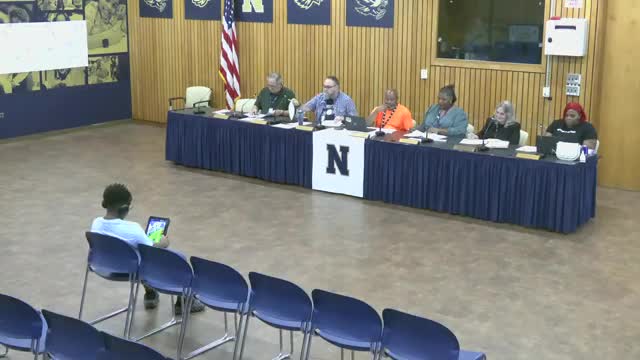
Summary
Committee members said the district’s anti‑discrimination/anti‑harassment policy has prompted many grievances and administrative burden; they agreed to handle further review in executive session with legal counsel and to allow members to provide input before any removal or revision.
Committee members told the Newburgh City School District policy committee that the district’s anti‑discrimination and harassment policy has prompted an unusually large number of grievances and workload for human resources, and they directed staff and counsel to review the policy in executive session.
Mr. Howard summarized concerns that portions of the policy have been used in ways “other than what was intended,” producing “a flurry of complaints” and extra work for human‑resources staff. He said the policy might need to be “totally omitted from the policy book or revised.”
Acting Superintendent Onyx Peterson said protections exist under New York State law and in collective bargaining grievance processes; she recommended the matter proceed as an executive discussion with the district’s legal team. Ray Bergarelli stressed that removing the policy should not strip statutory rights, saying the district already has policies providing many of the intended protections.
A member asked whether eliminating the policy would affect the DASA (Dignity for All Students Act); another member asked for clarification about the related employee anti‑harassment policy located in the 9000s section of the manual. The committee did not vote on amendments; instead they scheduled a review in executive session at the next meeting so legal counsel can advise and the full board can weigh in.
The meeting record shows the committee explicitly moved to an executive session later in the agenda “for the purpose of legal advice.” The transcript notes that “we will not be taking action” in executive session, indicating the review is for counsel input rather than immediate policy change.