
Planning commission endorses sending draft carbon‑sequestration ban to county attorneys for review
Get AI-powered insights, summaries, and transcripts
Subscribe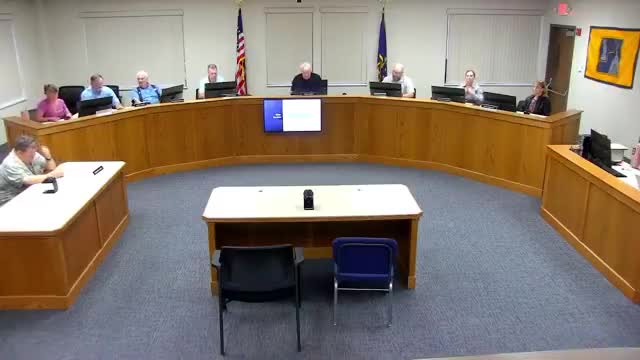
Summary
Commissioners discussed a draft ordinance that would ban underground carbon dioxide storage and new CO2 pipelines in Marshall County, citing uncertain impacts to groundwater and public safety. The commission voted to send the draft to county attorneys for legal review and potential public hearing.
The Marshall County Planning Commission on July 24 reviewed a staff-drafted ordinance to ban underground storage and pumping of captured carbon dioxide and to prohibit construction of CO2 pipelines and associated injection projects within county borders. The commission voted to send the draft to county attorneys for review.
Staff overview
Staff member Nicholas said the draft ban is intended to protect citizens, water supplies and natural resources from potential—but not well understood—risks of carbon capture and sequestration (CCS). He described the technology and typical transport methods: “carbon dioxide is compressed” and moved by “pipelines, trucking, and railcar,” and that geological and hydrogeological conditions determine local risk.
Why the draft would ban rather than pause activity
Nicholas said the draft differs from a moratorium; staff recommends an outright ban at this time because site-specific risks are not sufficiently understood and because early bans provide a clearer regulatory baseline. He cited a nearby Indiana example (Vermillion County) and international reports that have observed groundwater changes after CO2 injection in specific formations.
Public-safety and water concerns discussed
Commission members and staff discussed documented incidents and hypothetical risks: a referenced pipeline rupture in the Mississippi region (reported hospitalizations from high CO2 concentrations), groundwater contamination observed in some European injection sites, and the possibility that CO2 migration could mobilize dissolved metals or alter pH. The draft would prohibit underground injection and new CO2 pipelines in the county; staff said that would also reduce trucking and rail transport needs into Marshall County.
Action taken
A commissioner moved and the planning commission voted to send the draft ordinance to county attorneys for legal review and to prepare the item for a public hearing if attorneys advise proceeding. Roll-call voting was recorded in favor; the commission instructed staff to provide the revised draft and attorney feedback at a future meeting.
Next steps
If attorneys clear the draft, the commission will schedule a public hearing and further consideration. Staff said any ordinance would remain reversible; it could be replaced or revised later if scientific or regulatory developments warrant.