
Council approves settlement on groundwater export and continues planned well construction to meet max‑day needs
Get AI-powered insights, summaries, and transcripts
Subscribe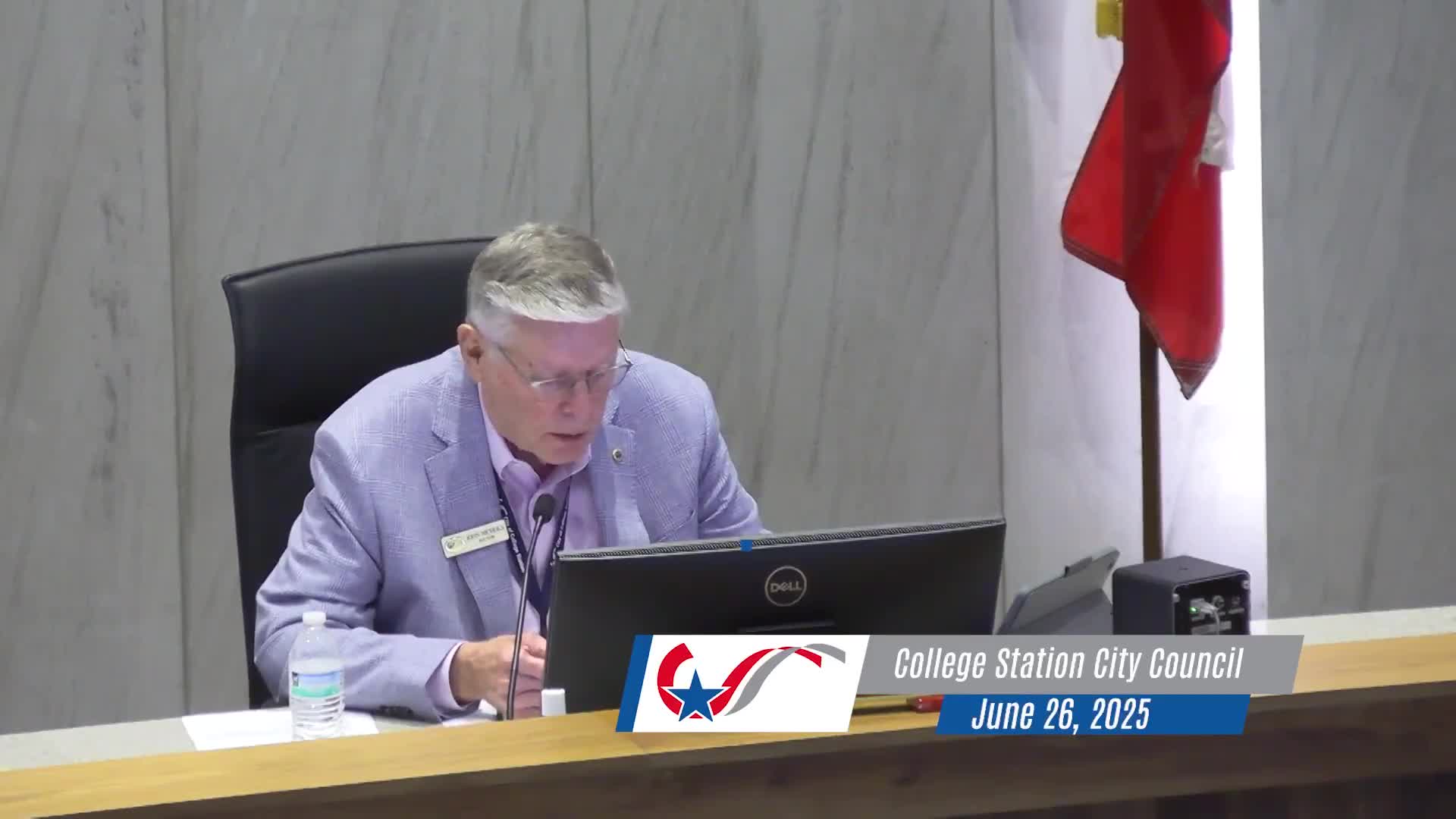
Summary
The council approved a settlement with Upl (upland exporter) and the Groundwater Conservation District that caps export at 50,000 acre‑feet with a staged ramp and creates an export fee to fund mitigation; separately staff described planned construction of three wells (wells 10–12) intended to meet max‑day capacity and redundancy.
The College Station City Council unanimously approved a settlement on June 26 related to litigation over groundwater export and heard staff describe continued construction of three new municipal wells intended to protect the city’s maximum‑day water supply capacity.
City Attorney Adam Falco and staff described the settlement reached among the district, the city and the export project (notice of the case and the settlement appeared on the council agenda as Court cause number 24002626‑CD‑472). Under the terms described to council, the export project’s authorized volume was capped at 50,000 acre‑feet, and the settlement establishes a staged pumping ramp: an initial limit of 23,000 acre‑feet until February 2034, then an increase to 38,000 acre‑feet until 2039, and then the capped 50,000 acre‑feet thereafter. The agreement also ties the exporter to the same curtailment rules that apply to College Station and requires the exporter to pay export fees—described in the meeting as more than $180 million over a 30‑year term—for mitigation of impacted wells within the district.
Attorney Falco told the council that, under current law, the export project could otherwise have moved forward under district rules and that the city’s protest and the litigation led to the negotiated limits and mitigation funding. The council voted 7–0 to approve the settlement after a motion by Council Member Smith and a second by Council Member Wright.
Separately, staff described ongoing capital work to add wells 10, 11 and 12 to the city’s well field. Steve Maldonado, assistant director of water services, said the primary purpose of the three wells is to meet maximum‑day demand and provide redundancy in extreme demand or outage scenarios. “The primary purpose of these 3 wells is for max day when we need a maximum day of water supply,” Maldonado said, noting that concurrent production on prior wells during droughts can mean all wells run at full capacity and loss of one well could create pressure and service risks.
City staff also reported the construction manager‑at‑risk process: the council previously accepted early guaranteed maximum price (GMP) amendments for early work packages covering site preparation, test‑well drilling and access road construction, and additional GMP packages for equipment and the permanent well construction are expected later this year. Staff said a test well was scheduled to be drilled in early July and that final drilling for the permanent wells would follow later GMP packages.
Council members asked whether the pending legal matters could reduce the need for three wells; staff answered that the wells are needed to meet the city’s max‑day capacity needs regardless of the export project. The combined result of the day’s actions was to preserve the city’s planning certainty: the settlement limits future exporters’ near‑term pumping, provides funding for mitigation, and staff will proceed with well construction to secure max‑day supply and redundancy.