
Councilmember proposes standard rules to lengthen and equalize public comment time
Get AI-powered insights, summaries, and transcripts
Subscribe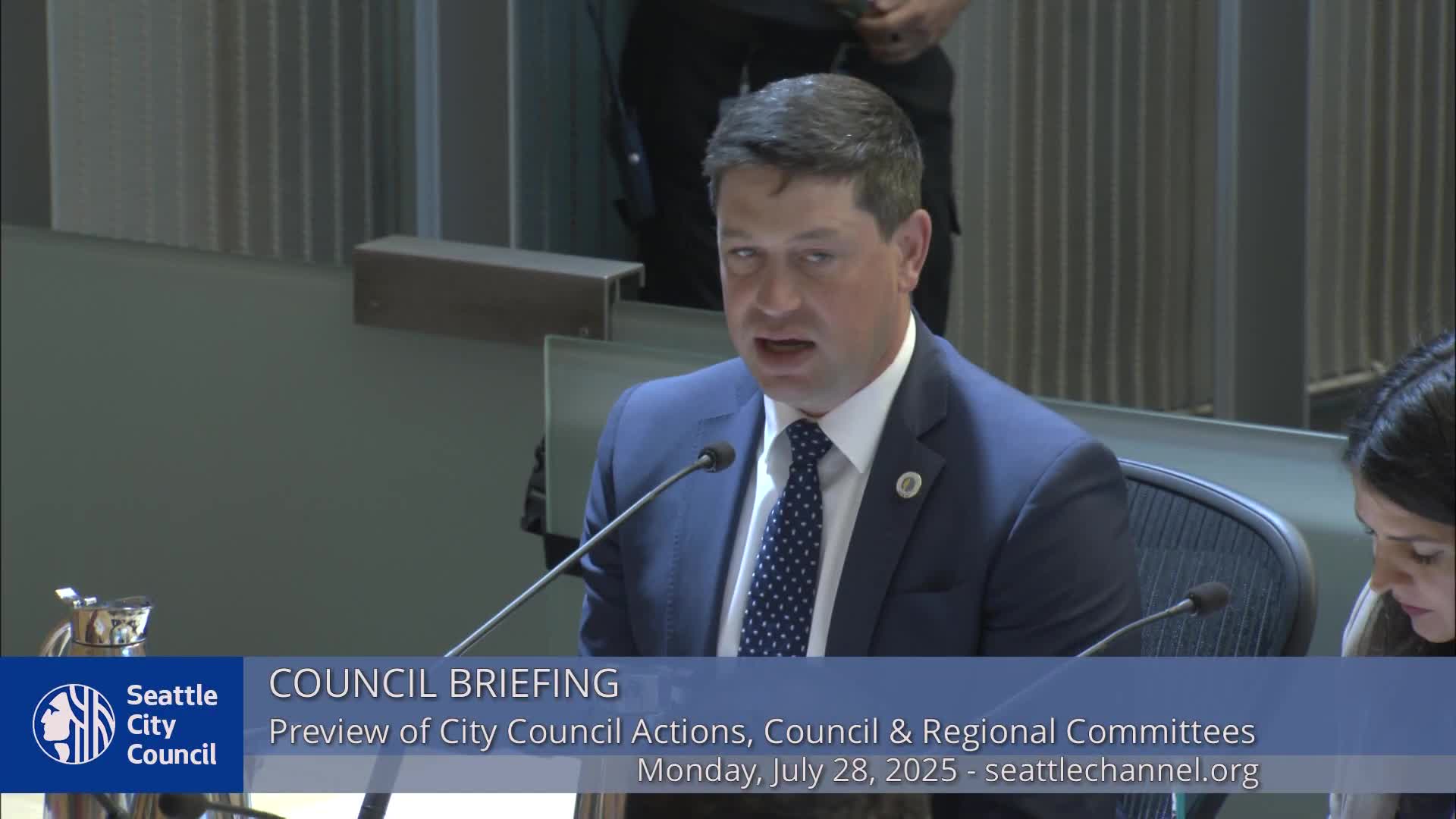
Summary
Councilmember Strauss introduced an amendment to Seattle City Council rules to expand the maximum public comment period from 20 minutes to up to one hour and to standardize per-speaker times based on the number of speakers; the change is scheduled for full council consideration at the next meeting.
Councilmember Strauss proposed an amendment to Seattle City Council rules that would extend the total public-comment window from “up to 20 minutes” to as much as one hour and standardize how much time each person receives to speak. The proposal aims to balance the council’s need to complete business with what Strauss described as a duty “to hear from our constituents” and to give members of the public predictable speaking time. Strauss told colleagues the change would set a schedule: if fewer than 30 people sign up, each speaker would get two minutes; 30–60 speakers would get one minute each; with more than 60, the presiding officer would have flexibility. She said the standardization would reduce the abrupt on-the-spot shortening of allotted time that some speakers experience. Council President Nelson raised a competing idea she had previously proposed: if public comment exceeds 20 minutes, the body should vote to extend the period so the decision is not left to a single chair. Strauss said she would consider whether her amendment could accommodate that approach. Strauss also said she reached out to Toby Nixon, former president of the Washington Coalition for Open Government, to request best practices for handling public comment that exceeds prescribed time limits. She emphasized the intent to balance Open Public Meetings Act (OPMA) requirements with the council’s workload. No formal vote on the rule change occurred during the briefing. Strauss said she will bring the amendment to the full council meeting for consideration and discussion. The proposed change responds to recurring complaints from members of the public and some councilmembers about unpredictable reductions to speaking time during public comment; it does not change existing OPMA obligations. Looking ahead, Strauss said the amendment is intended to provide predictability for members of the public while allowing the council to conduct time-sensitive business after public comment.