
County approves entering E‑911 software contract, staff to negotiate partial upfront payment
Get AI-powered insights, summaries, and transcripts
Subscribe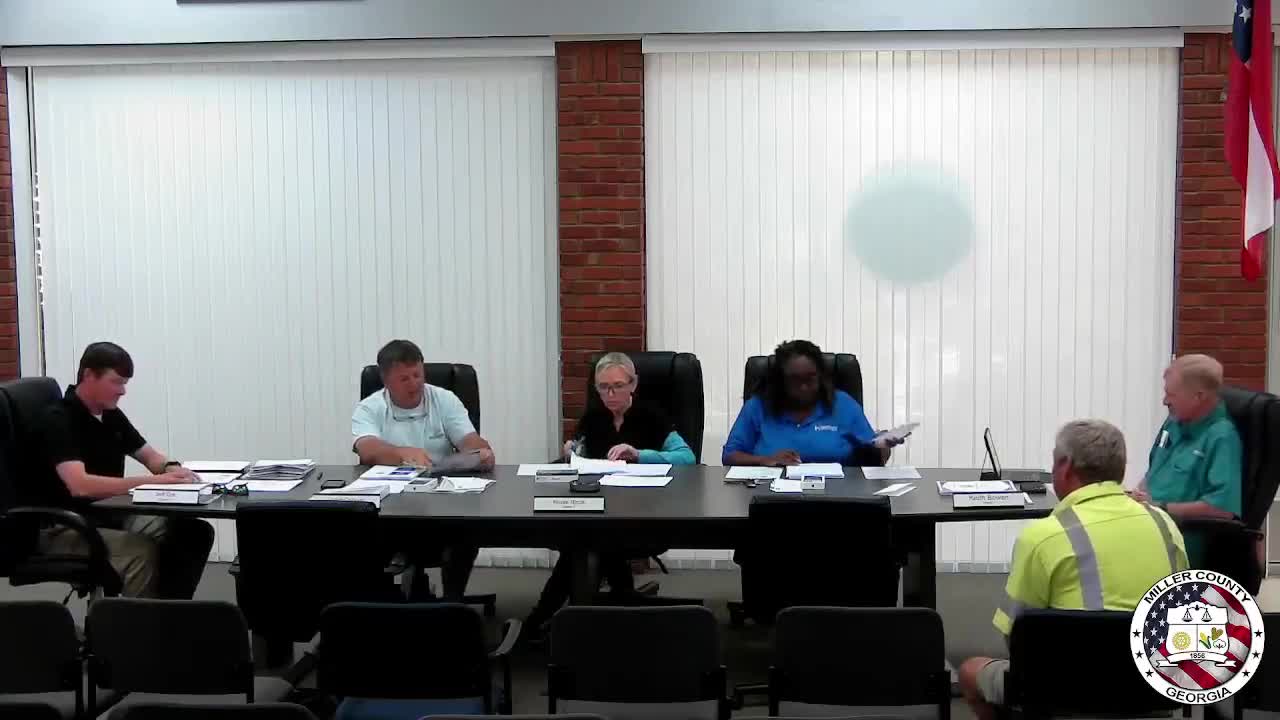
Summary
Miller County commissioners authorized staff to enter a contract for new E‑911 software and instructed them to negotiate partial upfront payment so the county can be scheduled earlier for implementation.
MILLER COUNTY, Ga. — The Miller County Board of Commissioners voted July 14 to authorize staff to enter into a contract for new E‑911 software and to pursue a payment schedule that would secure the county’s place on the vendor’s installation list. The board’s authorization follows staff reporting that the vendor typically requires full payment up front, but would consider a partial-upfront arrangement if the county signed the contract now. Staff advised that signing earlier would likely move the county’s installation from mid next year to roughly November and allow training sooner. The matter began under “old business” when commissioners discussed whether to sign immediately or wait until December. County staff reported conversations with a PTS representative, Jamie, who said the company normally asks for payment up front but could “work something out” to accept a partial payment and place Miller County earlier on its implementation list. The board moved and approved an authorization for staff to enter the agreement. The vote was recorded as an affirmative voice vote and no opposing votes were noted. The board did not adopt contract language at the meeting; staff said the exact payment and contract terms remain subject to negotiation with the vendor and county attorney review. Commissioners framed the decision as procedural: signing would secure an earlier slot on the vendor’s schedule but would not finalize the specific payment schedule until staff and the vendor agreed and the county attorney had reviewed contract terms. No timeline for final signature was provided at the meeting. Commissioners also noted the potential operational benefit: earlier installation and training could speed deployment of updated call‑handling features and radio integration when the system is live. The board recorded the authorization as a formal motion and approved it by voice vote.