
West Haven Council approves $1.65 million upgrade for police body and dash cameras
Get AI-powered insights, summaries, and transcripts
Subscribe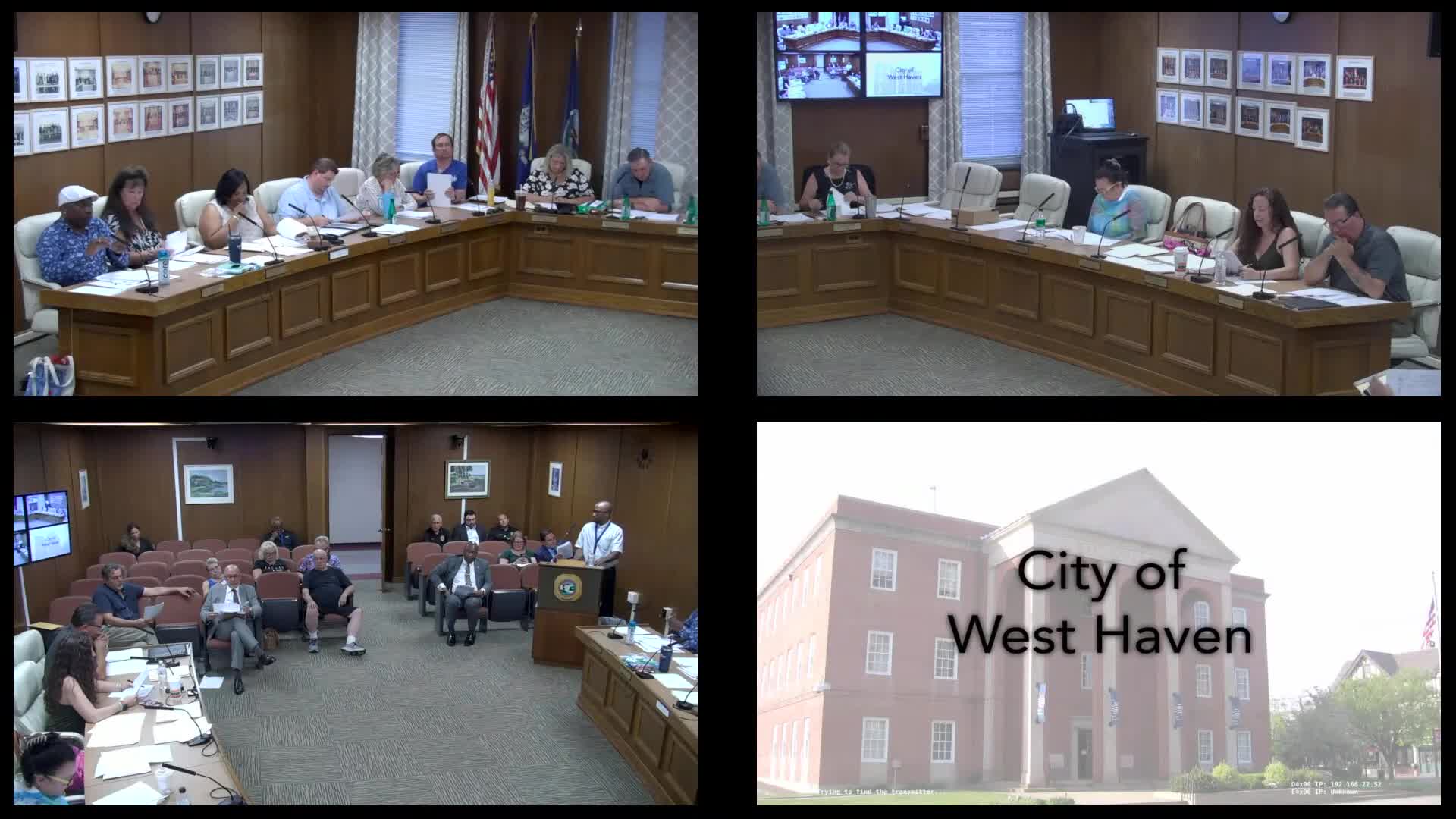
Summary
City council voted to reallocate capital funds and use special-duty revenue to buy Axon body‑worn cameras, dash cameras and related services, approving a five‑year cooperative purchasing agreement and creating a new capital project.
West Haven City Council on July 28 approved a capital reallocation and a five‑year procurement plan to upgrade police body‑worn cameras and in‑car dash cameras, creating a new capital project and authorizing the mayor or finance director to join a Sourcewell cooperative purchasing agreement with Axon Enterprises.
The vote follows an extended presentation by Mayor Dorinda Borer, Police Chief Joe Pernod and Axon representatives describing features such as automatic transcription, live translation and cloud storage. Mayor Dorinda Borer said the city wants to “be a leader in this area” and highlighted translation tools she said will “translate it, but also automatically translate what the police officer is saying back to the resident or the person involved.” Chief Joe Pernod described storage as a critical constraint until cloud options improved: “It’s in the clouds. Yeah. The storage, it’s unlimited. It’s unlimited storage, and that’s a that's a big, big thing.”
Why it matters: Council members and the administration said the package is intended to improve transparency, boost evidence reliability and reduce administrative burdens on officers. Axon account manager Joe Kwiatek told the council the vendor’s newer tools can speed report writing, accept digital evidence from the public and extend TASER range and functionality; he described TASER 10 as “developed for that purpose” of offering more effective options in certain encounters.
Budget and approval: Finance Director Michael Gormani told the committee the first‑year cost is roughly $1.65 million and proposed covering $1,150,609 by reallocating capital funds across several projects and the balance from police special‑duty revenue. The council voted to (1) create the new capital project for the Axon implementation, (2) reallocate $1,150,609 from existing capital items (police vehicles, DPW vehicle purchases/equipment, traffic signals, WPCA outfall and plant hardening) and (3) use special‑duty funds to cover the remaining first‑year cost. The council also approved authorization for the mayor or finance director to enter the Sourcewell cooperative purchasing agreement with Axon Enterprises.
Technical and operational questions: Members questioned data retention, cybersecurity, translation accuracy, equipment lifecycle and deployment schedule. Axon staff said retention rules can be set by case type (for example, one year for breach of peace; ten years for arrest; indefinite for homicide), and that municipalities using Axon typically handle tens of terabytes of rolling daily data. On cybersecurity, Axon and department staff described multi‑layer protections and said data are stored offsite rather than on local department servers. Chief Pernod and Sergeants noted live streaming to supervisors and drone integration as valuable operational capabilities during critical incidents.
Implementation and next steps: The approved contract is structured as a five‑year agreement with scheduled equipment refresh cycles (roughly every 2½ years). The administration said the capital plan will reflect the multi‑year costs in future budget cycles. The council carried the motion; the order to execute cooperative purchasing and create the project was approved.