
Board voices concerns over vacant-building ordinance enforcement, missing map and economic effects
Get AI-powered insights, summaries, and transcripts
Subscribe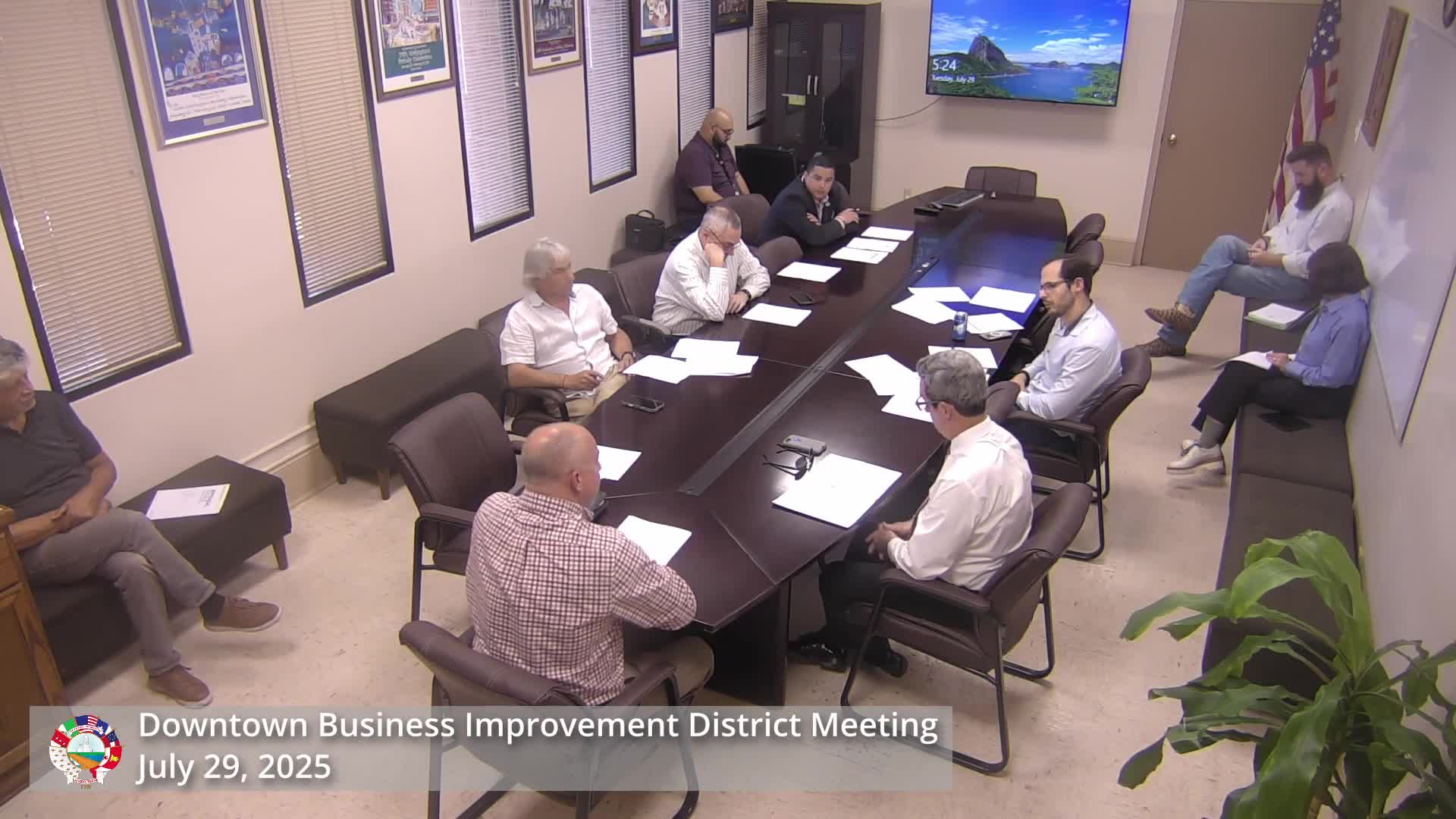
Summary
Board members raised objections on July 29 to the city’s vacant-building ordinance, citing a missing geographic exhibit in the adopting ordinance, unclear fee language and a 60% occupancy threshold that speakers said would classify many downtown properties as vacant.
Board members used the July 29 meeting to detail concerns about the city’s vacant-building ordinance, its enforcement and the potential economic effects on downtown property owners.
Board members said the ordinance, originally adopted in 2021, refers to a boundary map (Exhibit A) that was not included in the ordinance as adopted and that the lack of a clearly defined geographic boundary could complicate enforcement. “When you go to when it was passed, it says see exhibit A or exhibit B. And when you go to the meeting when it was passed, there is no document exhibit A,” a board member said. Another board member said the city’s building-services web page now shows a map but that the map on the website differs from maps other staff described; the board asked the city to clarify the geographic area subject to the ordinance before assessing fees.
Members discussed the ordinance’s occupancy threshold. A board member stated, “It’s gotta be more than 60% occupied to not be vacant,” indicating that properties at 60% occupancy or lower would be considered vacant under the rules as cited in the meeting.
Speakers also discussed fee and penalty language included in portions of the ordinance and in city communications but noted inconsistent figures in the materials and during the discussion. A board member summarized components cited in the ordinance process as including a registration fee, late fees and potential fines for failure to comply with building-code or security requirements, and explicitly said the exact fee schedule and timing “was not specified” in the meeting materials the board reviewed.
Several board members urged caution about enforcement before the city clarifies boundaries, registration processes and whether proposed fee increases will be applied. One board member said amendments to the ordinance were placed on the city council agenda for last week but that the council moved to table the item; another said the city staff’s position appeared to be to move forward with enforcement despite the pending questions. “So to me, it’s a little unclear. It’s still technically on the books,” a board member said of the ordinance.
Members warned the ordinance could have unintended economic consequences. Several said the downtown currently faces weak rental market conditions and that requiring substantial capital investment to bring buildings to code could push owners toward demolition or conversion to uses such as surface parking, rather than renovation and leasing. “If you spend the money to renovate the building and now it’s sitting there empty, deteriorating, that’s another disincentive for property owners,” one member said.
Board members asked council members outside the downtown district to press the city to pause aggressive enforcement until the boundaries, registration process and fee schedule are clarified and until the city pairs enforcement with incentives and outreach. The board did not take a formal vote; members said they will continue to press the city for clarity and reported that their district council representative had been restricted from speaking to council on the item because she owns property in the district.