
Opioid overdose data bill advanced after heated fight over Jeffrey Epstein file disclosure
Get AI-powered insights, summaries, and transcripts
Subscribe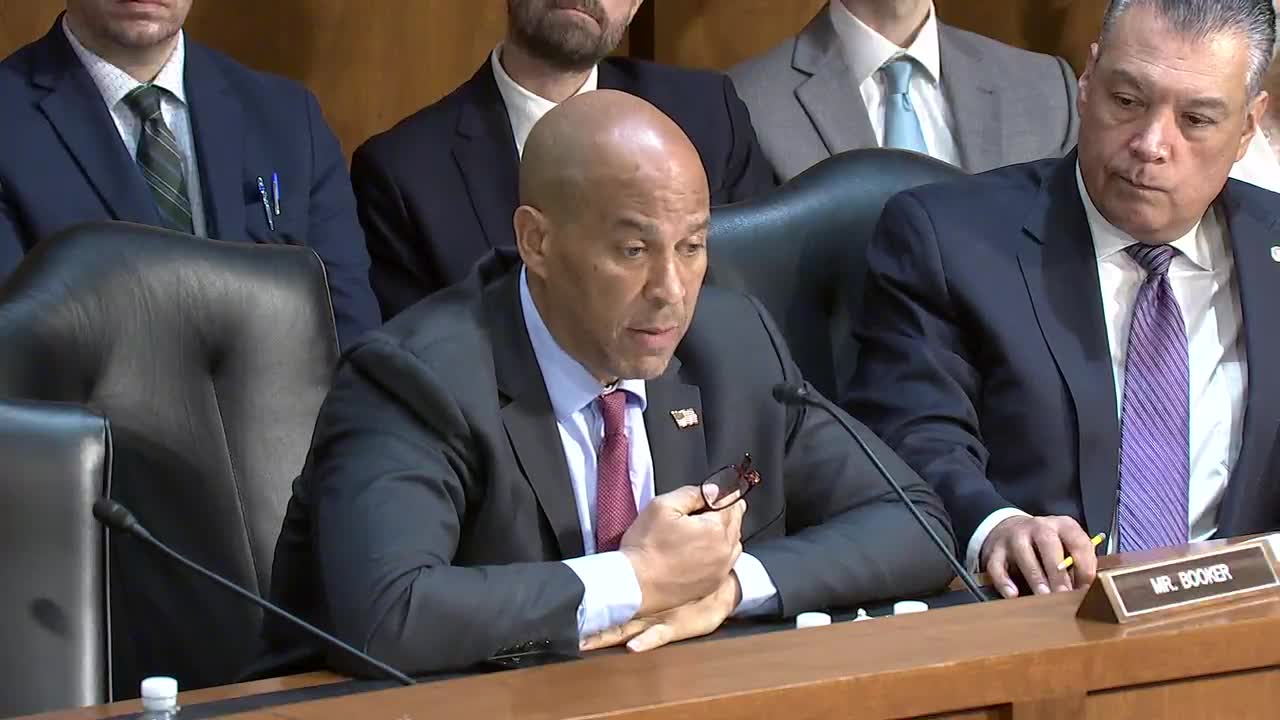
Summary
The Senate Judiciary Committee reported the Opioid Overdose Data Collection Enhancement Act after contentious debate and multiple amendments related to disclosure of Jeffrey Epstein files; committee sponsors said the bill aims to improve overdose tracking and Narcan distribution.
The Senate Judiciary Committee on Oct. 5, 2025, reported the Opioid Overdose Data Collection Enhancement Act (referred to in the markup as S.1098) after extended debate and a series of amendments that briefly threatened the bipartisan measure.
The bill, sponsored in part by Senators Cantwell, Cornyn and Klobuchar, would provide funding to improve tracking of drug-overdose incidents so that resources like naloxone (Narcan) can be distributed to areas with the greatest need, sponsors said.
During markup, Senator Cory Booker offered an amendment that, as described on the floor, would have tied the bill’s effective date to public disclosure by the Attorney General of certain unclassified files relating to Jeffrey Epstein and associates. Senator John Cornyn offered a second-degree amendment to remove the disclosure condition. The committee adopted the Cornyn amendment by roll-call, and debate over the measure included exchanges in which senators argued whether linking the opioid bill to disclosure would jeopardize enactment of a bipartisan public-health measure.
Booker argued the amendment sought accountability and transparency about the Epstein files; he said Democrats and Republicans in other parts of Congress had sought the same disclosure. Senator Cornyn and other proponents of removing the linkage said the opioid bill was an urgent, bipartisan public-health measure that risked being derailed by condition-based amendments. After discussion and floor colloquy about committee scheduling and the potential for the bill to fail on the floor, Booker withdrew his amendment, and the committee moved forward. Chairman Grassley and Senator Graham urged that the underlying opioid bill be reported so it could reach the Senate floor and, they said, help save lives.
Outcome: After the amendment exchanges and votes, the committee voted to report S.1098 to the Senate floor. The transcript records roll-call votes on amendments during the debate; committee sponsors pressed for the underlying bipartisan bill to be advanced rather than held up by the larger disclosure fight. The committee’s action reports the bill to the full Senate for further consideration.