
Senate panel debates tighter SBIR safeguards as witnesses warn of Chinese tech theft
Get AI-powered insights, summaries, and transcripts
Subscribe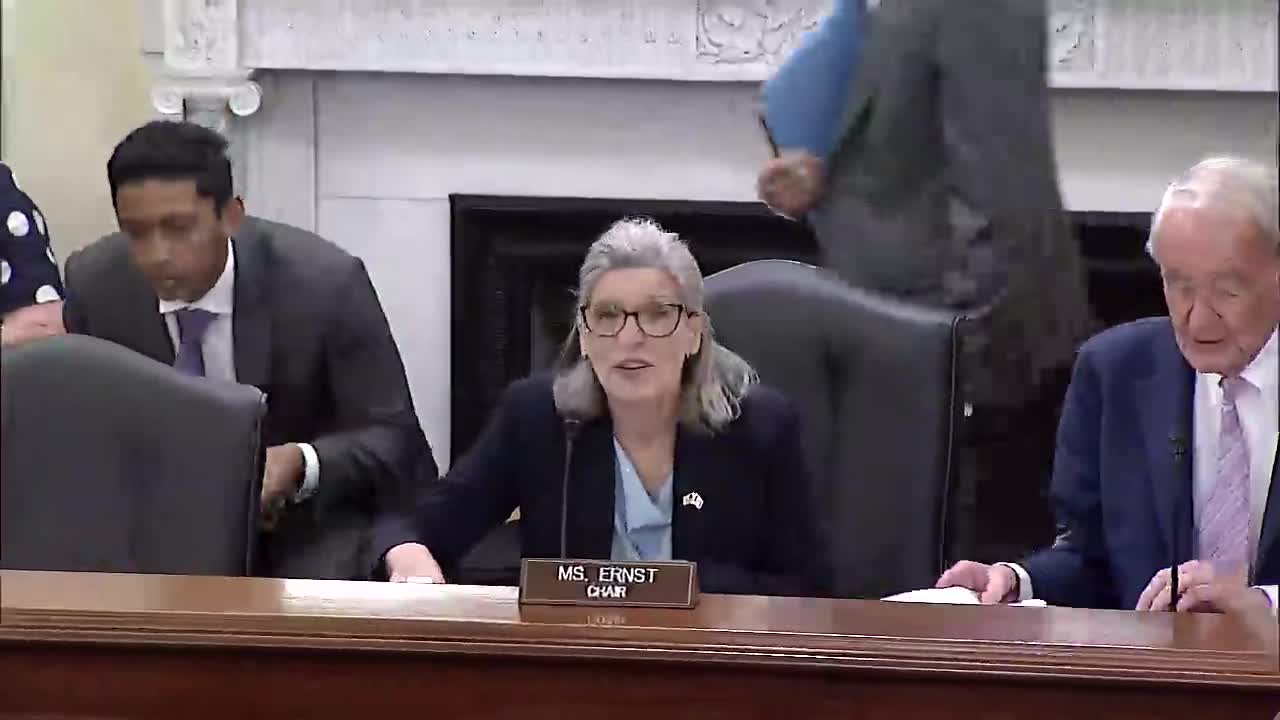
Summary
The Senate Committee on Small Business and Entrepreneurship heard detailed testimony from policy experts and researchers warning that China is exploiting U.S. innovation ecosystems and federal small-business research programs, and lawmakers debated legislative and administrative ways to tighten safeguards.
The Senate Committee on Small Business and Entrepreneurship heard detailed testimony from policy experts and researchers warning that China is exploiting U.S. innovation ecosystems and federal small-business research programs, and lawmakers debated legislative and administrative ways to tighten safeguards.
The committee's chair, Senator Joni Ernst, framed the hearing as part of an effort to "lock down our innovation pipeline," citing a range of threats including investment, talent-recruitment programs and industrial espionage. Ernst said a U.S. Trade Representative and FBI estimate places annual intellectual-property losses to China between $225 billion and $600 billion, and she told the panel her recent report found that "64% of applications flagged for foreign risk were still eligible to receive taxpayer dollars." Ernst also noted she introduced the Innovate Act to standardize foreign-ties due diligence across federal programs.
Why it matters: The Small Business Innovation Research (SBIR) and Small Business Technology Transfer (STTR) programs award federal funds intended to help startups and small firms move research from prototype to market. Witnesses said those firms are both strategically important and especially vulnerable to acquisition and exploitation by foreign actors because many lack in-house legal, compliance or cybersecurity resources.
Experts who testified recommended a mix of better data, more adaptive due diligence, and strengthened incentives to keep production and commercialization onshore. Emily Della Bruyere, senior fellow at the Foundation for Defense of Democracies, told the committee, "China is winning the technological competition against the United States," and argued Washington should both harden purchase/award rules and push private firms to choose between the U.S. and Chinese markets when seeking federal support.
Dr. Shivakumar, director of the Renewing American Innovation program at the Center for Strategic and International Studies, said SBIR is "a proven national security asset" and urged strengthening commercialization pathways rather than overregulating the program. He recommended more sustained funding for federal R&D agencies, flexible follow-on funding to bridge the "valley of death" between prototype and scale, and cybersecurity support for awardees.
William Hannes, a research professor at Georgetown's Center for Security and Emerging Technology, described China's approach to acquiring foreign technology as state-directed and institutionalized. "China treats foreign technology acquisition as an academic discipline," he testified, and he urged better catalogs and shared data on suspect individuals and venues so agency grant officers can vet proposals systematically rather than relying on chance discovery.
Committee members from both parties pressed witnesses on concrete steps. Senator Ed Markey (D-Mass.), the committee's ranking member, emphasized the broader impact of proposed federal cuts to research agencies and the need to keep universities and research institutions funded. Senators from both parties discussed using existing authorities such as CFIUS, strengthening denial presumptions for sensitive awards, and coordinating with allies that face similar threats.
Formal committee actions recorded during the hearing were procedural: Chair Ernst asked unanimous consent to place her report into the record and later to enter an article by a CSIS scholar; the committee accepted a GAO evaluation of the foreign-ties due diligence program into the record "without objection," and the committee granted a two-week period for members to submit questions and for the record to remain open. The committee adjourned at the hearing's close.
Key numbers and program context discussed at the hearing included: SBIR/STTR program history (since 1982, cited figures included "more than 207,000 awards totaling more than $72 billion"), the 2021 DOD review flagging exploitation of SBIR, the 2022 SBIR STTR Extension Act that created a foreign-ties due-diligence framework, and testimony from members noting that six of the 25 largest Department of Defense SBIR recipients had links to China yet received nearly $180 million from the Pentagon in 2023–24.
What happens next: Witnesses and multiple senators urged reauthorization and strengthening of SBIR/STTR, better data-sharing across agencies, targeted cybersecurity assistance for small firms, and policies that favor onshore commercialization. The committee left its record open for two weeks for follow-up questions and additional materials; no new statutory changes were voted on during the hearing.