Baker County transit operator trims service after federal grant shortfall
Get AI-powered insights, summaries, and transcripts
Subscribe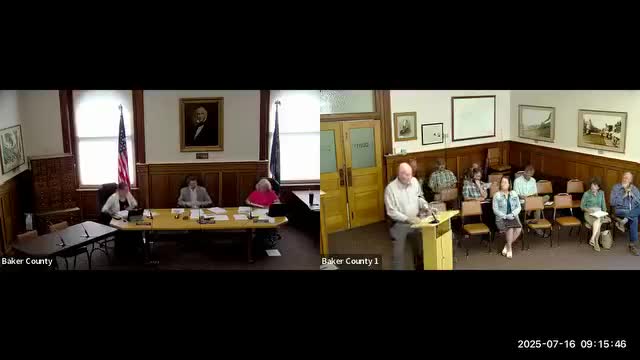
Summary
Community Connections Northeast Oregon reduced demand-response and intercity trips in Baker County after Federal Transit Administration grants (5310/5311) were not approved, county officials heard July 16.
Community Connections Northeast Oregon told the Baker County commissioners on July 16 that a shortfall of federal grants has forced the nonprofit to cut local public-transportation hours and lay off staff. Joe Hayes, operations manager for Community Connections Northeast Oregon, said Federal Transit Administration grants for “53 10 and 53 11” were not approved this year, reducing Baker-area funding by “about $225,000.”
The cuts narrowed demand-response (dial-a-ride) hours and removed some shopping and intercity trips. “Currently, now since July 1, we are doing our demand response slash dial a ride from 09:30 to 02:30, Monday, Wednesday, and Friday,” Hayes said, adding that Tuesday remains the agency’s heaviest medical-trip day and is operated from 8 a.m. to 4 p.m. He said the agency is covering operations in hopes of future reimbursement: “we are putting out $67,000 in hopes of reimbursement at some point in the future to just do these services.”
Why it matters: commissioners and staff asked whether the reduced schedule prevents residents from reaching work or medical care. Hayes said one rider so far could not use the service for work and that the operator had to reduce staff, including two drivers and a full-time transit manager. He emphasized that contractual medical trips (for example, for behavioral-health providers) remain covered outside the modified public schedule and are provided on contracted vehicles.
Commissioners discussed trade-offs including fare policy, vehicle utilization and whether assisted-living operators could expand transport for residents with appointments outside the reduced hours. Hayes said STIF (Statewide Transportation Improvement Fund) funding continues to support fare-free service and that fare revenue historically represented a small portion of operating costs. He said some long-distance shopping trips are scheduled weekly and require sufficient ridership to be feasible.
What’s next: commissioners asked staff to relay impacts to state legislators and to monitor rider complaints. Hayes said ridership and trip logs are available on request and that Community Connections will continue to prioritize contracted medical trips while seeking reimbursement and new funding.