
County debates parking‑garage camera upgrade and who pays — hot tax, sheriff or general fund
Get AI-powered insights, summaries, and transcripts
Subscribe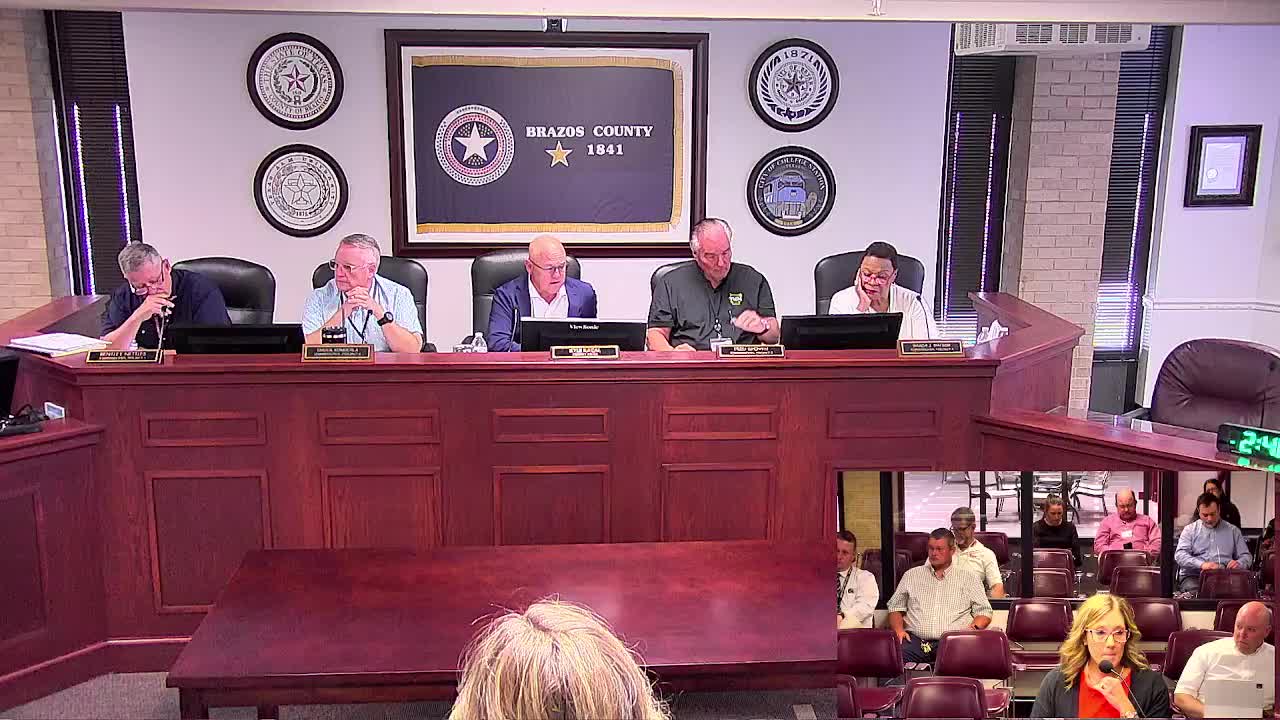
Summary
Commissioners discussed replacing or upgrading 52 cameras in the downtown parking garage, compatibility with the county's video management system, possible sheriff contributions for license‑plate cameras, and whether hotel occupancy tax funding could be used for parts of the project.
Brazos County Commissioners weighed options Feb. 25 for upgrading camera coverage in the downtown County parking garage, focusing on camera count, technology compatibility and funding sources. Staff and IT raised concerns about data rates for wireless options and compatibility with the county’s existing video management system.
Staff noted the garage currently has roughly 70 cameras; an upgrade could reduce that to an estimated 52 cameras while improving coverage of blind corners on the five‑story structure. Commissioners and staff discussed whether adding license‑plate‑reading cameras outside the garage (Flock or similar) would help capture bad actors leaving the structure; the sheriff’s office and constable’s offices have been involved in those conversations.
Funding drew sustained attention. One commissioner asked whether portions of the work could be charged to the hotel occupancy tax (hot tax) because jurors and court visitors park in the garage when attending court. Staff said the hot tax could potentially cover a share if the court designates a percent of garage use as public‑facing; they asked county counsel to review state rules to confirm eligibility.
IT staff cautioned that any new cameras must be compatible with the county’s existing video management and storage solution; replacing the backend system just to add wireless cameras would create larger costs. Commissioners asked staff to keep the camera project in the proposed budget as an ongoing project with “no funding” until a clearer scope and cost estimate are available, and to ask the sheriff’s office whether it could fund one or two Flock cameras to supplement interior coverage.
No final procurement or appropriation was approved. Staff will continue technical research, seek legal advice on hot‑tax eligibility and return with cost estimates and a recommended funding split.