
Polk County says PADS rapid‑rehousing has housed 443 people; Dallas counted 96 in January
Get AI-powered insights, summaries, and transcripts
Subscribe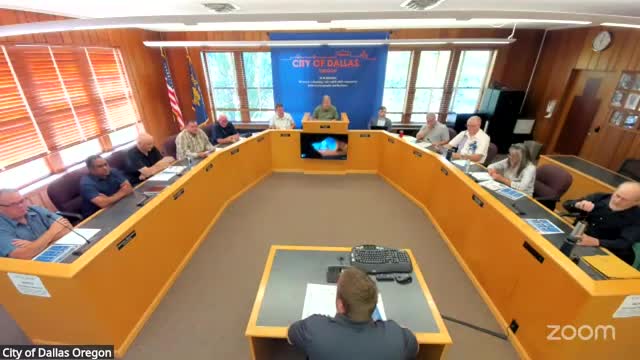
Summary
Polk County staff told the Dallas City Council that the Partners Aligned Towards Housing Solutions (PADS) homeless‑response system has housed 443 people since program launch and that a January point‑in‑time count recorded 96 people in Dallas, most with verifiable ties to Polk County.
Polk County homeless‑response staff told the Dallas City Council on Aug. 4, 2025, that the Partners Aligned Towards Housing Solutions (PADS) program has housed 443 people since mid‑2023 and that a January point‑in‑time count recorded 96 people in Dallas.
Ryan Pollard, Polk County homeless prevention and outreach liaison, told council members the PADS program began after a state legislative pilot awarded about $1 million to regional partners and that Polk County now houses a PADS office and staff to deliver rapid rehousing and related services.
Pollard said the county’s rapid rehousing program, launched in October 2023, has placed 247 individuals (103 households), and that 94 of those households have moved to or are on track to self‑sufficiency, a success rate he described as “just a little below 92.” He told the council “about 45%” of the 247 individuals are already paying rent without subsidy. Pollard also said PADS has helped 98 people who hold Section 8 housing vouchers find housing since June 2023 and that, combining program lines, the effort has housed 443 people total, including 204 children.
The council received a point‑in‑time count summary Pollard said was conducted in late January. The countywide count identified 308 people who were unsheltered or at risk; 135 were unsheltered. Dallas accounted for 96 people in the count: 46 unsheltered, 36 sheltered and 14 at risk. Pollard said 87% of the Dallas cases had a “verifiable tie” to Polk County — defined in his presentation as having grown up, attended school, worked or lived in the county — and that PADS prioritizes people with those ties for local services.
Council members asked about Section 8 wait times and backlog. Pollard said he could not speak for West Valley Housing Authority but understood wait times for vouchers to be “about a one to two year wait” and described the backlog as “hundreds” with a list he had heard earlier in the year that exceeded 1,000 people countywide. Pollard told the council he would follow up with West Valley Housing Authority to provide more precise wait‑list figures.
Pollard described several program elements and partnerships that support housing exits: case management at the Polk Community Resource Center, landlord outreach and quarterly landlord luncheons, deposit and short‑term rent assistance to bridge voucher gaps, and a RentWell tenant‑stability course offered free to prospective tenants. He credited local shelters such as Church at the Park and partners including Family Promise and Mid‑Willamette Valley Community Action Agency for recent success stories, saying four families exited a recently opened Dallas family shelter to permanent housing (two of those families were from Dallas; Pollard said one of the two was rehoused in Independence).
On funding, Pollard said the initial $1 million was the state legislative pilot grant and that PADS also receives smaller grants and donations — examples he named included the Willamette Health Council and a church fund — but that the program relies largely on state funding for staff. He said he and a partner are funded through a state emergency appropriation for roughly two more years, and that continued housing programming will depend on future funding decisions.
Pollard and councilors discussed hidden homelessness — people living in vehicles, RVs, sheds or couch‑surfing — and the county’s efforts to count and serve those populations. He said the 2025 point‑in‑time effort had greater volunteer participation and more locations (for example food banks) than prior years, which likely improved the count’s accuracy.
Councilor questions included how many people decline assistance (Pollard said the program has exited roughly 38–39 people for failing to follow through on program goals but that the number may be higher), how the program vets clients for shelter safety and suitability, and what steps the county has taken to mitigate safety risks in shelters. Pollard said intake and vetting — including coordination with parole and probation where applicable — are used to reduce risk and that Church at the Park and parole and probation staff coordinate on on‑site mitigation when needed.
The council did not take any formal votes on PADS during the work session. Pollard said PADS will continue outreach and follow up with the council and that staff are waiting to hear whether state funding will continue. Council President Briggs closed the session and the work session adjourned at 6:34 p.m.