
Las Vegas-area superintendents outline CTE push, literacy efforts and wellness supports amid enrollment shifts
Get AI-powered insights, summaries, and transcripts
Subscribe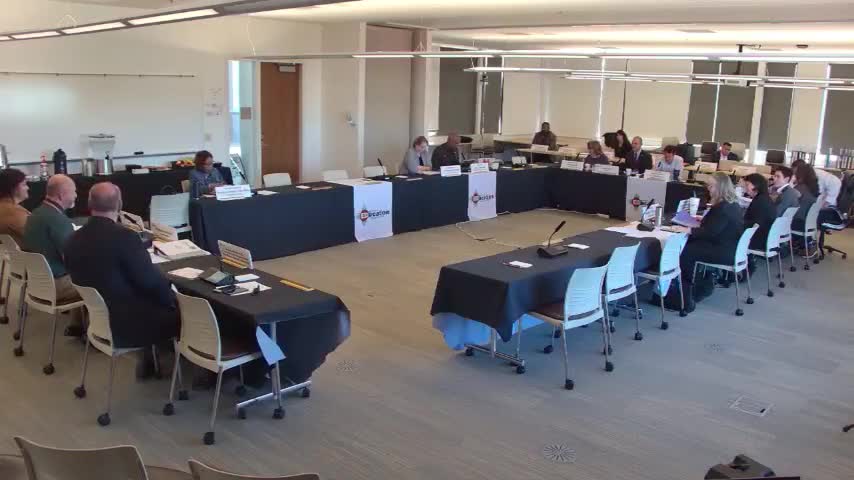
Summary
Superintendents from West Las Vegas Schools and Las Vegas City Schools told the Legislative Education Study Committee they have added career and technical education programs, applied for grants and plan school-based wellness rooms as they address enrollment, attendance and proficiency challenges.
Superintendents for West Las Vegas Schools and Las Vegas City Schools briefed the Legislative Education Study Committee on Tuesday about enrollment trends, career and technical education (CTE) expansions, literacy work and student supports in Las Vegas, New Mexico.
Christopher Gutierrez, superintendent of West Las Vegas Schools, told the panel his district has grown its enrollment by roughly 300 students over several years and reported about 1,588 students last year (1,650 including additional programs). Gutierrez said West Las Vegas reintroduced CTE pathways — commercial drivers’ license (CDL), welding, automotive, plumbing, culinary and graphic design — and that its most recent graduating class included 113 students, 88 with dual-credit honors, five with CDL licenses and seven with welding certificates.
“Those were the highest graduation numbers we’ve had in the past five years,” Gutierrez said, adding his district aims for roughly 90 percent of graduates to earn some dual credit in future classes.
Melissa Sandoval, superintendent of Las Vegas City Schools, said her district is focusing on four levers — systems, leadership, instruction and culture — to reverse enrollment loss and improve outcomes. Sandoval outlined grant activity and program development: her district received a Comprehensive Literacy Grant, Land of Enchantment funding of about $100,000 for CTE work-based learning, and $100,000 in wellness-room funding to equip Memorial Middle School and Robertson High School. Sandoval said the district added agribusiness (supported by Perkins and RCT funding), digital and film pathways, a CDL program with two recent graduates, construction trades and health sciences pathways, and partnerships with New Mexico State University, Luna Community College and New Mexico Highlands University.
Both superintendents said dual-enrollment participation varies by district. Gutierrez reported about 86 of his 113 recent graduates finished with dual-credit honors; Las Vegas City Schools’ stacking of dual-credit hours was lower, Sandoval said, with roughly 35 percent of students leaving high school with more extensive stacked credit.
Committee members pressed both superintendents on math and reading performance, attendance and graduation. Sandoval and Gutierrez said the districts are enhancing professional development, increasing full-day training and restoring intervention roles (such as math interventionists) to address long-term proficiency declines. Gutierrez emphasized vertical alignment across grade spans so teachers coordinate standards and interventions.
On district structure, Gutierrez described historical reasons for two Las Vegas districts: West Las Vegas and Las Vegas City emerged from formerly separate towns and local communities have resisted consolidation. Gutierrez said consolidation would likely raise property taxes for residents on the West side and “isn’t the direction to go” given local political and economic differences.
Both superintendents described workforce pressures and teacher recruitment patterns: districts compete for educators and some departures go to virtual schools. Sandoval said Las Vegas City Schools were fully staffed until recent resignations, while Gutierrez said West Las Vegas’s pay scales have been adjusted to remain competitive. Committee members and superintendents agreed increasing meaningful student opportunities — band, CTE, athletics — supports attendance and reduces chronic absenteeism.
The presentation included several concrete clarifications: West Las Vegas reported 30 new students in the district the day before the meeting and high dual-credit participation among recent graduates; Las Vegas City Schools are pursuing early-college high-school pathways and planning two new wellness rooms. The committee took no formal votes at the meeting due to lack of quorum; superintendents provided updates and asked for continued legislative support.
The superintendents also sought help with math instruction and funding for sustained interventions; committee members said legislative work on funding, training and program reimbursements could support the districts’ goals.