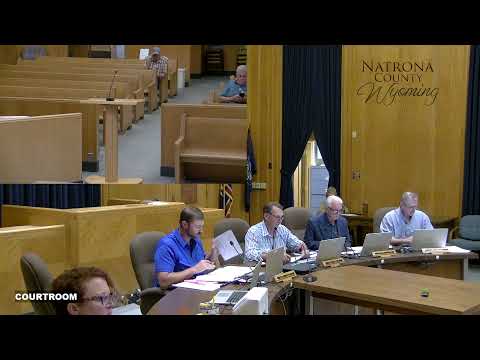
County planner proposes short moratorium on wind and solar permitting while zoning updates reviewed; commissioners ask for more protections and later remove mor
Loading...
Summary
The county planning director proposed an emergency moratorium on wind and solar permitting to allow revision of the county zoning code and to route large projects through the state's Industrial Siting Council first; commissioners questioned whether an emergency was necessary, asked for clearer health, safety and liability provisions, and later a
Natrona County planning staff proposed a short-term moratorium on wind and solar permits so the county can finalize updates to its zoning code and require larger energy projects to proceed first through the state Industrial Siting Council (ISC). Sabrina (planning staff) said the zoning rewrite moves certain large projects to ISC review to take advantage of the council's more prescriptive requirements and to reduce the county's administrative burden for complex applications.
Sabrina told the commission she had not received any formal wind or solar applications to date but had received inquiries and that other Wyoming counties route large projects to ISC before local approval. She recommended publishing a proposed emergency resolution for public comment (45–60 days) while Planning and Zoning finalizes the zoning ordinance changes.
Several commissioners expressed concern about using an emergency resolution without a clear, immediate health, safety or welfare threat. Commissioner Mayo asked whether the county's legal standard for an emergency moratorium was met; Sabrina said she had not assessed statutory emergency criteria and suggested commissioners review the proposed language and provide feedback. Commissioners also raised substantive concerns: whether the zoning rewrite would include insurance and liability requirements for catastrophic failure, whether projects too small for ISC review would be covered by county zoning, and whether the county should include other industrial projects in any moratorium.
Commissioner Coates suggested a broader temporary pause on development elements that would otherwise be affected by the ISC routing; Sabrina said that could be done but would require careful drafting because ISC thresholds would not capture smaller projects. Commissioners asked staff to draft clearer language on insurance, financial assurance and public-safety protections and to circulate revised language for public review. No emergency moratorium was adopted at the meeting.
Later in the meeting a formal motion by Commissioner Coates removed the emergency moratorium item from the published agenda; the motion passed without recorded opposition. Commissioners said they would continue work with planning staff, the county attorney and stakeholders to finalize zoning language and to provide a public-comment period before any moratorium or ordinance change is adopted.