Kirkland expands in‑house administration of Kirkland Cares program after first year; 461 households served
Loading...
Summary
Council received a status report on Kirkland Cares, the city's low‑income support program. In 2024 the program verified 461 households and delivered over $245,000 in direct financial support; city staff are continuing administration after an initial contractor period and recommended outreach and interagency coordination as the program matures.
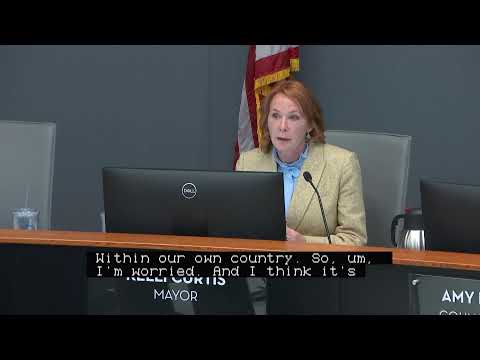
Kirkland staff on March 18 briefed the City Council on year‑one outcomes from Kirkland Cares, the city’s low‑income support program, and described the transition from an outside administrator to city operation and a plan for administering the program through the 2025–26 biennium.
Mike Olson, Director of Finance and Administration, and Andrea Peterman, Senior Financial Analyst, reported that 461 households were verified for assistance in 2024 and that the city provided more than $245,000 in support across discounts and rebates. “Four hundred fifty households were verified by Forward [the initial third‑party administrator], and the city verified an additional 11 after we took operations in house,” Olson said.
The program’s largest expenditures were direct utility discounts (treated as reduced city revenue) and rebates for multifamily residents who pay utilities through rent. Staff noted neighborhood concentrations of participation — higher participation in Totem Lake, Juanita and Kingsgate census tracts — and demographic patterns: 70% of awarded households earned less than 30% of King County AMI, and 53% of participants were age 65 or older.
Key operational changes and costs
- Administration: Council provided one‑time funding of $680,000 in the prior budget to expand eligibility and contracted with a third‑party administrator (Forward) for initial implementation. Beginning October 1, 2024 the city took over the application and verification process; the city created and funded a temporary program coordinator position (starting April 1) to manage administration through the remainder of 2025.
- Program scale and categories: The initiative included direct utility discounts for residents who pay the city for utilities, pet license reductions, and rebates for multifamily tenants who pay utilities indirectly via rent. Staff noted increases in discounted utility accounts: garbage discounts grew 95% from December 2023 to December 2024; combined water and sewer discounted accounts rose about 70% over the year.
- Budget outlook: About $575,000 remains available in the 2025–26 biennial budget for program activities. Staff disbursed roughly $37,000 in rebates in 2024 (in addition to discount revenue reductions) and incurred $68,000 in administrative and vendor fees. Staff modeled several participation scenarios tied to expansions (for example, if all low‑income housing units participated, annual rebates might approach $450,000), but recommended further analysis before enlarging automatic eligibility.
Council feedback and next steps
Council members applauded the program and urged staff to continue coordination with community partners and neighboring utilities. Several members — including Councilmember Falcone and Deputy Mayor Arnold — asked staff to explore partnering with other local utility districts (Northshore, Woodinville, etc.) to expand coverage for residents served by non‑city utilities and to bring those partners’ funding to the table where possible, while retaining the city as a single intake point.
Staff will also examine: (1) options to expand the program to residents whose utilities are handled by other districts, (2) whether program income thresholds should align with related regional benefits (for example, King County property tax exemptions for seniors), and (3) whether data collection and outreach can be improved to reduce applicant confusion about award amounts.
Quotations
- "Four hundred sixty‑one new households were approved for the program and the city provided over $245,000 in financial support," Mike Olson, Director of Finance and Administration, said.
- "The city has created a new one‑time position to help manage the program — that position will start April 1 and be the primary point of contact for applicants," Olson added.
Ending note: Staff will continue administering Kirkland Cares for the 2025–26 biennium, collect more program data, pursue outreach partnerships (notably For Tomorrow) and analyze the budget impact of any future expansion before bringing recommendations to council.