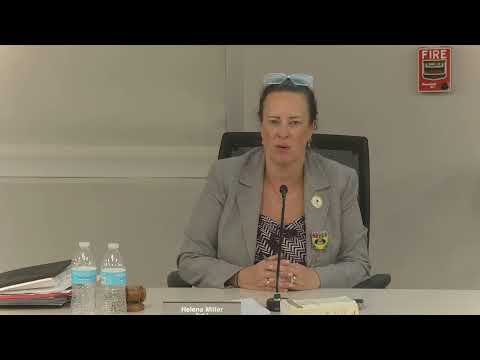
Independent analyst warns Rock Hill Schools of $15.8 million recurring shortfall; board and staff weigh revenue, cuts and program changes
Loading...
Summary
An independent financial analyst told the Rock Hill Schools Board of Trustees on March 19 that the district’s current budget relies on roughly $15.8 million in one-time revenues and that relying on one-time funds to cover recurring costs is not sustainable.
An independent financial analyst told the Rock Hill Schools Board of Trustees on March 19 that the district’s current budget relies on roughly $15.8 million in one-time revenues and that relying on one-time funds to cover recurring costs is not sustainable.
Gary Miley, the independent financial analyst contracted to review the district’s finances, told the board, “You have a problem. It’s an addressable problem,” and said the district had used one-time transfers from the fund balance and capital accounts to balance the current year.
The analysis, presented at a specially called meeting, found that the district added dozens of full‑time positions over recent years even as enrollment declined and that roughly $3 million in salary adjustments increased recurring costs. Miley advised the board and administration to produce a FY2025–26 budget with as little one‑time revenue as possible and to prioritize placing the finance director in a direct reporting relationship with the superintendent.
Why it matters: using one‑time money to fund recurring expenses can create repeated shortfalls in future years. Board members pressed for a fuller set of options — not only cuts — that could include revenue increases, capital transfers and operational changes.
Key numbers and options discussed - One-time funds used in the current budget: approximately $15,800,000 (Miley’s estimate). - Shortfall referenced for FY2025–26: Miley cited a similar figure and warned the district must identify recurring revenue or cuts to eliminate the gap. - Millage: Board staff (Miss Webb) said the district’s value of a mill is approximately $360,000; raising 9 mills would generate roughly $3,200,000 annually. Webb also said a prior millage increase two years earlier generated about $7,700,000. - Capital funds: Board staff (Miss Smith) said $8,000,000 of bond/capital proceeds already are allocated to balance the current year; roughly $7,000,000 could be returned from capital to the general fund if the board chooses.
Board discussion and alternatives Board member Donald Belton, who asked many of the questions during the public discussion of the report, said the district is solvent and has cash on hand but acknowledged the need to make difficult choices to avoid recurring reliance on one‑time funds. “Rock Hill Schools is not broke,” Belton said, urging the community to understand the distinction between cash on hand and recurring funding needs.
Belton and other trustees asked for a “full buffet” of options rather than a single menu of cuts. Staff and the consultant noted alternatives the board could consider: targeted cuts or attrition, a millage (tax) increase for recurring revenue, limited transfers from capital (one‑time), and revenue generation from facility rentals and naming/partnership policies (both currently limited in scale).
Program proposals tied to budget reductions Superintendent (Doctor) Jones and staff presented program-level proposals intended to preserve services while reducing recurring general‑fund costs if needed: - Day treatment program: recommendation to outsource day‑treatment personnel and services to an external medical/provider partner so the district can continue capacity elements while reducing direct payroll costs; the district would retain one teacher position while providers supply clinical staff. - Mental‑health therapists: recommend transitioning therapists to billing Medicaid and allowable insurance for eligible students while keeping two district‑funded therapists on staff so students without billable coverage still have access. Staff said this billing model is used in neighboring districts. - Rock Hill Virtual Academy: recommend focusing virtual course offerings at the high‑school level (where enrollment is highest) and discontinuing the middle‑school virtual format that serves roughly 80 students. Staff said the change would save the equivalent of about 7.5 teacher positions.
Process and next steps Board members instructed staff to develop a broader set of options and noted the budget calendar: internal updates through spring, a public hearing in June and final budget approval thereafter. Staff said procurement and legal constraints may affect timing and feasible uses of capital proceeds and federal funding.
Ending The board received the report and directed administration to continue developing a balanced FY2025–26 budget with options that prioritize classroom programs while addressing the recurring shortfall. The meeting then moved on to additional agenda items, including a separate discussion and vote on a district office reorganization.