
Union speakers press board for living wage as county moves forward with 3% nonbargaining COLA and one‑time fiscal close fixes
Get AI-powered insights, summaries, and transcripts
Subscribe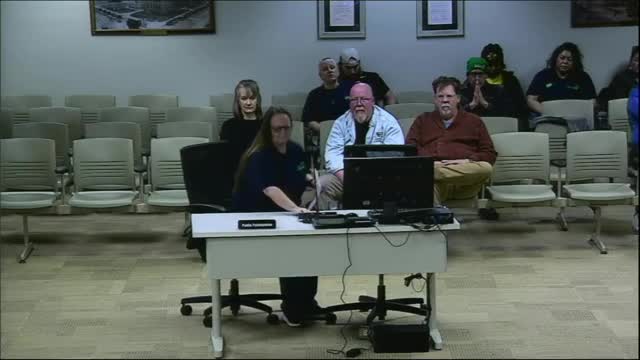
Summary
Public commenters representing Local 900 and AFSCME urged larger wage increases for county employees. County staff said a 3% cost‑of‑living adjustment for non‑bargaining employees will be implemented (with back pay) and the board approved a one‑time resolution to balance FY24 overdrawn lines; some members voiced concern about timing and planning.
During public input at the March 20 Champaign County Board meeting, county employees and union representatives urged the board to address pay and staffing concerns while the board discussed administrative measures that affect pay or fiscal administration.
Cece Phillips, identified in the meeting as Local 900 union president and a county circuit‑clerk employee, told the board that county bargaining proposals offering 1%–2% do not meet employees’ needs and said many AFSCME members work second jobs to make ends meet. Bobby Johnson, a 20‑year county employee in the Public Defender’s Office and secretary of his AFSCME unit, described the cumulative effect of small annual increases and rising insurance costs on retention.
Board and staff responses and administrative actions:
• County staff told the board they budgeted for a 3% increase for non‑bargaining employees and now intend to implement that 3% increase with historical back pay practices; Michelle (county staff) said the increase should take effect by April at the latest.
• The board also approved a one‑time resolution authorizing the county executive to balance overdrawn lines for fiscal year 2024 so the fiscal year can be closed. Several members — including one who said the payroll split that caused the issue was known a year ago — pressed staff and elected officials on why the fix was arriving in March rather than earlier.
Why it matters: union speakers framed pay as a retention and equity issue for essential county services; staff said they were trying to balance fiscal realities and bargaining negotiations while minimizing cuts. The one‑time FY24 balancing measure was described by staff as a temporary fix to complete closeout procedures, not a permanent policy change.
Next steps: bargaining committee and labor management negotiations will continue; staff and board leaders said they will pursue the best contract the county can afford and that non‑bargaining employees will receive the 3% adjustment with back pay, per the county’s historical practice.