
Senate debates bill restricting DEI practices by city and county governments
Get AI-powered insights, summaries, and transcripts
Sign Up Free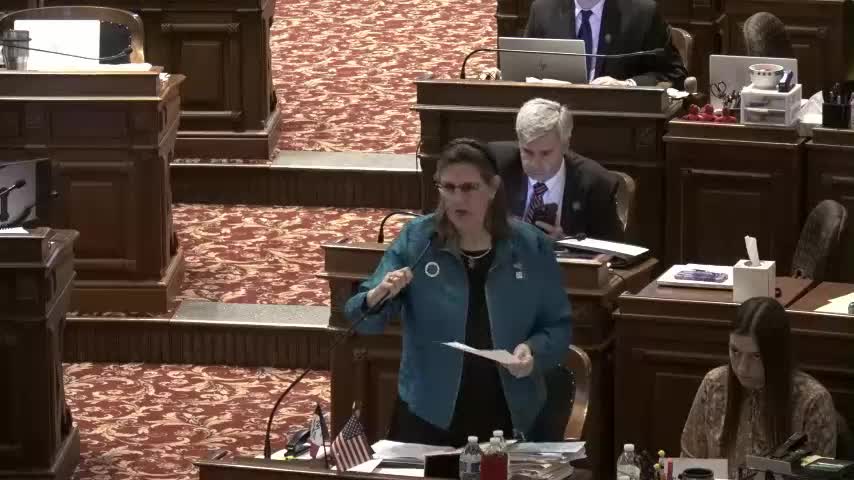
Summary
Senate File 507 drew extended debate over whether the bill would bar local governments from contracting for diversity, equity and inclusion (DEI) positions, requiring DEI statements, or giving preferential consideration based on DEI statements, while preserving an exception for law-enforcement training under Iowa Code section 80B.11G.
Senate File 507 drew floor debate after being called up for opening remarks, as senators questioned whether the bill’s prohibitions on local DEI practices would limit recruitment and training used by law enforcement and other public services.
"Senate file 507 prohibits city and county governments, including boards and offices of the same, from adopting any ordinance, motions, resolutions, amendments, or policies, except as provided by state or federal law that do any of the payment employee or contracts with a third party to perform duties of a DEI office. Compels requires, induces, or solicits any person to provide a DEI statement or gives preferential consideration to any person based on provisions within a DEI statement," an opening speaker on the bill said on the Senate floor (transcript). The opening remarks identified the scope as applying to city and county governments and their boards and offices.
The body debated exceptions in the bill. Senator Krombach, who questioned details of the exception, said the bill contains a carve-out for trainings and programming consistent with "section 80B.11G." Krombach asked the bill sponsor to explain the content of that section. In floor discussion Krombach described the statute’s law-enforcement training requirements and argued that diversity instruction — including de-escalation techniques, implicit-bias instruction and material on the civil-rights movement — is part of effective policing. "Diversity and merit are not antithetical," Krombach said. "If you want the most qualified police officers, you have to search as broadly as possible. The bigger the pool of applicants, the more likely it is you're gonna find the best possible person." Krombach said he will oppose the bill because, in his view, it would bar outreach to underrepresented groups and could harm recruitment and public trust.
The sponsor (identified in the transcript during floor discussion as the senator addressed by colleagues) said law enforcement requested that the bill not change existing training requirements and that the bill therefore preserves the training exception for section 80B.11G. "Law enforcement requested that we did not change their training, and we did not," the sponsor said on the floor. The transcript records repeated exchanges about whether the exception was included and why; the sponsor said that the bill’s focus was local government hiring and promotional practices rather than law-enforcement training.
The transcript records questions and extended remarks but does not record a final vote on Senate File 507; debate continued until the Senate recessed. The record includes a detailed floor-level description of what the bill would prohibit and at least one senator’s stated intent to oppose the measure. The text of the bill and the referenced Iowa Code section 80B.11G are mentioned on the floor; the article does not interpret those statutes beyond the floor statements and recommends checking the bill text and Iowa Code for final legal definitions and exceptions.