
Committee to adopt town email accounts; chair warns against group email threads under right-to-know rules
Get AI-powered insights, summaries, and transcripts
Subscribe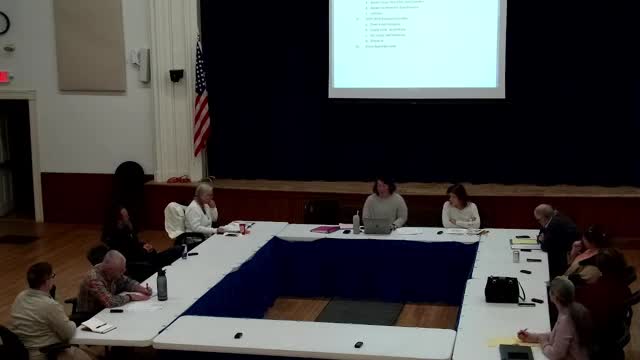
Summary
Town IT will supply town email accounts for budget committee members to centralize distribution of financial materials; the chair cautioned members not to conduct committee business via group email because of Right-to-Know Act recordkeeping requirements.
Town staff will set up official town email addresses for Kingston Budget Committee members to receive financial materials, the chair said at the March 26 meeting, and the committee was given guidance on how to use the addresses to comply with New Hampshire’s Right-to-Know (RSA 91-A) requirements.
The chair explained that the town will issue official email accounts and that she will BCC committee members when distributing financial information so recipients do not inadvertently create a serial meeting or an unadvertised deliberation. “All of our discussions with if we are have quorum are public discussions,” she said, explaining the rationale for centralized town email accounts and blind-copy distribution.
Members raised practical issues: one member said the town-format emails sometimes produce printing and PDF conversion problems on Apple’s Safari browser, making it difficult to print documents directly from the message. Town staff offered to troubleshoot individual members’ printing issues but reaffirmed that town email accounts are being adopted to centralize official communications and records.
The chair reminded members that responding-all to a committee-wide email could trigger Right-to-Know obligations and create records that must be retained and made available. She instructed members to route requests for committee information through the chair so that official distributions remain clear and auditable.
The guidance is procedural: it does not change public-access policy but clarifies how committee business should be conducted to remain compliant with state open-meetings and public-records law.