
Planning commission approves preliminary PUD for 45,000‑sq‑ft Walmart at Honey Farm Crossing with signage, fence conditions
Get AI-powered insights, summaries, and transcripts
Subscribe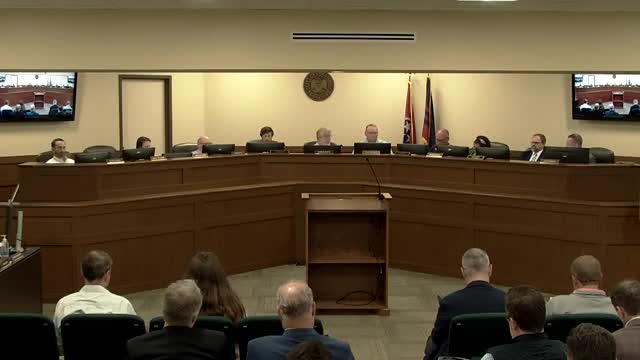
Summary
The Planning Commission approved a preliminary planned‑unit development for a 45,000‑square‑foot Walmart at Honey Farm Crossing, granting several deviations from the zoning ordinance while requiring the removal of a proposed south‑side brand wall and directing the applicant to work with staff on privacy‑fence materials.
The Columbia Municipal Planning Commission approved a preliminary planned‑unit development request for a 45,000‑square‑foot Walmart at Honey Farm Crossing, a 7.49‑acre parcel at the northeast corner of Nashville Highway and Honey Farm Way.
Commissioners voted to grant multiple deviations from the city’s zoning ordinance for the planned development, but required the developer to remove a proposed branded ‘‘side wall’’ on the south elevation and to work with staff on more durable privacy‑fence materials along the north boundary.
Staff planner Austin Brass said the project had been revised several times and ‘‘has come a very long way’’ toward meeting ordinance standards. Brass described the site plan and landscape plan in detail, noting the project meets several major requirements: an internal drive section with two 11‑foot travel lanes and a continuous sidewalk, parking‑lot landscaping and perimeter hedge rows, and primary facade materials of brick. Brass also told commissioners the applicant had improved the rear elevation from a blank CMU wall to brick.
Brass identified the deviations the applicant requested: exceeding the 180‑foot maximum building‑site frontage (within the staff‑allowable 20% deviation), reduction of an evergreen buffer on the north boundary (proposed to be replaced with a 6‑foot shadow‑box wood fence and tree line), less than the ordinance’s required 50% glazing on certain primary elevations, and larger signs than the code allows. The ordinance limits freestanding monument signs to 50 square feet at 10 feet high and limits wall signage square footage; the applicant proposed a 100‑square‑foot freestanding sign and larger wall signs than the 32‑square‑foot limit described in staff materials.
Joseph Parsley, the civil engineer on the project with Carlson Consulting Engineers, told the commission the retaining wall at the rear would be a segmental block wall with varied block sizes and that the applicant proposed to omit evergreen shrubs at the base ‘‘just because the location being at the rear of the property’’ and concerns about maintenance. Parsley said the wall primarily serves truck circulation behind the store.
Kirsten Whitehead of HFA, the project architect, said the applicant had reduced the original pole‑mounted brand signage to monument signs to better conform with the ordinance and that Walmart’s corporate branding requirements drove the requested wall and monument sizes. She said the design team had reduced its standard corporate sign size for the site: ‘‘We are maintaining branding standards for Walmart, but we have also reduced that, so what you are seeing is actually a reduction from what their standard brand is.’’
Commission discussion focused on signage scale and location, the amount of glazing on street‑facing walls, the proposed substitution of a fence for required evergreen trees in a 75‑foot buffer, and the durability/aesthetics of the fence given nearby utility easements. Commissioners asked staff and the applicant about sidewalk connectivity and long‑term pedestrian access as surrounding parcels develop.
A motion to approve the preliminary PUD and associated variances passed after a commissioner added the condition that the proposed Walmart sign on the south (Honey Farm Way) elevation be removed. The motion was amended to allow the applicant to work with staff on improved privacy‑fence materials (for example, composite panels and metal posts) rather than a simple wood fence. Staff will review final signage, lighting and material details in the plan‑review process before building permits are issued.
Next steps: the applicant must submit final site plans and sign details for staff review; any signage or plan changes that differ from the approved PUD will be reviewed under the city’s sign code and plan‑review requirements.