
Senate bill would bar collection on debts tied to identity theft and 'coerced debt'; advocates urge streamlined evidence options
Get AI-powered insights, summaries, and transcripts
Subscribe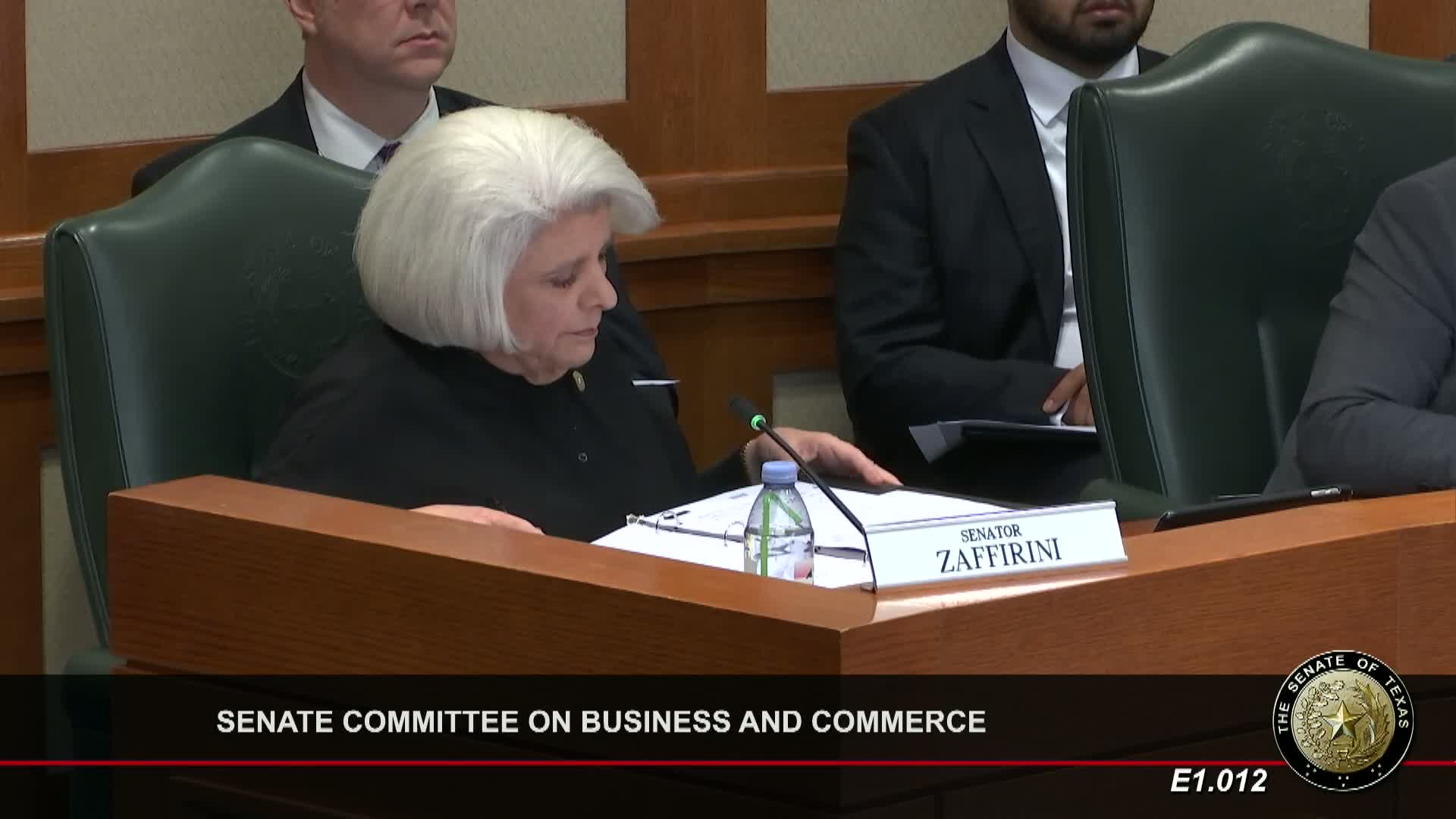
Summary
Senate Bill 2902, authored by Senator Zaffirini, would prohibit creditors and collectors from pursuing consumer debt against victims of identity theft and coerced debt when the consumer provides specified documentation. Survivor advocates and academics urged the committee to add a police report as an accepted form of proof.
Senator Zaffirini laid out Senate Bill 2902, which would expand protections for victims of identity theft and "coerced debt"—a form of economic abuse in which an abuser fraudulently incurs credit in a victim’s name. The bill would bar creditors and third‑party collectors from attempting to collect a consumer debt from a victim of identity theft if the consumer provides a court order or a copy of a Federal Trade Commission (FTC) identity‑theft victim report. The measure would also require creditors and collectors to notify all parties involved with a disputed debt that it is no longer collectible from the victim.
Professor Angela Littwin of the University of Texas School of Law and Lauren Duveros of the Texas Council on Family Violence testified in support. Littwin described examples from research and recommended adding a police report as an accepted form of evidence: "Police reports are the standard way that identity theft is verified, and that they are a person who is does a police report falsely is subject to criminal charges," she told the committee. Duveros said coerced debt has a disproportionate impact on survivors and urged the committee to approve the bill to give victims a pathway to relief.
Senator Zaffirini said the bill is refiled from a prior session and would not apply to home loans or collection of previously obtained judgments. The committee took public testimony and left the bill pending.