
Committee adopts substitute allowing chief appraiser to grant cemetery tax exemptions when owner unidentifiable
Get AI-powered insights, summaries, and transcripts
Subscribe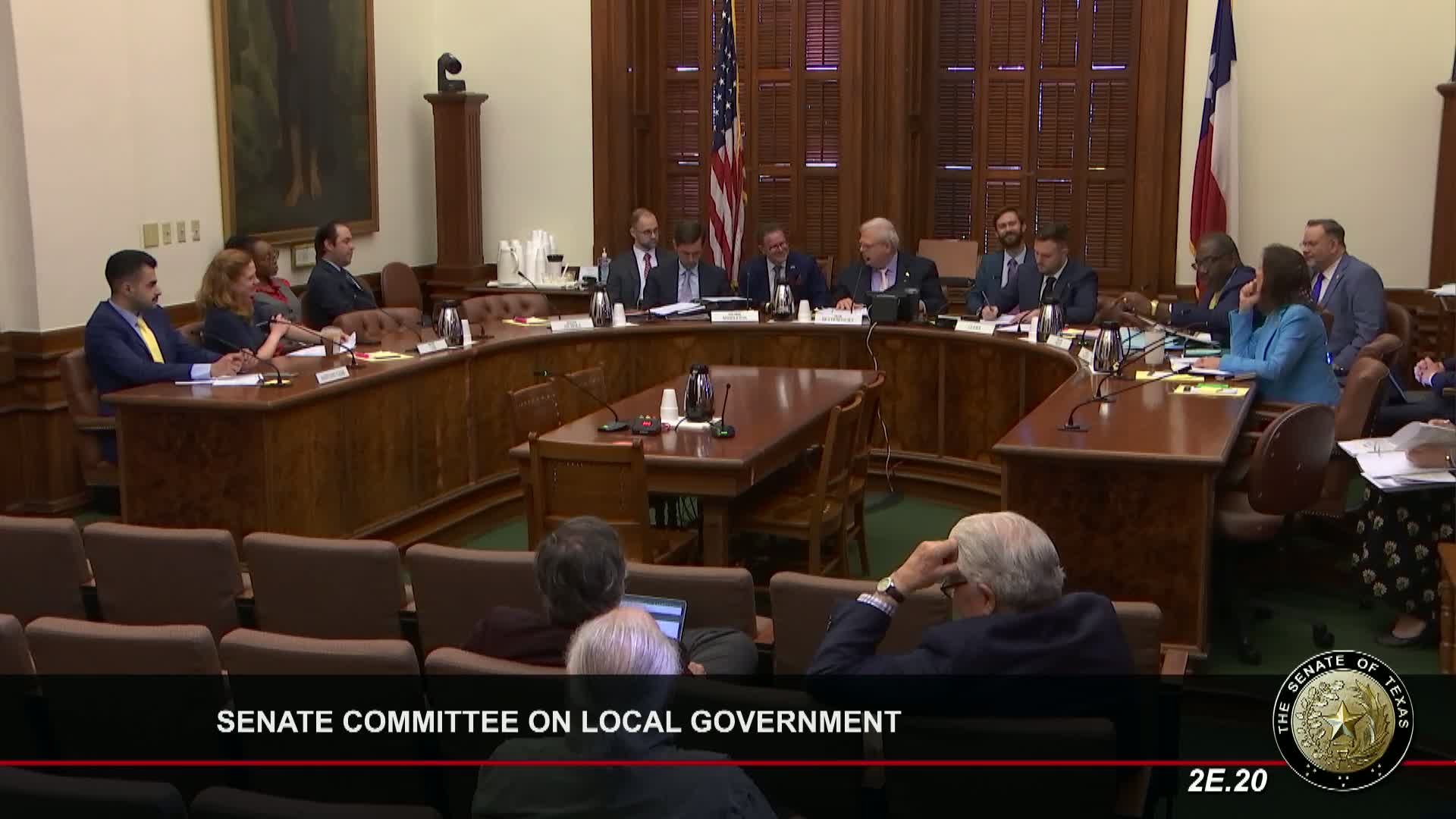
Summary
A committee substitute to Senate Bill 1,920 was adopted and reported out of the Senate Committee on Local Government. The substitute directs appraisal districts’ chief appraisers to grant property tax exemptions for cemetery land if no applicant exists and the land is identifiable as a cemetery.
The Senate Committee on Local Government adopted a committee substitute to Senate Bill 1,920 on Oct. 12 and reported that substitute to the full Senate with a recommendation that it pass and be printed.
The committee substitute says a chief appraiser of an appraisal district shall grant a property tax exemption for land used for human burial if no person applies for the exemption and the appraiser knows or should know, based on a reasonable inspection, that the property is a cemetery and the owner is not identifiable. The substitute permits chief appraisers to consult a county historical commission or a nonprofit organization to help determine whether property is a cemetery.
Why it matters: Some cemetery parcels have unclear ownership but contain human remains; without an exemption process recognized by appraisal officials, former burial grounds can remain on tax rolls and face administrative or market pressures. The substitute provides a mechanism at the appraisal-district level to grant exemptions when no applicant is present.
Committee discussion and context
Senator West explained the substitute and emphasized practical problems with older, often low-value cemetery parcels. A committee speaker noted an example from committee investigation that some parcels have annual property taxes of roughly $10, limiting the effectiveness of ordinary property-tax enforcement or foreclosure as a means to address abandoned burial sites. The substitute allows appraisal officials to rely on reasonable inspection and local historical or nonprofit expertise when ownership is unknown.
Formal action
The committee adopted the substitute by voice/roll-call vote and reported it to the full Senate with a recommendation that it pass and be printed; the roll call recorded five ayes and no nays. The committee also recommended the committee substitute for placement on the local and uncontested calendar.
What the record does not show
The hearing record summarizes the committee substitute but does not cite a statute number or provide the full substitute text on the transcript. Implementation details—such as how appraisal districts will document inspections, how nonprofits or county historical commissions will be designated, or timelines for applying exemptions—are not specified in the committee transcript and will depend on the substitute’s enacted text.
Next steps
The substitute was reported to the full Senate and recommended for the local and uncontested calendar; floor consideration will follow according to the Senate’s scheduling procedures.