
University faculty urge Board to allow theatre and speech subject endorsement for secondary teachers
Get AI-powered insights, summaries, and transcripts
Subscribe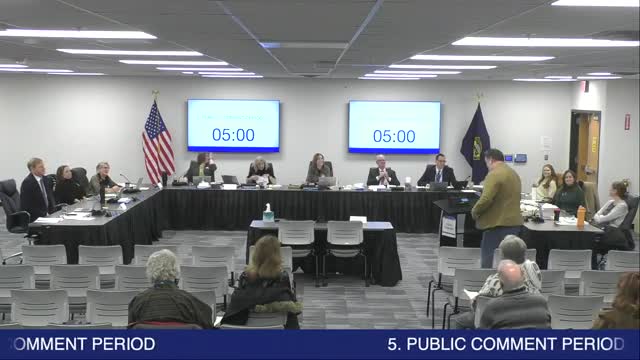
Summary
Three university theater professors testified during public comment urging the State Board to permit a secondary subject endorsement in theater and speech, arguing it would expand the pipeline of qualified teachers and strengthen arts instruction in Nebraska schools.
Three university theater educators told the State Board during public comment that restoring or permitting a subject endorsement in theater and speech for secondary teachers would boost the number of qualified instructors and strengthen arts education statewide.
Ryan Kathman, a professor of theater at Nebraska Wesleyan University, described theater and speech coursework as producing adaptable students with leadership, collaboration and communication skills. “These are qualities that Fortune 500 CEOs overwhelmingly say they’re looking for,” Kathman said, urging the board to approve the change to allow secondary education majors to earn a subject endorsement in theater and speech.
Dan Hayes, director of theater at Midland University, and Robin McKercher, a professor at Doane University, provided examples from their institutions of students prepared for teaching positions and noted open secondary theater positions across Nebraska. McKercher said the number of Nebraska-origin scholarship recipients has slipped and that the state loses potential teacher candidates to neighboring states that still offer theater-education endorsements.
Supporters asked the board to amend rules (Rule 24 and related endorsements were mentioned during public comment) so that teacher-preparation programs and universities can offer a clear pathway to licensure for theater and speech instructors. They urged the board to consider the local workforce implications (unfilled positions, student recruitment) and to coordinate with educator-prep providers on an endorsement framework.
Board members received the public comment as part of the public allowed period; the item was not on the board’s formal agenda for action. Board staff and committee chairs later noted that the Rules Committee is reviewing endorsements and that the committee had asked for Attorney General guidance on certain endorsement certification questions.