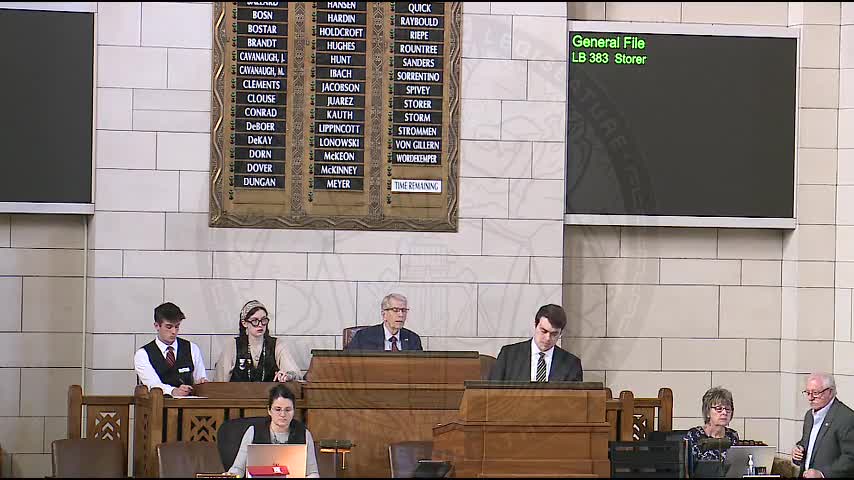
Senate adopts technical changes and advances parental-rights social media bill amid free-speech concerns
Loading...
Summary
The Legislature advanced LB383, a parental-rights and social-media measure, after floor amendments that clarify enforcement and funding. Supporters said the bill protects minors from manipulative platform design and predatory content; opponents warned of First Amendment and privacy risks and predicted litigation.
The Legislature advanced LB383, a bill that would require age verification and parental consent before minors may use certain social-media features and that increases parental access to a minor’s account settings and posts. Sponsors said the measure seeks to protect children from the addictive and predatory design features of social platforms; opponents raised First Amendment and privacy concerns and warned the law could be subject to court challenges.
Sponsor Senator Storer told colleagues the state has a ‘‘compelling interest to protect minors from predatory online behaviour’’ and described LB383 as tailored to that goal. The bill’s drafters said it avoids the broad exclusions that led a recent Arkansas statute to be enjoined in federal court and includes targeted exemptions (for example, for basic broadband transmission and services that are not interactive social platforms).
The floor adopted several committee divisions and technical amendments. Senator John Kavanaugh offered an amendment to clarify constitutionally required apportionment of enforcement fines to the common school fund; that change (AM 10 07) was adopted 39–0. The committee’s second division (which included language from Senator Harden to expand the state’s Child Sexual Abuse Material definition to explicitly include computer- or AI-generated images) was adopted as well. A later technical amendment delayed the bill’s enforcement date to July to give platforms time to comply (AM 10 16), and the chamber recorded subsequent adoption votes for both divisions and technical fixes.
Several senators said they support the bill’s protective intent but remained worried about legal exposure. Senator McKinney said the measure ‘‘may chill a broader spectrum of constitutionally protected speech’’ and listed several concerns, including mandatory parental monitoring provisions and age-verification methods that could require users to submit identifying information. Senator DeBoer said she would work with the sponsor on “belt-and-suspenders” language to reduce risks to speech rights and to refine age-verification approaches.
Sponsor and committee offices told senators that an age-verification mechanism in the bill requires verifiers to dispose of identifying information after confirming age. Senator Storer said whether a platform uses an in-house verifier or a third-party service, the statute requires disposal of the verification source and prescribes penalties if it is retained.
On procedural votes, the Legislature adopted AM 10 07 (apportion fines to the common school fund) and the committee divisions, approved a technical enforcement-date amendment, and advanced LB383 to E & R initial; the clerk recorded the vote on advancement as 38–2.
The bill now proceeds to enrollment and review and later select file where sponsors and opponents said they expect further amendment and that constitutional questions could be raised by challengers in federal court. Supporters said the measure is a narrow, targeted tool to allow parents more oversight of minors’ accounts and to limit minors’ exposure to manipulative platform design; opponents said existing platform tools and education may be a preferable path.