
Appropriations committee reviews Louisiana judiciary's $220 million FY26 request, including CASA, specialty courts, tech and security
Get AI-powered insights, summaries, and transcripts
Subscribe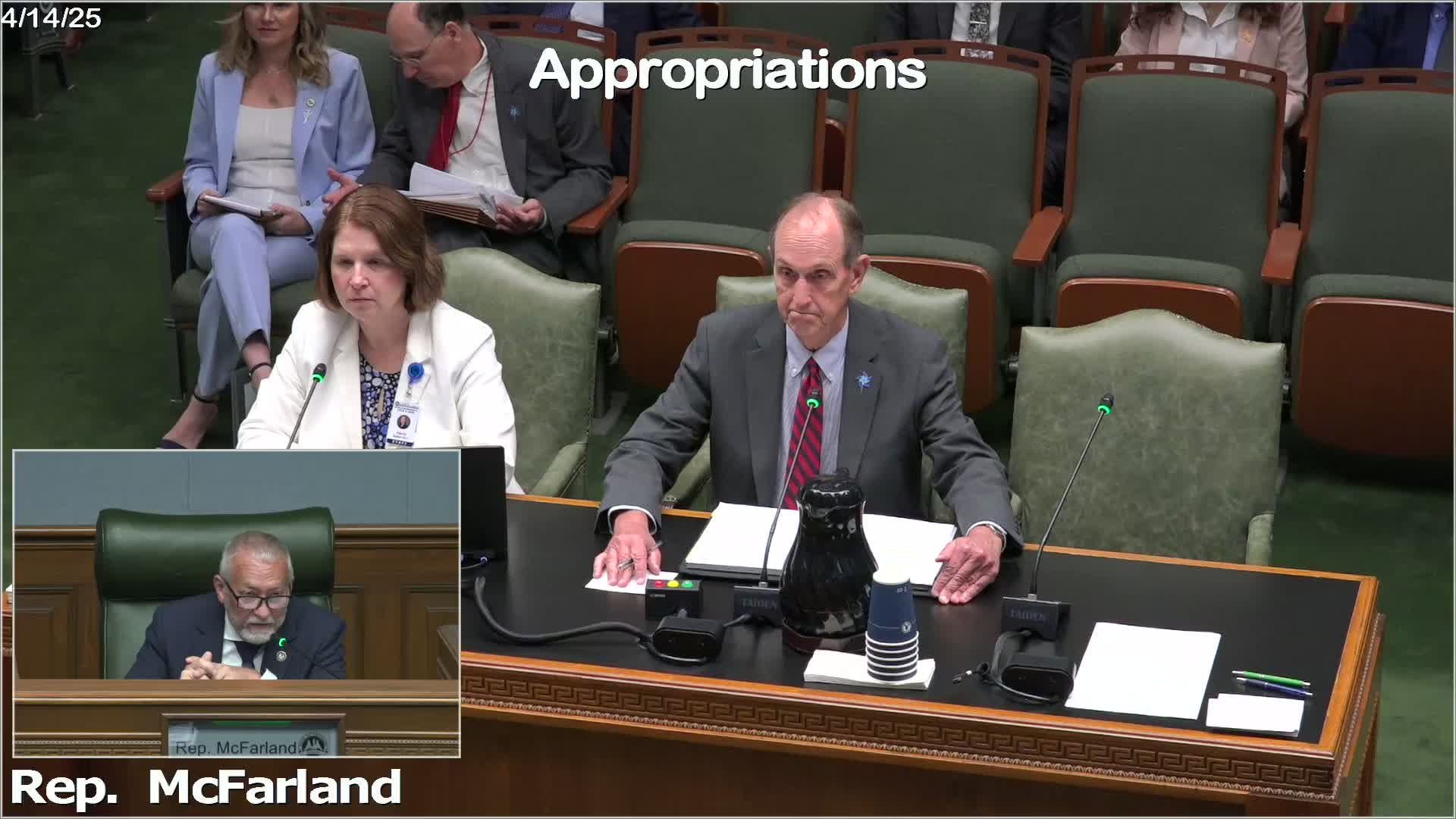
Summary
The House Appropriations Committee heard the judiciary's fiscal 2026 budget request on April 14. The judiciary asked for roughly $220 million total, about $199 million in state general fund, and sought increased funding for judges' pay, court technology, security upgrades and programs including CASA, drug and specialty courts and FINS (truancy)
The House Committee on Appropriations on April 14 received the Louisiana judiciary's fiscal 2026 budget presentation, which proposed a roughly $220 million total budget with about $199 million in state general fund support and multiple targeted increases for judges' pay, court technology, security and specialty programs.
Why it matters: the judiciary's budget funds salaries and operations for the Supreme Court, courts of appeal, district courts and statewide programs such as CASA (Court Appointed Special Advocates), drug and specialty courts, and the Families in Need of Services (FINS) program. Committee members pressed the judiciary on how new requests fit amid declining filings, a pending workload study and the state’s fiscal constraints.
The presentation, delivered by agency staff and by Chief Justice John Weimer, said the judiciary's FY26 request totals about $220,000,000. Of that, the state general fund portion was reported at roughly $199,000,000. The Supreme Court portion of that request is the largest single share: roughly $98,900,000 (about 45 percent). Courts of appeal and district courts were listed at about $57,000,000 and $59,000,000 respectively; other courts and non‑statutory items made up smaller amounts.
Miss Robinson, presenting the package, described line‑item increases the judiciary is seeking: an $11,000,000 increase in state general fund overall, an estimated $6.8 million for judges' salary increases, $2.2 million for staff cost‑of‑living adjustments, higher health insurance premiums, operating expense increases and several technology and position requests. The judiciary asked for technology funding (a $5,100,000 request in the presentation) and security upgrades; the figures differed by speaker in the hearing record: Robinson listed $3,600,000 in security upgrades targeted to multiple courts, while Chief Justice Weimer later referenced an $8,600,000 one‑time security request outside the regular judicial budget.
Specialty and problem‑solving courts: the Supreme Court oversees 67 specialty courts statewide (about 38 are drug courts). Presenters said those programs served more than 5,000 people in 2024 and reported a recidivism rate of 5.8 percent in 2024, down from 8 percent in 2023. The judiciary described drug courts, reentry courts, veterans treatment courts, behavioral health and family preservation courts as part of its request and characterized continued investment as an alternative to incarceration.
CASA and FINS: Amanda Moody, the state director for CASA, told the committee CASA now has volunteers covering all 43 judicial districts after a 2023 expansion. She said CASA served 1,799 new children in the last year and recruited 319 new CASA volunteers; the presentation packet showed 1,861 CASA cases closed in 2024, with 881 children reunited with biological families and 384 placed in permanent adoptive homes. The judiciary also requested expanded funding for the FINS (Families in Need of Services) program to address truancy and related youth interventions; Chief Justice Weimer said the court system plans local summits and a stakeholder “kitchen cabinet” to coordinate truancy interventions.
Technology and the court modernization fund: the judiciary described a court modernization and technology fund created by a 2023 appropriation of $5,000,000. Judicial staff said $720,000 of that appropriation has been spent so far on district‑court server and security upgrades; the fund was described as split between district court projects and statewide projects such as an integrated case management system and a judicial portal. Chief Deputy Judicial Administrator Brian Wiggins said district court projects prioritized internet connectivity and server upgrades in rural parishes; Wiggins said judges were asked to submit discrete, court‑specific projects and that the judiciary will reopen a request process to clarify allowable uses.
Judges’ compensation, stipends and reserve funds: committee members pressed the judiciary about recent stipend payments and future pay requests. Chief Justice Weimer and staff described a constitutional protection for judges' pay and noted that the judiciary retains a reserve fund; the CFO reported about $56,000,000 in the reserve, with roughly $13–14 million unencumbered, about $8 million restricted and about $34 million committed. Members raised concerns that a stipend paid in a prior year could be converted into a permanent pay increase and thus become constitutionally protected going forward; the committee also asked the judiciary to defer compensation changes until the workload study is finished.
Workload study and judicial commission: Weimer said judges volunteered data for a workload (work point) study being evaluated by the National Center for State Courts, with results expected in October. The committee also heard that a recent constitutional amendment changed the composition and scope of the Judiciary Commission; presenters said the commission had one investigator and had requested additional investigators and attorney support, and the judiciary asked for funding to expand that capacity.
Questions and pushback: members acknowledged investments in CASA and specialty courts but repeatedly sought clarity on how salary increases, reserve use and potential reductions or reallocations of judges would be handled once the work point study is complete. Several members expressed concern that filings have declined year‑to‑year and that judicial staffing and salary increases should be considered in light of the upcoming workload data and the state’s overall fiscal shortfall.
What happens next: the committee continued questioning judiciary officials and staff; no formal votes were taken during the hearing. The work point study results, the judiciary’s technology project lists, and further budget negotiations were signaled as likely inputs to the committee’s later decisions.