
Senate approves limit on fees for companies assisting veterans with benefits claims after extended debate
Get AI-powered insights, summaries, and transcripts
Subscribe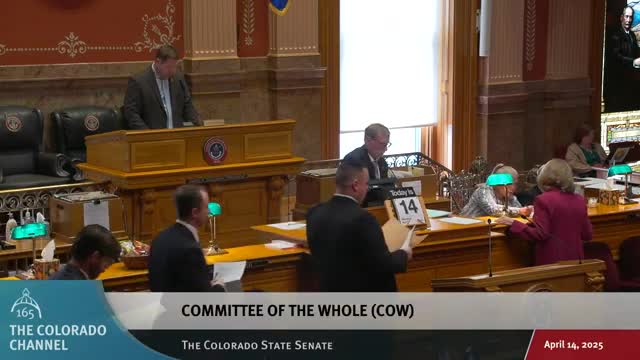
Summary
The Senate passed Senate Bill 2-82, a compromise measure that sets statutory limits and consumer-protection rules for persons providing services related to veterans benefits claims after a lengthy floor debate and sponsor testimony about uneven access to VA-accredited help.
The Colorado Senate passed Senate Bill 2-82 on April 14, a measure that places statutory consumer-protection limits on persons who provide services related to veterans benefits claims, after debate that split supporters and opponents on the floor.
Sen. Kevin Priolo Ball (sponsor) and Sen. Brittany Pelton B. described the bill as a compromise crafted with traditional veterans organizations and industry stakeholders to address what supporters characterized as an unregulated market of unaccredited companies that can mislead veterans and charge high fees. "Bottom line, veterans are not getting their needs met," the sponsor said on the floor, describing uneven access to accredited veterans service officers and the potential for predatory pricing by unregulated actors.
Ball and other proponents told the Senate the bill mirrors fee structures used in similar benefits programs (for example, SSDI/SSI representation) and limits how much companies may charge veterans for services tied to securing retroactive benefits. Sponsor remarks and committee testimony noted that accredited representatives cannot charge for initial filings but may collect a portion of retroactive awards; the bill seeks to set limits and guardrails for private-sector providers in Colorado.
Sen. Tim Sullivan spoke against the bill on the floor, saying he had opposed it in committee and arguing that some private companies provide effective services and should not be broadly constrained. The record shows a contested floor debate with proponents arguing the legislation protects veterans from confusing, high-cost offers and opponents cautioning against regulatory overreach.
Senate Bill 2-82 passed on the floor after debate. The transcript records a voice vote and adoption; no numerical roll-call tally was specified in the floor record excerpt. The sponsors said the bill had support from the United Veterans Coalition and several traditional veterans service organizations, and an amendment discussed on the floor adjusted fee language to align the measure with existing, analogous fee limits used for social security representation (sponsors referenced a 25% figure during floor remarks).
Why it matters: supporters said the bill protects veterans from predatory actors in an unregulated market and expands reliable access to representation where veterans service officers are unevenly available. Opponents said the bill risks constraining legitimate providers. The measure sets new statutory consumer protections governing how veterans pay for assistance with benefit claims.