West Valley outlines Innovation Center expansion, daily math and work-based learning plans
Loading...
Summary
District officials and Innovation Center staff reviewed program changes for 2025–26, including separating aerospace and robotics tracks, increasing daily math integration, use of state grants for equipment and growing work‑based learning and apprenticeship pathways.
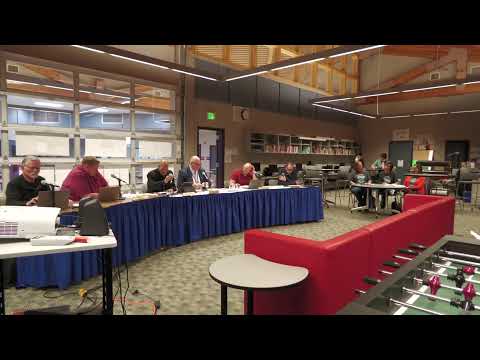
West Valley School District officials and Innovation Center staff detailed changes to the Center’s programs and schedule for the 2025–26 school year at the board meeting May 13, saying the shifts aim to increase daily math instruction, expand robotics and aerospace offerings and grow work‑based learning and apprenticeship opportunities.
Jed Waters, the district’s executive director for innovation, told the board the Center currently offers four programs for grades 7–9 — computer science, health science, robotics and agriscience (STEM) — and that next year the district will separate robotics and aerospace so students can choose the pathway that matches their interest. “Robotics now is, like, our number 1 seller for programs. It's all full for next year,” Waters said.
The move accompanies scheduling changes meant to give students more consistent math instruction. Waters said the district will restructure the day so math is embedded and offered daily for grades 7–9, with project‑based connections between math, computer science and technical pathways. “We want to work in math every day,” he said.
Kendra Born, the Innovation Center’s math‑science designer, described how teachers are integrating grade‑level math standards with hands‑on projects. She said students use mathematics to plan and code Sphero robots and to calculate distances and angles for design projects: “They were able to code it for an entire map before they ever even saw them,” Born said, describing the Sphero units and related maze projects used to teach geometry and rate/distance problems.
Sierra Clark, the computer science designer for grades 7–9, and Born said project work is also used to teach ELA and technical writing; students wrote step‑by‑step guides tied to the math used for coding projects and produced technical documentation aligned to workplace expectations.
Waters said the Innovation Center has received state grants to buy equipment including a CubCrafters kit and a robot, and that students will assemble an aircraft as part of an aerospace program. “That was received through a state grant so the district didn't pay for those items,” he said.
Staff described expanding pathways to work‑based learning. Waters and staff said Innovation Center students participated in field trips to local manufacturers and orchards, and that some seniors are placed in paid on‑the‑job training that yields high school and college credit. “We do have students participating in sports... and we have a number of students here participating in apprenticeships or looking at apprenticeships next year,” Waters said.
Waters gave enrollment and capacity figures for the Center, saying the building’s capacity is “about 220” and that enrollment was roughly 176–178 at the time of the meeting; he said the grades 7–9 program was nearly full and there were more openings in grades 10–12. The district plans to keep the innovation schedule flexible to allow students to take some courses at the high school while preserving multi‑period blocks at the Innovation Center for mastery‑based projects.
Board members and staff also discussed the Center’s emphasis on mastery‑based learning and project‑based instruction. Waters noted the district’s participation in a mastery‑based learning consortium and said the Innovation Center has received school visits from districts across the state and beyond. He said the Center had posted strong outcomes in student engagement, hands‑on skill building, and employer partnerships, and that graduation plans included about 25 students choosing to graduate at the Innovation Center and others attending the district’s Sundome ceremony.
No formal board action was taken on program changes at the meeting; Waters and staff presented the program and answered board questions.
The district recommended tours of the Innovation Center for board members and community members interested in the new schedule and project examples.