
Council approves $748,110 Phase 2 archaeological data recovery for Willow Creek sewer project
Get AI-powered insights, summaries, and transcripts
Subscribe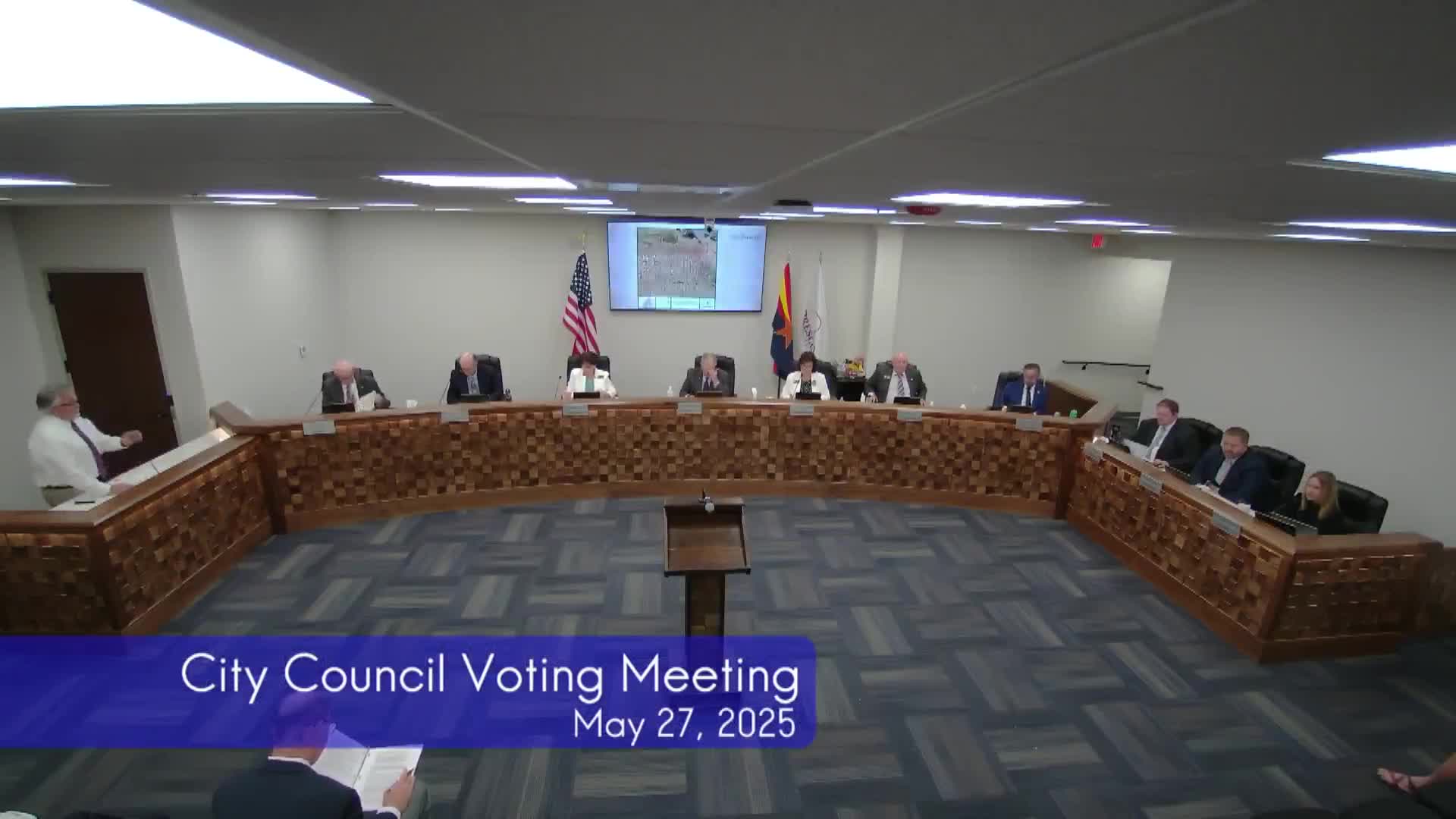
Summary
Council approved city contract 2025-156 with Logan Simpson for Phase 2 archaeological data recovery related to the Willow Creek gravity sewer project after Phase 1 fieldwork found significant prehistoric materials; work is required under the Arizona Antiquities Act and local historic-preservation code.
The Prescott City Council on May 27 approved city contract number 2025-156 with Logan Simpson for Phase 2 archaeological data recovery investigations tied to the Willow Creek gravity sewer project. Staff said the contract amount is $748,110 and funding is budgeted in FY25 from the wastewater fund.
Why it matters: The proposed sewer alignment crosses three previously identified archaeological sites. State and local law (the Arizona Antiquities Act and the City of Prescott Historic Preservation Code) require an HPTP (historic properties treatment plan) and additional investigation when significant artifacts are found. Phase 2 recovery is a more intensive process than the Phase 1 exploratory work and involves detailed excavation, documentation and curation or repatriation steps.
Staff presentation: Public Works Capital Program Manager Tim Sherwood said Phase 1 was completed in February 2025 and consulting parties (Arizona State Museum and Hopi Tribal Historic Preservation Office) recommended Phase 2. Sherwood said Phase 2 work is labor-intensive and could delay construction schedules: the contractor estimates 6–8 weeks fieldwork plus several months to complete reports and any curation required.
Council discussion and implementation: Council members acknowledged the cost and necessity. Sherwood said the archaeological contractor was selected from the city's on-call services list and that the complexity of the sites limited workable alternatives. If Phase 2 uncovers additional significant materials, the schedule could push construction into spring of the following year; staff said they expect the project to move forward after Phase 2 and necessary reporting are complete.
Outcome: The contract passed 7-0. Staff will coordinate recovery work, complete required documentation and proceed with sewer project planning once the archaeological obligations are satisfied.