
ASD expands "at‑risk" definition to include academic measures; committee marks policy for board review
Get AI-powered insights, summaries, and transcripts
Subscribe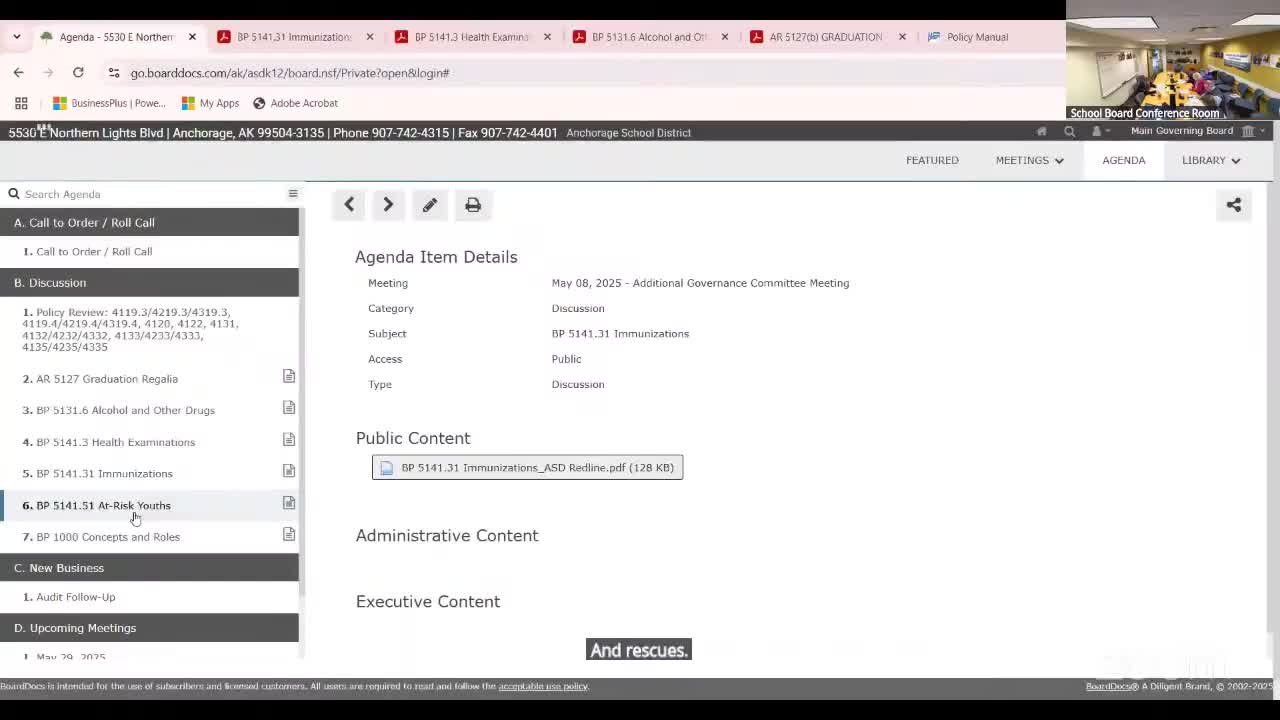
Summary
The governance committee reviewed a revision to policy 51.41.51 that adds academic at‑risk language — district assessments and evaluations will be used to identify students performing well below grade level — and noted the district already uses assessments for identification.
Anchorage — On May 8 the Anchorage School District governance committee reviewed proposed changes to policy 51.41.51 that expand the definition of students “at risk” to include academic measures, directing the district to use assessments and evaluations to identify students performing well below grade level.
A district presenter said the new language requires the use of district assessments and evaluations to identify students falling behind academically or at risk of failing to meet district standards. The presenter noted the district already uses assessments for early identification and intervention.
Board members asked how the policy would define “below grade level.” Staff described common operational practice of using cut scores on standardized and criterion‑referenced tests; one board member recalled other districts using a two‑year‑below criterion as an operational threshold in targeted interventions. Staff said the district uses cut scores that are roughly comparable to that concept.
The committee recorded no objections and agreed to move the revised policy forward as an agenda item for a future board business meeting. The discussion was procedural and focused on clarifying language and how existing assessment systems would be applied in practice.