
Committee advances bill to expand tobacco tax base and dedicate revenue to cancer and prevention programs
Get AI-powered insights, summaries, and transcripts
Subscribe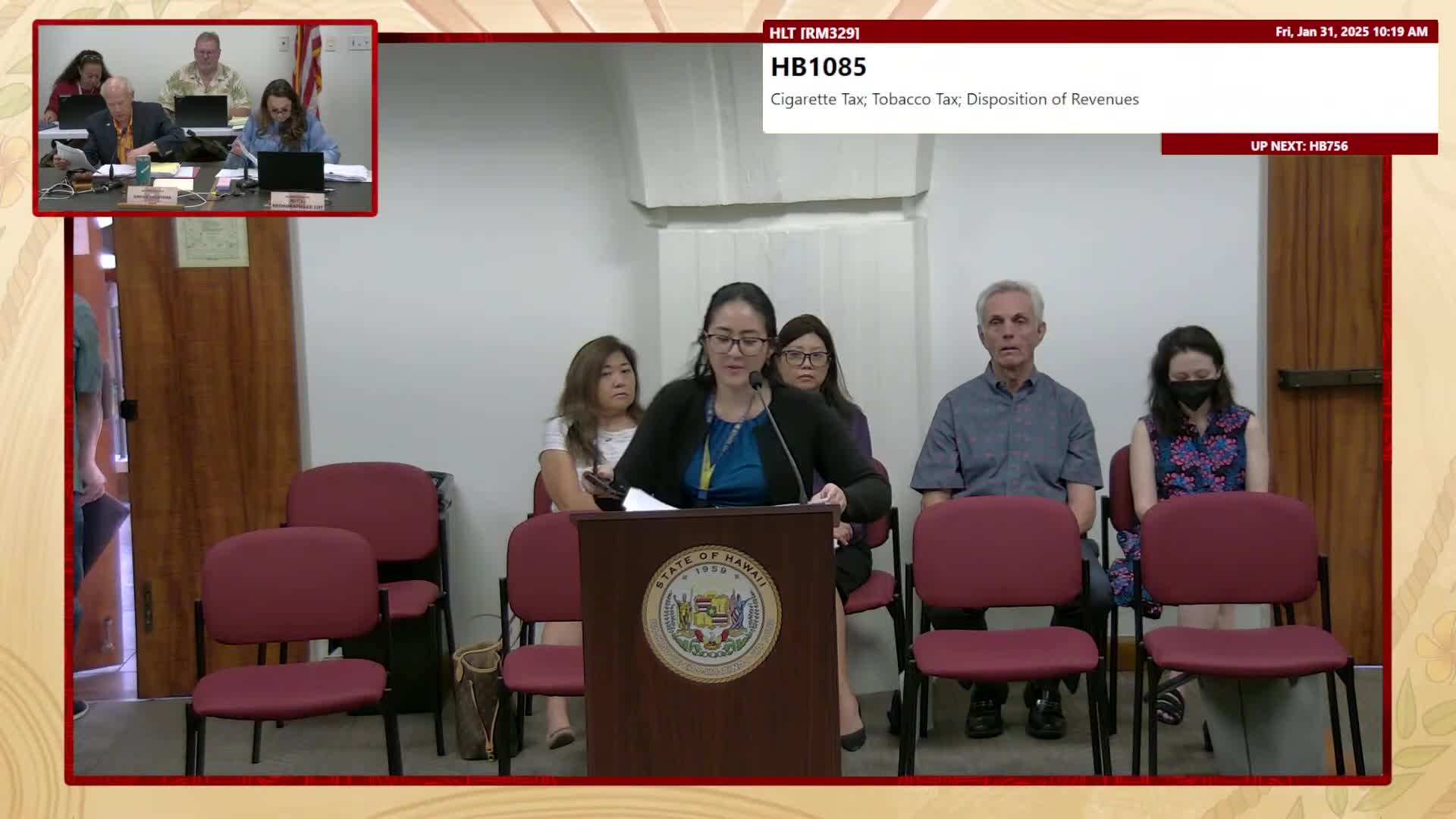
Summary
HB1085 would raise the cigarette tax and broaden the revenue pool to include e‑liquids and other tobacco products; agencies and public health groups supported the change and asked that funds be directed to tobacco control and the UH Cancer Center.
Lawmakers advanced House Bill 1085, which would raise the cigarette tax and broaden the tax base to include additional products covered under chapter 245 (cigars, little cigars, smokeless tobacco, e‑liquids and e‑cigarettes) and direct proceeds to cancer control and tobacco prevention programs.
The Attorney General’s Tobacco Enforcement Unit and Department of Health testified in strong support, saying the special tobacco enforcement fund has declined with falling cigarette sales and that broadening the revenue pool will stabilize funding for tobacco control, the University of Hawaii Cancer Center and related public health programs.
Department of Health testimony noted that higher tobacco taxes reduce initiation and increase quitting; DOH and public health organizations urged dedicating revenue to prevention and cessation programs. The University of Hawaii Cancer Center said sustained funding supports clinical trials and local research that can reduce cancer mortality in Hawaii.
Opponents and fiscal commentators, including the Tax Foundation of Hawaii, cautioned that declining tobacco consumption means revenue will fall over time, so relying on tobacco taxes for ongoing programs carries risk.
Committee action: members moved HB1085 forward with technical amendments, a defective effective date and report language. Supporters urged that part of the revenue be dedicated to tobacco prevention and the UH Cancer Center; the committee adopted the chair’s recommendation to pass with amendments.
Why it matters: Supporters said the proposal both discourages tobacco use through higher prices and stabilizes funding for cancer research and prevention programs that rely on special tobacco revenues.