
Portage City Council approves one-year police contract while officials say new revenue needed to fund it
Get AI-powered insights, summaries, and transcripts
Sign Up Free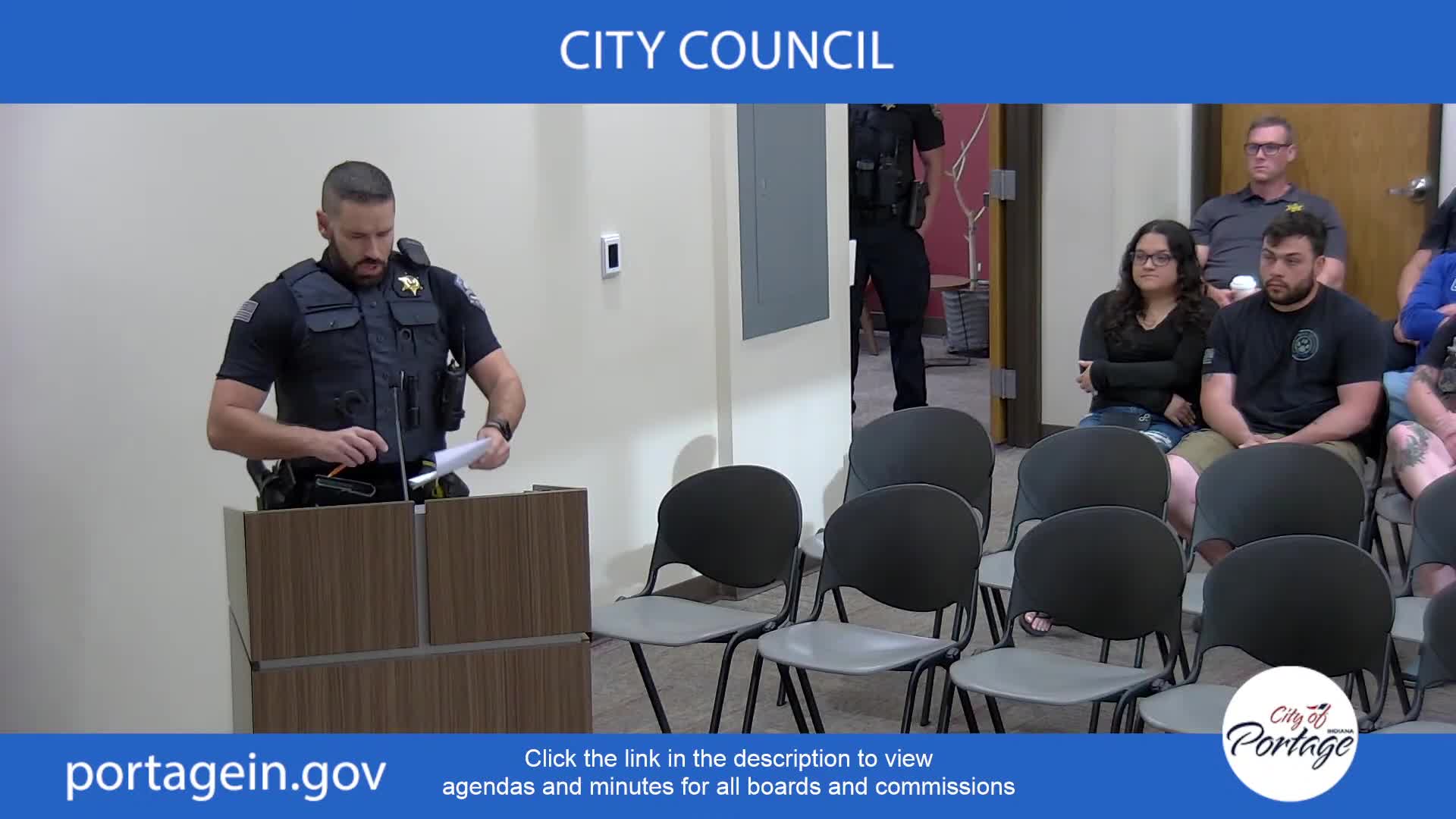
Summary
The Portage City Council approved a one-year contract for the Portage Police Department that city officials said will require new revenue and budget actions — including a proposed residential tax-increment financing (TIF) plan — to cover an estimated $775,000 cost in 2025.
The Portage City Council on a roll-call vote approved a one-year contract for the Portage Police Department that city officials said will cost roughly $775,000 this year and will require new revenue or budget adjustments to be fully funded.
Mayor Bonta and finance staff told the council the city plans to use a proposed residential tax-increment financing (TIF) program, other revenue-generation measures and spending reductions to cover the increase; the city’s clerk-treasurer and outside consultants provided differing cost estimates during the meeting.
Police Chief Kenny described the changes in the agreement as aimed at recruitment and retention. He told the council the department seeks to raise minimum on-road staffing from six to seven officers and to make pay-structure changes to increase the difference between ranks. "My job is to get the best police department out here, get the best officers," Kenny said, arguing pay competitiveness affects recruitment and the cost of turnover.
Clerk-Treasurer Modesto said the city ran several estimates when calculating the fiscal impact. "We crunched the numbers in my office and we came up high, and it was at $1,100,000," Modesto said; she added that further review and a consultant reduced that figure and that the administration’s estimate when accounting for certain items was about $775,000. Modesto also said consultants produced estimates roughly at $700,000, plus about $75,000 associated with retirees.
Mayor Bonta said the administration negotiated the contract based on a revenue plan that includes residential TIF districts and other changes. "I am very confident that we can do it," Bonta said, while noting the funding depends on future council votes and the success of planned revenue measures. He described residential TIF as an "indirect public safety tax" and said legal and financial advisers had developed mechanisms — including negotiated developer payments and bond arrangements — that could accelerate receipts to the city.
Council members pressed administration and finance staff for clarifications about specific cost elements. Councilman Alvarez flagged Social Security, PERF (public employee retirement), overtime and other payroll-driven increases that could change the final fiscal impact; finance staff and the mayor said those items were being examined and that one consultant’s initial inclusion of Social Security contributions may not apply because Indiana police and firefighters generally do not pay the employee 6.2% Social Security contribution.
Several council members asked what would happen if residential TIF revenue did not materialize in time. The mayor and clerk-treasurer said the contract, as negotiated and ratified by the bargaining unit, had been approved by the board of works and was before the council; they said the city would need to pursue the identified revenue plan, reallocate budget items, and — if necessary — use contingency measures such as targeted cuts or interfund transfers, while warning that some traditional cash-management tools may not be available if physical cash is low. "This contract would not be funded unless we get additional revenue," the clerk-treasurer said during the discussion.
The council then voted to adopt the contract. Roll-call votes recorded in the meeting transcript were: Councilman Alvarez — yes; Councilwoman Weidenbach — yes; Councilwoman Hurst — yes; Councilman Parnell — yes; Councilwoman Vasquez — yes; Councilman Zillie — yes. The motion carried and the contract was approved.
Next steps discussed at the meeting include the council’s consideration of residential TIF proposals expected to come to the council in the late summer and fall months, and continued work by the mayor’s office and the clerk-treasurer to refine the cost estimate and identify specific budget moves to create the required cash flow.
The contract is effective immediately for the remainder of 2025; the administration said police and fire will return to the negotiation table next year for 2026 agreements.