Panel advances bill to protect low-income solar customers from future utility charges
Get AI-powered insights, summaries, and transcripts
Sign Up Free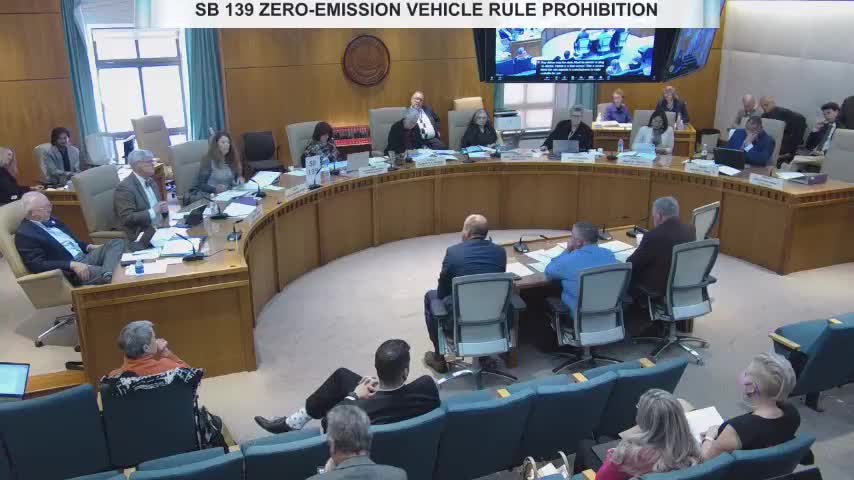
Summary
Senate Bill 156, which defines —low-income— customers and exempts them from certain future interconnection cost riders, received a split committee vote after supporters said it would protect savings for vulnerable households and utilities warned about rate design and eligibility implementation.
The Senate Conservation Committee voted 5-3 to send Senate Bill 156 to the full Senate. The bill creates a statutory definition of —low-income customer— in the Public Utility Act and instructs utilities to preserve bill savings for qualifying households by exempting them from future ancillary or standby rate riders tied to distributed-generation interconnections.
Sponsor Senator (presenter) said the measure organizes existing definitions, clarifies low-income qualification pathways and instructs utilities to notify customers annually how to qualify. Under the bill, a household may qualify by self-attestation of income and household size, proof of residence in an affordable housing facility, or enrollment in an existing state or federal low-income program (LIHEAP, Medicaid, SNAP, etc.). The bill also states a qualified household need not be requalified for five years.
Christian Casillas of the Coalition of Sustainable Communities told the committee the bill would preserve solar savings for low-income households and enable programs (including leases and on-bill repayment) that can deliver 20% or more annual savings to eligible families. Beth Biloff of the New Mexico Climate Investment Center said her organization intends to invest in low-income solar lease programs and called the bill necessary to protect those investments.
Utilities raised concerns. Mike D—Antonio of Xcel Energy and Carlos Lucero of PNM said the bill places burdens on utilities to verify eligibility and risks shifting costs to nonparticipating customers. Xcel and PNM recommended a separate House bill (cited in testimony) that would allow utilities to offer low-income rates or programs without the same statutory rider language.
Committee debate centered on implementation details: how households would be verified, the proposed five-year certification, and whether preserving savings for low-income rooftop solar owners creates modest cross-subsidies for other customers. Christian Casillas said the sponsoring groups expect the initial uptake in New Mexico to be small (roughly 5,000 households over several years) and argued the per-customer effect on the broader rate base would be negligible.
Senator Hamblin moved for a due-pass recommendation; Senator Bill Pope seconded. The roll-call vote was 5 in favor, 3 opposed and 1 excuse (detailed in the official roll call). Senators who voted yes said the bill promotes energy equity; those opposed cited concerns about rate design, verification burden and potential unintended cross-subsidies.
SB 156 now moves to the Senate for further consideration and possible amendment in subsequent committees.