Senate Bill 302 would codify DOJ access rules, extend gaming license terms to three years
March 01, 2025 | Tax, Business and Transportation, Senate, Committees, Legislative, New Mexico
This article was created by AI summarizing key points discussed. AI makes mistakes, so for full details and context, please refer to the video of the full meeting. Please report any errors so we can fix them. Report an error »
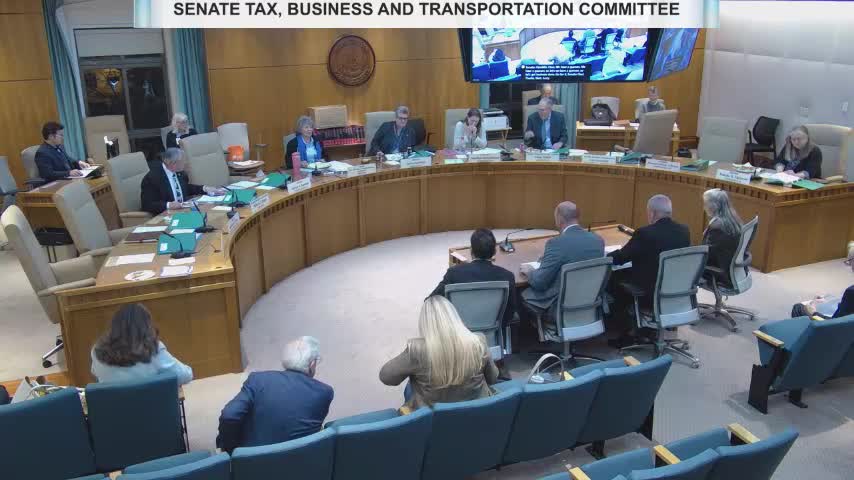
Terry McGaha, acting executive director of the New Mexico Gaming Control Board, told the Tax, Business and Transportation Committee that the measure responds to a Department of Justice audit. “The Federal Department of Justice mandates that access to criminal history information must be explicitly rooted in state law,” McGaha said, and the bill “simply codifies existing practices in the law and to correct the DOJ audit finding.”
Why it matters: Committee members were told the board already performs background investigations under its rules, but federal policy requires an explicit statutory basis for agencies to access criminal-history records. McGaha said the change preserves the board’s ability to run thorough background checks for licensees, contractors and certain raffle applicants.
Committee discussion and details: McGaha also explained the bill would change renewal cycles for some suitability determinations and work permits from yearly to three-year terms, aligning New Mexico with the “industry standard.” He said the existing applications are lengthy—“multiple pages, 20 or so pages of questions”—and annual reapplication is burdensome for both licensees and staff. McGaha added that modern systems can notify regulators if a licensed person has a subsequent arrest through the National Crime Information Center, reducing the need for annual full rechecks.
The committee recorded no public supporters or opponents in the room or online. Senator Figueroa moved a due-pass recommendation; Senator Sherr seconded. The committee approved the due-pass motion by a show of hands with no recorded opposition.
What the bill does not do: McGaha said the bill “does not change in any way how we do backgrounds or how backgrounds are conducted,” only the statutory authority enabling the board to continue receiving criminal-history information.
Next steps: The bill was given a due-pass recommendation and will move forward per the committee’s scheduling.
Don't Miss a Word: See the Full Meeting!
Go beyond summaries. Unlock every video, transcript, and key insight with a Founder Membership.
30-day money-back guarantee
Sponsors
Proudly supported by sponsors who keep New Mexico articles free in 2026

