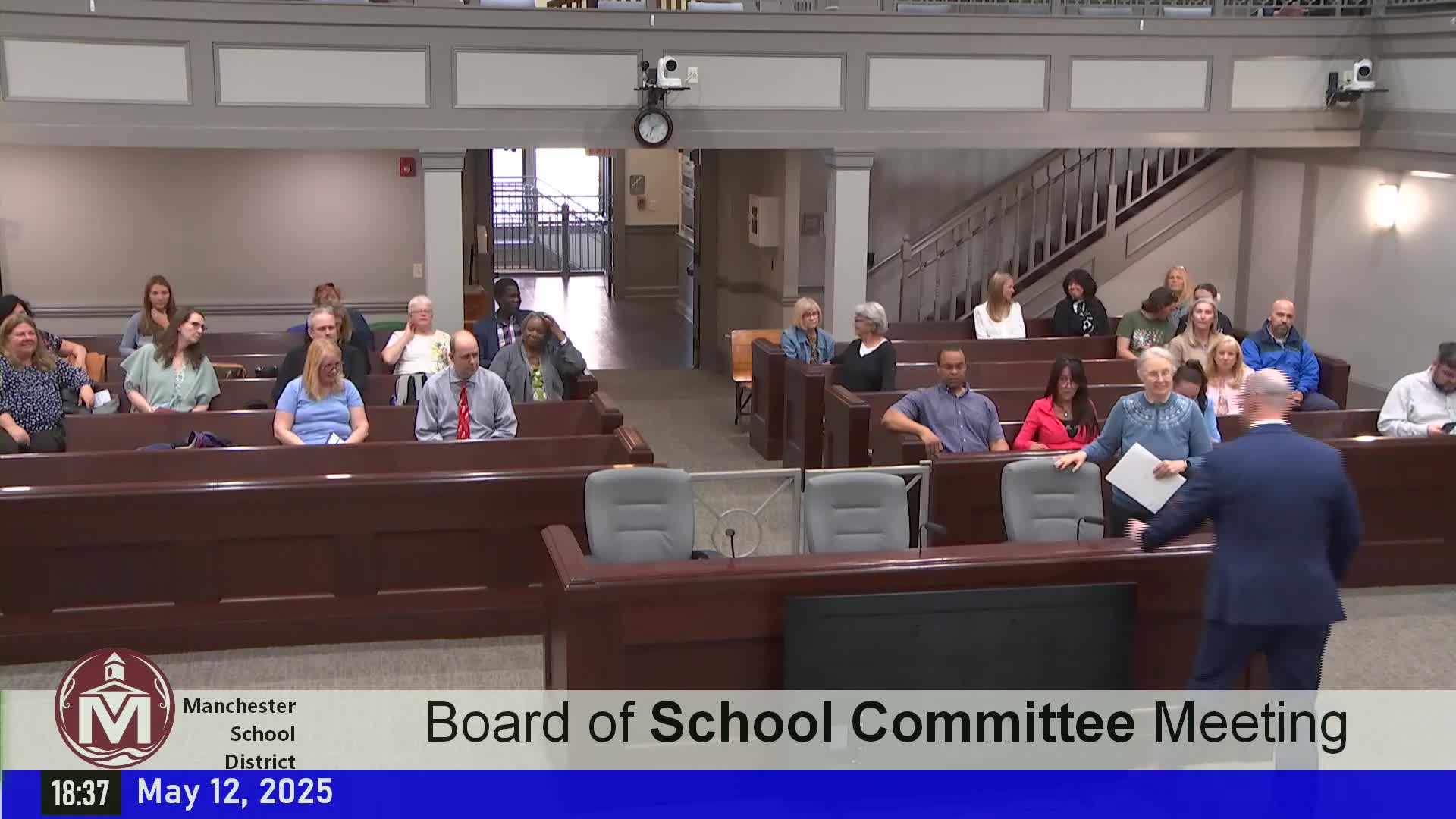
Residents, NAACP and board debate district diversity and equity materials after teacher training packet was shared
Loading...
Summary
Public commenters at the Manchester School Committee’s May 12 meeting pressed the board over a packet of professional-development materials — including a “wheel of power and privilege” exercise — that the district says was intended for staff training but was inadvertently shared with parents and once with a student.
Public commenters at the Manchester School Committee’s May 12 meeting pressed the board over a packet of professional-development materials — including a “wheel of power and privilege” exercise — that the district says was intended for staff training but was inadvertently shared with parents and once with a student.
Supporters and opponents of the materials used the public forum to make sharply different claims: some called the resource a useful tool for teacher reflection and student support, while others called it divisive and inappropriate for use with children. Board members and administrators responded in public, saying the packet was for adult professional development and that the district has acknowledged the distribution mistake and taken steps to prevent recurrence.
The dispute drew a mix of residents, civic leaders and the NAACP. Arnold Mikolo, speaking for the Manchester NAACP, said the materials were meant for staff development, not classroom instruction, and urged the board to remain committed to equity and inclusion. “These materials were not part of the student curriculum,” Mikolo told the committee, adding the district acknowledged the mistake and took remedial steps. Several parents and speakers said they were upset the packet reached families and one student; some framed specific exercises — such as the “wheel of power and privilege” — as labeling or ranking children in ways they find harmful.
At least a dozen commenters addressed the packet in person. Carla Beasley Topliffe told the board she supports the Manchester School District’s 2021 diversity and equity policies and said trained teachers need tools to meet diverse students’ needs. Arnold Mikolo, representing the Manchester NAACP, echoed that the materials aim to help educators better understand and support a diverse student body. Resident Callie Rojas and Chrissy Kantor, an alderman and parent, expressed opposition to the wheel exercise; Kantor said she believed district officials had told the board the materials had been aligned to federal or presidential guidance and that she felt misled when told otherwise.
Board members responded during the “response to public comment” section. Vice Chairman O’Connell and Committee Member Spillers said the wheel exercise was not used in the classroom and that no student curriculum was changed; Spillers described the wheel as “a tool for self reflection meant to address our own internal bias and the social assumptions we make.” Committee member Potter and others emphasized that staff and curriculum decisions must protect students and that any errors — including the packet distribution — should be remedied. Several board members also warned against public commenters disparaging individual staff and said the board’s rules prohibit disparagement of employees during public comment.
Superintendent (Dr. Camille) and other district leaders repeatedly said the materials were created for adult training, not for direct student instruction, and that the district is reviewing communication protocols to prevent future accidental distribution. Superintendent remarks noted the district’s diversity of need — later quantified in the budget discussion as about 2,200 multilingual learners (roughly 20% of students) and 2,745 students receiving special education services (about 23%) — as the rationale for staff training that equips teachers to support varied student backgrounds.
The debate also touched on state-level developments. Board and staff speakers criticized a State Department of Education webpage mentioned by a public commenter that linked to a civil-society group targeting educators; some board members called that state-level resource harmful to teachers. Commenters referenced a recently filed court injunction (challenging restrictions on DEI-related training) and said several New Hampshire districts have rescinded certifications tied to the state letter; board members said legal advice on rescission would be provided in nonpublic session.
No formal policy change or vote on district DEI policies occurred at the meeting. The board took public comments under advisement and asked staff to report back. Several members asked that the district provide clearer detail on what materials were intended for staff training, when the packet was distributed, and what steps had been taken to ensure that materials for adult professional development are not used in classrooms.
The public comment period and board responses highlighted deep community division: speakers who support the district’s diversity, equity and inclusion work stressed its role in helping educators respond to students’ varied needs, while opponents described certain exercises as divisive or inappropriate. Board members repeatedly urged civil, fact-based public testimony and said that employees should not be publicly disparaged. The district said it will update its communication protocols and clarify the intended audience for professional-development materials.
The board did not adopt any binding changes to curriculum or policy at the May 12 meeting. A legal question about previously certified state guidance and whether the district should rescind that certification was raised and scheduled for follow-up in a nonpublic session where the board will receive legal advice.
Speakers quoted above and their first appearance in the transcript are documented in the meeting record; the board asked staff to bring a written update on distribution and notification protocols at a follow-up meeting.