
Tribal health leaders press to fund environmental health measures to curb respiratory illness in Native children
Get AI-powered insights, summaries, and transcripts
Subscribe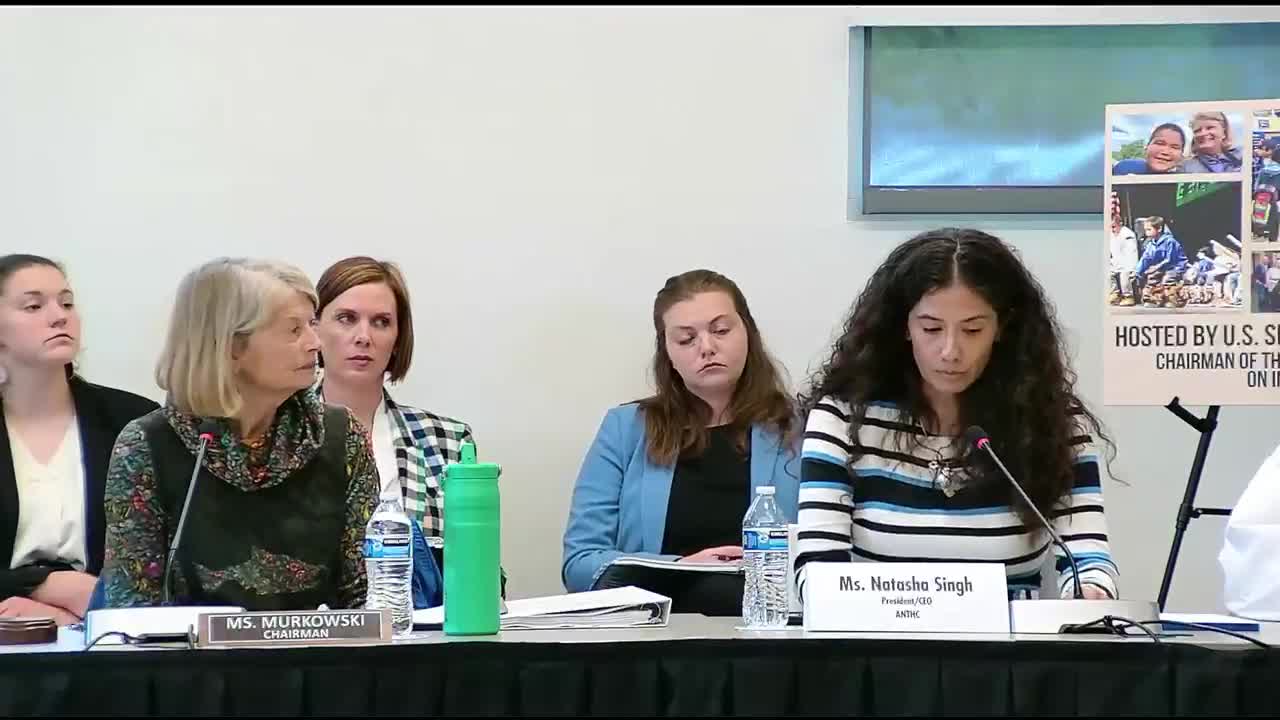
Summary
Panelists described links between overcrowded, poorly ventilated housing and high rates of respiratory illness among Alaska Native children and recommended integrating environmental health into tribal health systems and EHRs.
ANCHORAGE — Tribal health leaders told the Senate Committee on Indian Affairs that environmental health threats tied to overcrowded and substandard housing — including poor ventilation, indoor air pollutants and inadequate plumbing — are driving elevated rates of respiratory illness among Alaska Native children.
“Infants in overcrowded homes are 2.5 times more likely to be hospitalized for RSV,” said Natasha Singh, president and CEO of the Alaska Native Tribal Health Consortium, citing region-specific hospitalization risk and pointing to the YK Delta, where overcrowding is four times the national prevalence and chronic respiratory conditions are common.
Singh urged that Title 5 of the draft legislation strengthen environmental health capacity by funding environmental health staff, home-repair interventions, HEPA filtration distribution and improved integration of environmental exposure data into electronic health records to support prevention and clinical management.
Panelists said addressing dust, mold, in-home smoking, inadequate sanitation and contaminated sites requires home-level structural solutions alongside clinical care. They recommended empowering tribal health staff with tools to identify and mitigate hazards and to support preventive measures that reduce infection rates and long-term respiratory complications.
Senator Murkowski noted small but meaningful improvements in some remote villages but said much more is needed to scale proven approaches across the state.