
Council advances Chagrin Valley regional dispatch application amid union and resident objections
Get AI-powered insights, summaries, and transcripts
Subscribe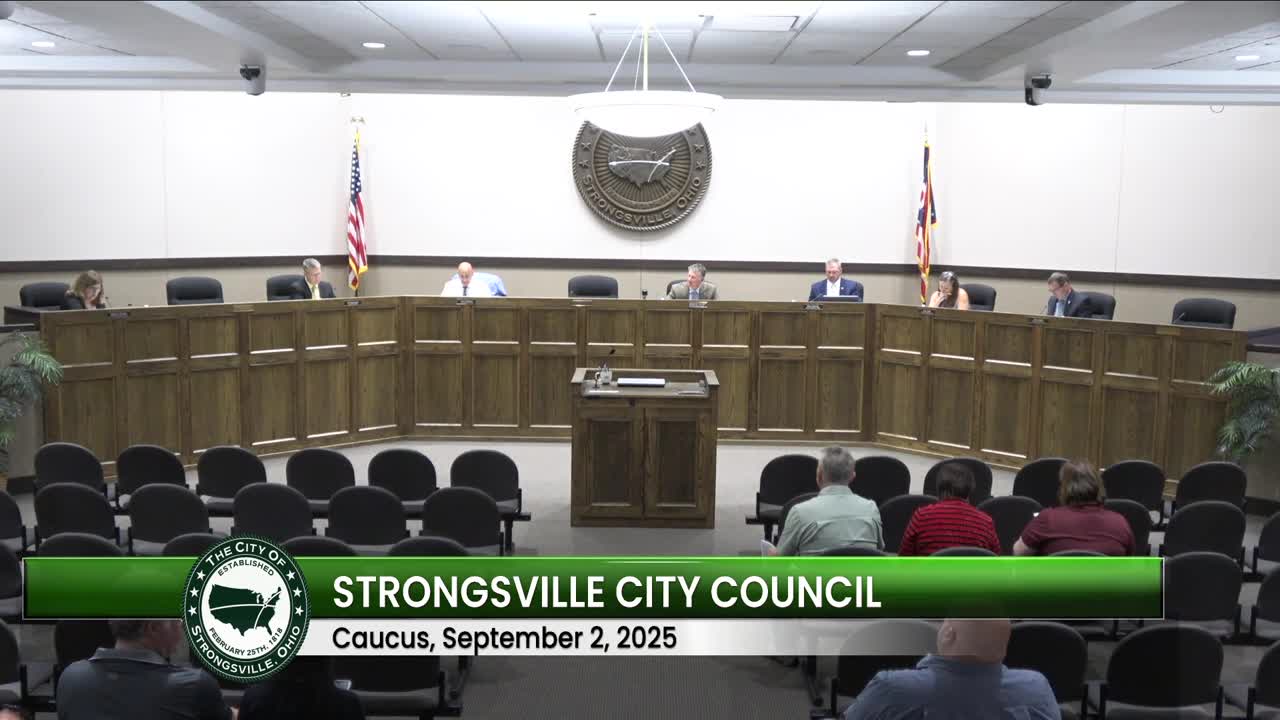
Summary
Strongsville council moved the ordinance authorizing membership in the Chagrin Valley Regional Communication Center to a second reading after hours of committee and public comment, prompting questions from firefighters, dispatchers and residents about staffing, service continuity and bargaining-unit protections.
Strongsville City Council advanced an ordinance to join the Chagrin Valley Regional Communication Center to a second reading after discussion in committee and extended public comment on Tuesday, Sept. 2. The measure would authorize the mayor to enter a participation agreement with the Chagrin Valley dispatch council. Committee discussion did not produce a final adoption.
Council members and public speakers said they wanted answers about how a move would affect staffing, local knowledge in the dispatch center and protections for current employees. The discussion drew multiple public speakers, including active and former dispatch employees and union representatives who urged the council to preserve the local bargaining unit and to seek alternatives that would keep dispatch operations in Strongsville.
Why this matters: dispatch centers coordinate emergency police and fire responses; changes in structure, staffing or location can affect response procedures and relationships between dispatchers and first responders. Several speakers told the council that losing experienced local dispatchers or dispersing them across a regional center could degrade service and slow responses while staffing and training transitions occur.
During audience participation, John Douglas, president of Strongsville Firefighters Association Local 2882, said the decision affects multiple municipalities and could eliminate protections the dispatchers now have. “These dispatchers deserve better. They deserve to have not only the right to work here, but the protection to work here as well,” Douglas said. Robert M. Cermak, a Strongsville resident, warned that moving operations to a distant “mega center” would reduce institutional knowledge and said, “When you move a workforce like this group is to another location, you’re not gonna get a 100% of the people to move.”
Dispatcher Rebecca Namick, who identified herself as a longtime Strongsville dispatcher, asked councilors to “do your homework” and to consider the effects on public safety before approving any transfer of service.
What the council did: Ordinance 202586 (authorizing entry into the Chagrin Valley participation agreement) was kept in committee and placed on second reading; the floor schedule and roll-call actions did not adopt the ordinance on Sept. 2. Council members asked the administration to provide written answers to outstanding operational and staffing questions and to schedule follow-up briefings. President Short asked for those materials to be delivered to council members and for the administration to coordinate responses with Finance and other staff.
Discussion vs. decision: The meeting included extended public comment and requests for more information; no final transfer or contract award was approved at the meeting. Council deferred a final decision by retaining the ordinance in committee and setting it for further consideration.
What’s next: Council asked administration staff to compile written answers to the specific operational and staffing questions raised and to meet with councilors; the ordinance remains under council consideration on the second reading schedule.
Ending: The item remains active and council members requested additional documentation and briefings before a final vote.