
Parole granted conditionally for Jerome Lewis; board requires transfer for mandatory classes and strict conditions
Get AI-powered insights, summaries, and transcripts
Subscribe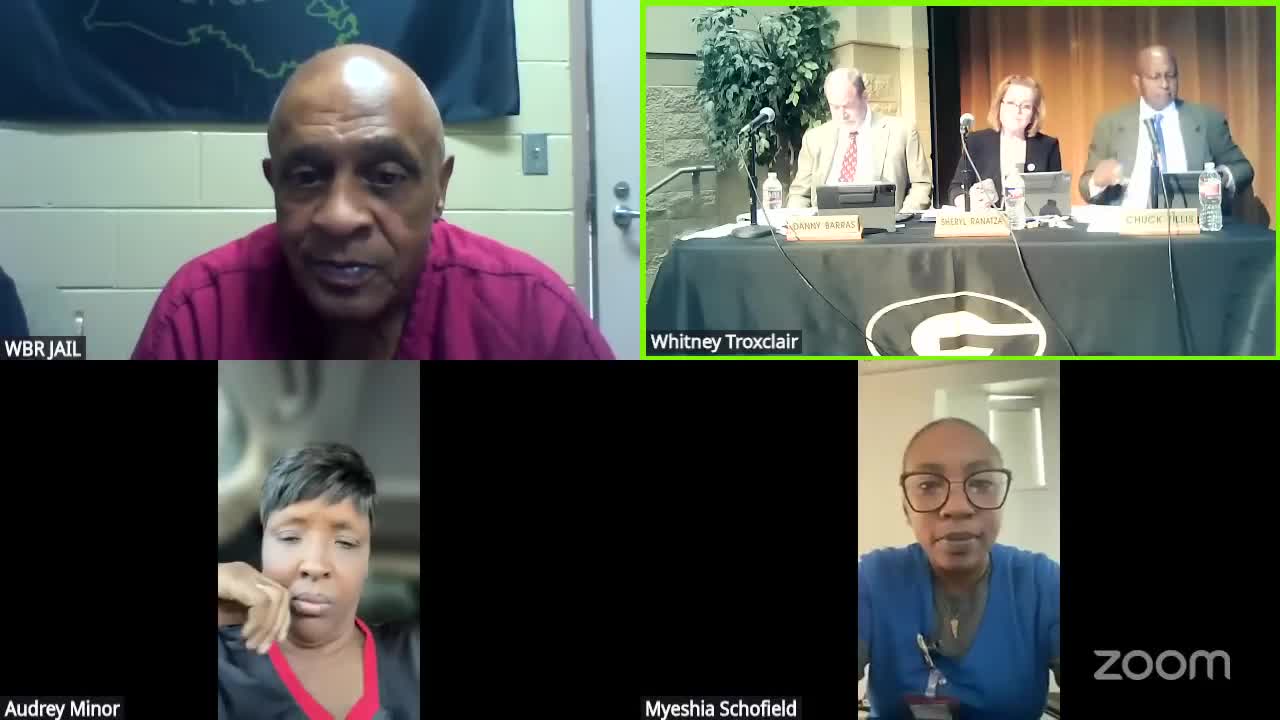
Summary
The Committee on Parole conditionally granted release Sept. 11 for Jerome Lewis (DOC 750002), a manslaughter inmate, contingent on completion of mandatory prerelease and literacy classes after transfer and strict supervision conditions including no contact with victims' family and random testing.
The Louisiana Committee on Parole conditionally granted parole Sept. 11 for Jerome Lewis, DOC 750002, who is serving a 10-year sentence for a manslaughter conviction with a parole eligibility date of April 16, 2026. The hearing used a hybrid format connecting the board to West Ave. Baton Rouge Parish Jail.
Lewis acknowledged the conduct underlying his conviction, telling the panel, “I got myself in trouble. I hit a guy inside the head with a bowl, and it wouldn’t meant to go that far.” He said he was intoxicated at the time and that incarceration had taught him not to return to that behavior. Lewis told the board he completed anger management and parenting classes and worked as a cook in the facility.
Family members and supporters urged release. Lewis’s daughter-in-law, Destiny Williams, and his son, Christopher Griffin, described plans to provide housing in Port Allen, transportation and employment support. The facility reported Lewis had a positive disciplinary record while assigned to work in the kitchen.
The board recorded strong opposition from the victims’ family, represented at the hearing by Audrey Minor, and from the district attorney and sheriff. Minor told the board she and her family opposed early release because a family member died in the incident and she said she did not believe his incarceration conditions constituted adequate punishment.
Board members weighed the competing factors. One member noted Lewis had not completed some mandatory prerelease classes because they were not offered at his prior housing facility; staff confirmed he had taken available facility classes and that mandatory classes could be completed if he were transferred. The panel’s conditional grant requires that Lewis be transferred to a facility that provides the mandatory $100 prerelease class and literacy instruction, complete anger‑management programming and outpatient substance‑abuse treatment if indicated. Additional supervisory conditions include a 10 p.m.–6 a.m. curfew, random drug and alcohol screens and no contact or approach within one mile of the victim’s family.
Board members also recorded warnings to Lewis about abstaining from alcohol on supervision and complying with all supervisory conditions. The vote to grant was recorded as the board’s decision with conditions; Lewis acknowledged the terms.
The board made clear that completion of transfer and required programming is a precondition to placement on parole supervision.