
Portage County commissioners approve resolution of necessity to pursue new human services levy
Get AI-powered insights, summaries, and transcripts
Subscribe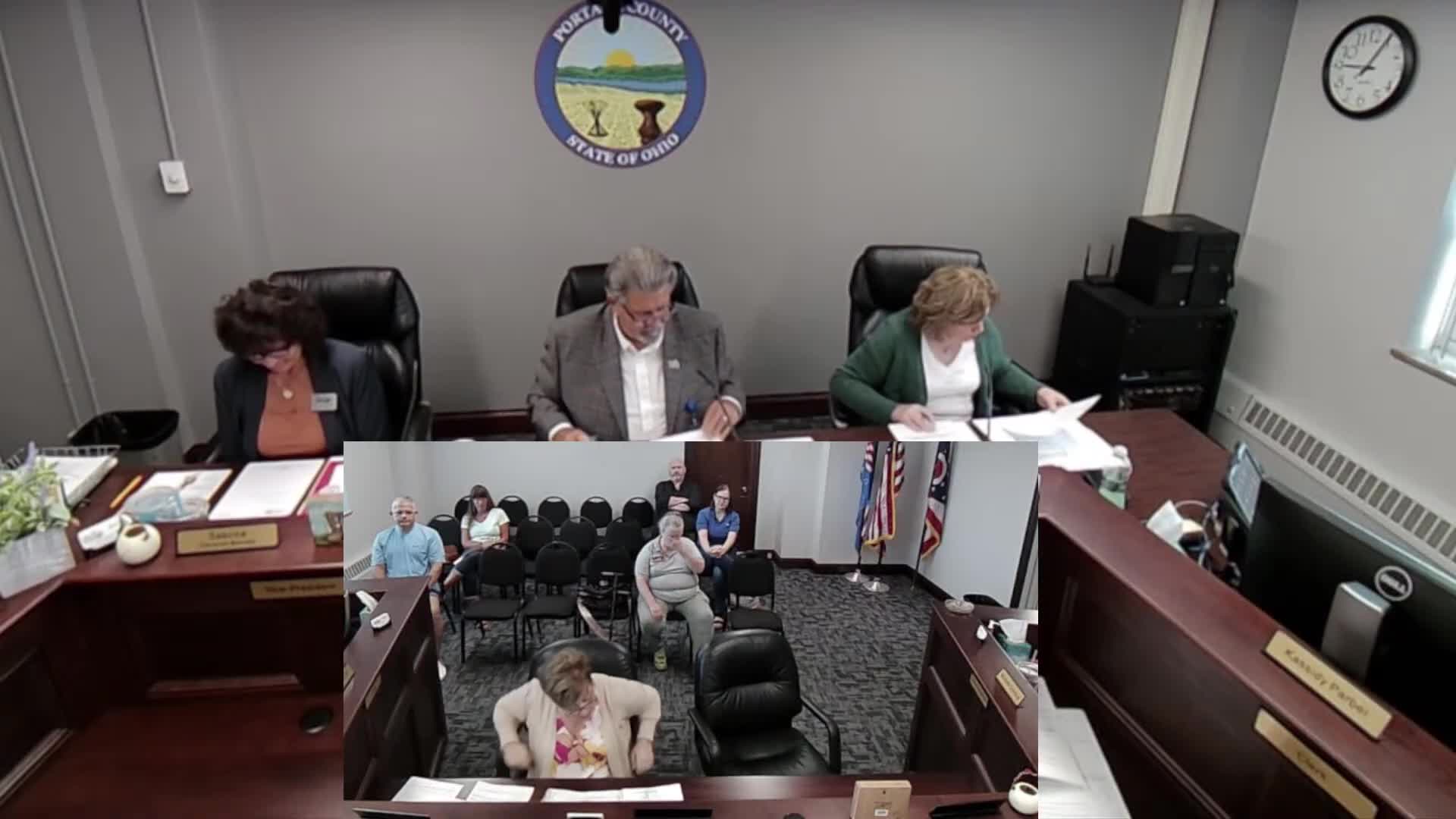
Summary
After hearing data on rising adult protective caseloads and a shortfall in senior meal services, Portage County commissioners approved a resolution of necessity to place a new "new additional" 0.5-mill human services levy on the ballot; commissioners asked for additional revenue projections before final placement.
Portage County commissioners voted July 17 to adopt a resolution of necessity to place a new additional human services levy before voters, a step that starts the formal process of putting a 0.5-mill measure on the ballot.
Job and Family Services representative Kelly Jo told commissioners the proposed levy would be a new additional tax levy under Ohio law and would fund public assistance, children’s services and adult services including adult protective services and senior programs. "We're seeing an increase in our caseloads in adult protective services," Kelly Jo said, citing an average of 46 adult protective cases in 2024 and about 52 cases so far this year.
Kelly Jo said the county would not move forward with a previously planned child-protective 0.5-mill levy in November if commissioners back the human services levy, and she requested the board approve the resolution of necessity so staff could file to get the measure on the ballot. She described the levy as "new additional" because state statute requires that wording for levies above the 10-mill floor.
Mark Ferzone of Access Family Services, a local senior-services provider, urged commissioners to act, describing current gaps in meal delivery and other senior services. "I have now a waiting list of low income seniors who were being fed up until very recently," Ferzone said, and described service interruptions at multiple senior housing sites amid funding shortfalls. Matt Reed of Direction Home Area Agency on Aging said the end of one-time COVID relief dollars and other federal funding changes have created a "perfect storm" of need: "Without some support at the local level, we anticipate not seeing funding of that nature again."
Kelly Jo provided several financial and program details during the discussion: Carroll County Job and Family Services transferred $18,484 to Portage County to cover part of adult protective services needs; JFS reported being about $100,000 in the red on adult protective services before the transfer. Meals data cited by presenters showed Access Family Services served 35,510 meals last year and had provided 15,761 meals as of June this year; speakers said providers had paused service at some sites because they had exhausted funds.
Commissioners asked for specific revenue projections and for staff to clarify how the new levy would interact with the county's existing levy structure. The presenters said the current levy (the existing child-welfare levy) generates about $2,000,000 annually and remains in force through 2026; because property valuations have risen, the proposed 0.5-mill new levy would likely generate more than $2,000,000 if passed, but exact projections were not available at the July 17 meeting.
Commissioner-level questions focused on tax burden and distribution of funds. Commissioners emphasized the need for community education so residents understand that, if approved, the county intends to roll back or replace the current child-welfare levy structure and to earmark funds for child protective services while adding funds for adult protective and senior emergency assistance programs. Kelly Jo said the county would seek a blend of allocations — for example, an initial distribution scenario discussed during the meeting was roughly $1,000,000 for child protective services and $750,000 for a new emergency assistance program to serve seniors and adults in crisis, with remaining funds for community partner contracts.
The board approved the resolution of necessity on a roll call vote. Commissioners recorded the vote as yes from Sabrina, Jill and Mike Timlin. Kelly Jo said staff would return with the detailed revenue projections and the formal resolution required to place the measure on the ballot; she noted an August 6 deadline for filings to reach the November ballot.
The vote authorized only the resolution of necessity; placement on the ballot and ballot language will require a second, formal resolution and completed revenue projections before final filing. The presenters and commissioners repeatedly emphasized outreach and transparency to explain to taxpayers how the new levy would operate and how it would affect existing levies.