
Cleveland council president recommends censure after third‑party probe finds workplace‑violence violations by Councilman Joe Jones
Get AI-powered insights, summaries, and transcripts
Subscribe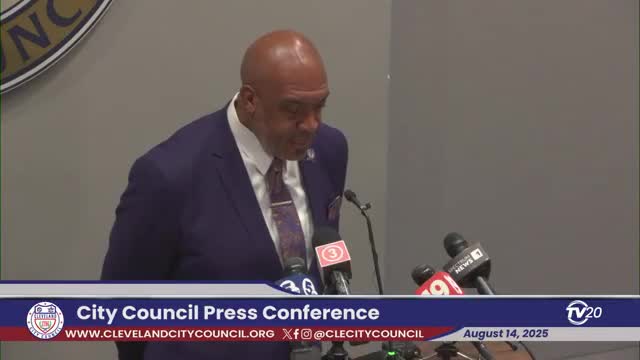
Summary
Cleveland City Council President said an independent investigation found that Councilman Joe Jones violated updated workplace‑violence policies after allegations from two staffers; she recommended censure and described steps already taken to limit contact while a full council deliberates at its next meeting.
Cleveland City Council President said an independent investigator found that Councilman Joe Jones violated the council’s workplace‑violence policies after two employees made allegations, and she recommended the council consider censure. “This is a very sensitive matter,” the Council President said, adding the city hired McDonald Hopkins to interview witnesses and produce a report. The president said the investigator’s findings include violations of workplace‑violence rules and recommended one‑on‑one counseling and consideration of a censure. The recommendation follows allegations by two employees that a council member made threats, including that he “threatened to kill” a staff member, and that he had been in close, intimidating proximity to a staffer from whom he had been instructed to stay away. The Council President said she accepted the investigator’s findings but that the full council must decide whether to censure the councilman. The president said the report was completed Tuesday after delays while the councilman sought counsel and agreed to be interviewed; she told reporters the complaints were first filed in May. She said the councilman was made aware of the pending findings before the letter was released and that the council will discuss the recommendation when it next meets on Sept. 15. The president described interim steps already taken: the councilman has been removed from committees, has received one‑on‑one training, and has been given instruction about how to access staff without direct contact. “We have upgraded our workplace violence policies,” she said, and emphasized protections for staff and limits on public release of investigative materials because of privacy and attorney‑client privilege. At the press conference, a councilwoman who identified herself during remarks urged a swifter, firmer response, citing local news reporting and asserting a pattern of alleged misconduct. “It is past time that council do its job and finally censure Councilman Joe Jones,” the councilwoman said, and urged a formal vote rather than delay. The Council President noted legal and procedural limits on removing elected officials, referencing past attempts and a requirement that removal actions meet high legal standards. She said historically only a small number of censures had succeeded and that removing an elected official would require a two‑thirds council vote and could face court scrutiny. No formal motion to censure was made at the press conference. The Council President framed her role as presenting the investigator’s findings and recommendations and making herself available to colleagues and constituents; she said she accepts the investigation’s recommendations and is urging the council to deliberate. She said the persons who filed complaints asked that their identities remain confidential and that the full investigative file will not be released because it is protected by attorney‑client privilege. The council president said the chief priority is staff safety: “These workers are human beings and are people,” she said, noting employees had asked to remain out of media coverage. She said the council will consider the investigator’s recommended remedies — counseling and training — alongside the possible censure at its next regular meeting. Reporting note: quotes in this article are taken from remarks by the Cleveland City Council President and an unnamed councilwoman at a public press conference announcing the investigative findings and recommendations.