
Carroll County board presses police on body-camera retention after ACC hearings
Get AI-powered insights, summaries, and transcripts
Subscribe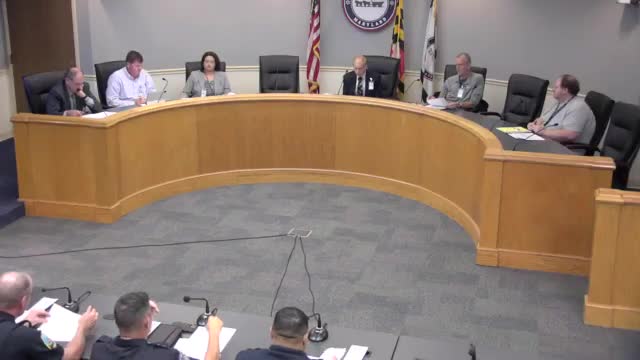
Summary
At a PAB meeting, ACC and law enforcement officials said missing or hard-to-read body-camera footage has complicated adjudication of complaints; officials urged consistent retention practices and proposed using the state's attorney's digital evidence unit as a resource.
Carroll County Police Accountability Board members and Accountability and Compliance Committee representatives told a public meeting that unavailable or unreadable body-worn camera and in-car video has repeatedly complicated the ACC's reviews of complaints against officers. The ACC has relied on video in the large majority of cases it reviews, officials said.
The issue surfaced during an ACC update from Tom, the committee's representative, who summarized seven cases heard since June and highlighted multiple incidents where video either was not retained or arrived in a format ACC members could not easily view. "This body cam footage is really critical," Tom said, adding that absent footage can make adjudication much harder.
Why it matters: ACC reviewers told the PAB they often dismiss complaints when footage shows no misconduct. When footage is missing or erased, reviewers face disputed accounts and, in some cases, constraints from statutory adjudication windows. PAB members and law enforcement officials said inconsistent retention schedules, technical-format problems and storage costs are the main obstacles.
Tom described a range of recent matters: a June traffic stop where an officer's conduct was supported by video; a tense Sykesville protective-order enforcement where body cameras showed officers de-escalated the situation; a case involving an apparent scam role for a pizza driver; and a Taneytown stop in which video was reportedly unavailable because of retention or formatting problems. In another Manchester case, the ACC reached a decision near the statutory time limit without full video but relied on photographs and other evidence.
"If we would ask the departments if they could work with their IT people to provide a better experience for the ACC when it comes to those videos, we would appreciate it very much," a PAB member said at the meeting. Chief Snyder of Hampstead said retention schedules are expensive and vary by jurisdiction: "Retention schedules are necessary because there is a cost associated with data," he said, noting departments send large volumes of video to the state's attorney's digital evidence unit for processing.
Several officials recommended the ACC and PAB use the state's attorney's digital evidence unit as a technical resource and explore a county-level policy to standardize retention and formats. Christian Price, acting chief at Westminster City, said departments set their own retention schedules and offered to share Westminster's retention policy with the PAB to aid consistency.
Ending: The board did not approve a new county policy at the meeting but asked staff to pursue follow-up with departments and the state's attorney's office to identify technical fixes and retention timelines that keep footage available for the ACC while acknowledging local storage costs.