
Officials weigh EMS expansion and satellite stations to shorten rural response times
Get AI-powered insights, summaries, and transcripts
Subscribe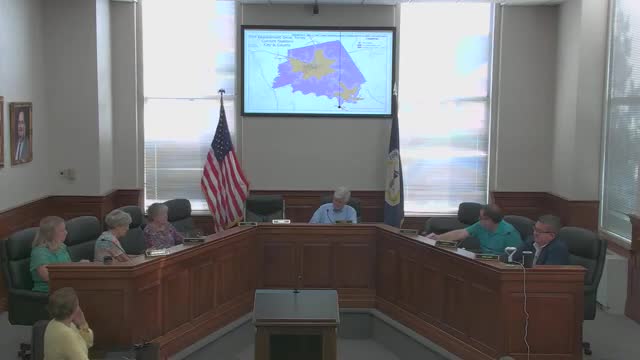
Summary
Committee members discussed expanding EMS capacity — adding an ambulance per shift and installing satellite stations in rural quadrants — to reduce long turnaround and transport times for county residents who live outside 10‑minute response windows.
At the joint city–county EMS committee meeting, members debated options to shorten emergency medical response times in rural parts of the county, including placing satellite stations in Trapp and other southern and outlying communities and adding a fourth frontline advanced life‑support ambulance per shift.
The discussion focused on maps and data presented to the committee. A Red Clark Foundation slide that the group reviewed suggested a large share of county residents live outside a 10‑minute response window; presenters and GIS staff said the county’s large geographic area means many residents are farther from stations than city residents. Committee members noted that while most calls by count occur in the city, county runs consume more time per incident because drive and turnaround times to hospital can be much longer in outlying areas.
Chief Whiteley summarized operational constraints: the city covers about 7.7 square miles while the county covers roughly 252 square miles, and longer travel and turnaround times in the county can double or triple the time an ambulance is tied up on a single incident compared with an in‑city run. He said the department currently runs three frontline ALS ambulances and that expanding to a fourth would help “recapture transfers” and reduce periods when units are out of service during long county calls. The committee also reviewed paramedic staffing: the record lists 17 paramedics and 12 advanced EMTs (29 advanced responders in total), with some paramedics assigned to fire apparatus on occasion.
Participants discussed options to finance any expansion. Suggestions included reexamining the city/county cost percentage if the county requests additional satellite stations, forming a combined EMS taxing district, or incorporating capital needs into a bond offering. Committee members said they want options and cost estimates before any reallocation of operating percentages. Several members emphasized that residents in long‑response zones expect equitable service improvements and that locating new assets should follow population density and run‑time analysis.
No final decision was recorded. The committee asked staff to produce maps, staffing and cost options and to convene joint EMS committee meetings to examine recent combined runs, training integrations, and possible station locations. A follow‑up meeting was scheduled in September to consider the options and, if appropriate, present a recommendation to the city commission and fiscal court.
The committee emphasized that any expansion would require matching funding choices, updated operational percentages, and detailed capital and operating estimates before either governing body votes.