
Godly ISD trustees call $119.96 million bond election for Nov. 4 after facilities committee recommendation
Get AI-powered insights, summaries, and transcripts
Subscribe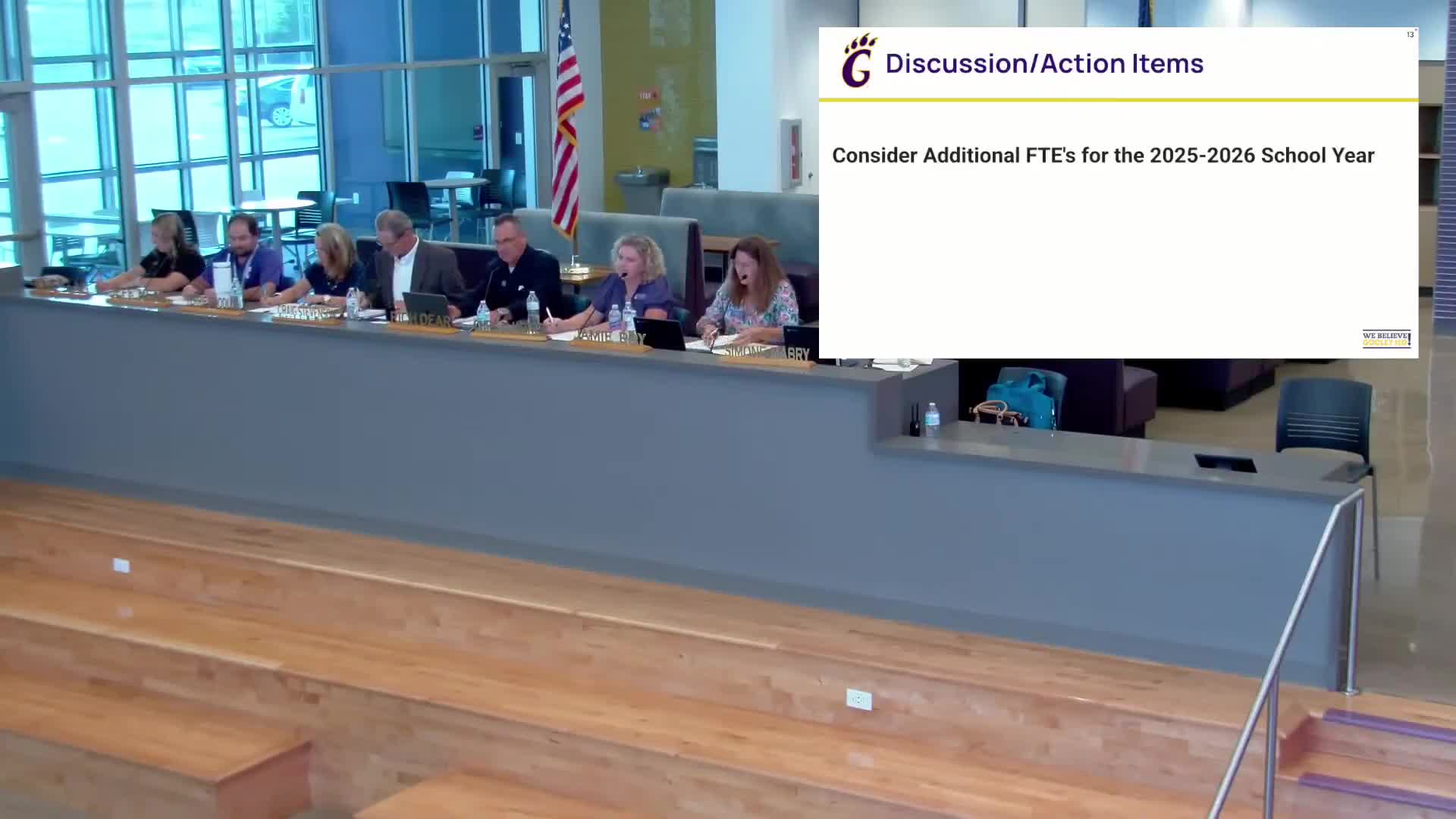
Summary
The Godly Independent School District Board of Trustees voted 6–1 to order a Nov. 4, 2025 bond election for $119,957,000 to address aging roofs, HVAC, cafeteria capacity, technology and an addition to the middle school; the decision follows a long‑range facilities committee recommendation and public concern over the district's debt load.
The Godly Independent School District Board of Trustees voted 6–1 to order a bond election on Nov. 4, 2025, asking voters to consider a single proposition for $119,957,000 to fund building repairs, capacity additions and districtwide infrastructure improvements.
The board's action followed a presentation and unanimous recommendation from the long‑range facilities planning committee, which prioritized work at RB Godly and Legacy elementaries, renovations and an addition at Godly Middle School, upgraded technology wiring and increases in classroom technology, additional buses and traffic‑related improvements.
The committee members described the district as a fast‑growth district with four of six campuses likely to be over capacity in the next five years. "We would like to add and renovate and repurpose space in on multiple campuses," said Tom Frazier, who identified himself as a parent and Legacy Elementary principal. The committee reported that middle school enrollment rose from 492 to 517 students in a single day and said the campus is near its 550‑student capacity.
Why it matters: The bond would fund projects the committee and district officials described as necessary to address immediate health, safety and capacity issues — leaking roofs and HVAC units, cafeterias that cannot seat full student bodies during events, technology wiring and bus replacements — rather than discretionary additions. Board members and committee presenters characterized the proposal as a "bare‑bones" package focused on needs the district cannot fund from its regular operating budget.
Public comment and fiscal concerns: During public comment, two residents urged trustees to reject more debt. Nova Olsen said, "I do not support any further indebtedness by this ISD that my taxes pay for. This community is overtaxed as it is." Rhonda Miller told the board, "Godly ISD is in debt over $225,000,000 just in principal alone," and said the district's debt per student is "$84,000." The trustees and district staff addressed those concerns during discussion.
District finance staff said the district has not missed any bond payments and explained how the district is using fund balance and the interest & sinking (I&S) tax bucket to manage debt service. "No payments have been missed," said Spencer (staff member). He also described how previously authorized bonds were affected by pandemic escalation and construction inflation, noting some projects were delayed or scaled back when costs rose.
Committee priorities and scope: Committee members described three scenarios they considered; the committee favored a scenario that combined addressing aging facilities and growth. Priorities the committee cited included: - Cafeteria expansions at Legacy and RB Godly to allow assemblies and events to be held on campus; - A middle school addition and repurposing the existing middle school footprint to house sixth grade while keeping sixth graders as a separate unit within the campus; - Districtwide upgrades to data wiring and classroom technology to achieve equity across campuses; - Replacement of several aging buses and adding buses to support extracurricular travel; - A traffic study (the committee estimated roughly $50,000 if the district must commission one) to analyze campus and nearby roadway operations, plus related infrastructure improvements such as a right‑turn lane if needed.
Board debate and packaging: Trustees debated whether to ask voters to approve a single proposition combining all projects or to split projects into multiple propositions. Supporters of a single proposition argued it gives the district flexibility to move funds among projects if some come in under budget and others exceed estimates, and it avoids voter confusion. Opponents worried multiple propositions would allow voters to express finer preferences. After discussion, the board voted to place a single proposition on the ballot.
Vote and next steps: The motion to call the bond election (motion by Jeff; seconded by Terry) passed 6–1. Trustees said they will proceed with voter outreach and a communications plan to explain the proposed projects and the ballot language, and the district will publish detailed plans for each proposed project as part of its voter information effort.
What the bond does not do: Trustees and staff emphasized that voter‑approved bond funds can only be used for the purposes described in the proposition language and that most sporting stadium facilities are commonly excluded; the ballot language will list eligible project types and the district intends to publish further detail in outreach materials.
The bond order sets the district up to ask voters on Nov. 4, 2025, whether to authorize $119,957,000 in bonds; implementation would depend on voter approval and subsequent project planning and contracting.