
Auburn School Committee votes to trial new cell-phone practices for 2025–26 school year
Get AI-powered insights, summaries, and transcripts
Subscribe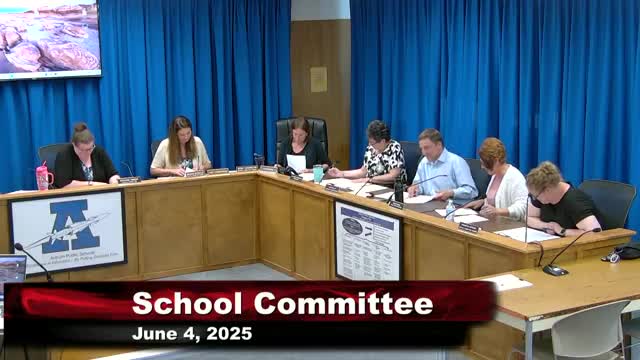
Summary
After a multi-hour discussion of student privacy, lockers, bathroom supervision and equity concerns, the Auburn School Committee approved a one-year trial of recommended cell-phone practices for middle and high schools with planned mid-year review.
The Auburn School Committee voted to implement a one-year trial of new cell-phone practices for the 2025–26 school year aimed at reducing in-school social-media access and improving student focus and school climate.
The proposal grew from a committee that surveyed families, students and staff and recommended progressive measures by level: keeping devices in backpacks at the middle school and a more restrictive "belt-to-bag" or away-in-bag approach at the high school. School leaders said the high school proposal would limit students’ ability to use phones during passing time, lunch and class, while allowing limited exceptions for documented medical needs.
"What we're trying to do with this is create, more focused learning culture in each of the schools," Superintendent Dr. Beth Chamberlain said during the discussion, framing the recommendation as student-centered and not punitive. Committee members voiced concerns about implementation logistics, including locker access, restroom screening, students with medical needs and smartwatches that can act like phones. Members also emphasized the need for staff buy-in and extensive family outreach before September.
The committee voted to approve a trial run for 2025–26, instructing staff to conduct outreach over the summer, hold assemblies and orientation for students, and perform mid-year focus groups or surveys to evaluate the initiative. The committee asked administrators to report progress in October and again later in the school year; the trial is not a permanent policy change and will be revisited based on feedback.
Staff flagged specific operational issues for follow-up: clarifying exceptions for students with documented medical needs or 504/IEP accommodations, addressing restroom supervision to reduce unsupervised phone use, ensuring locker access time for students who have not used lockers since COVID protocols, and planning teacher/staff expectations and modeling.
The motion to implement the trial, as described in the committee packet, passed by voice vote.