
Council sends report on 911 call response times after members highlight long waits for non‑emergency callers
Get AI-powered insights, summaries, and transcripts
Subscribe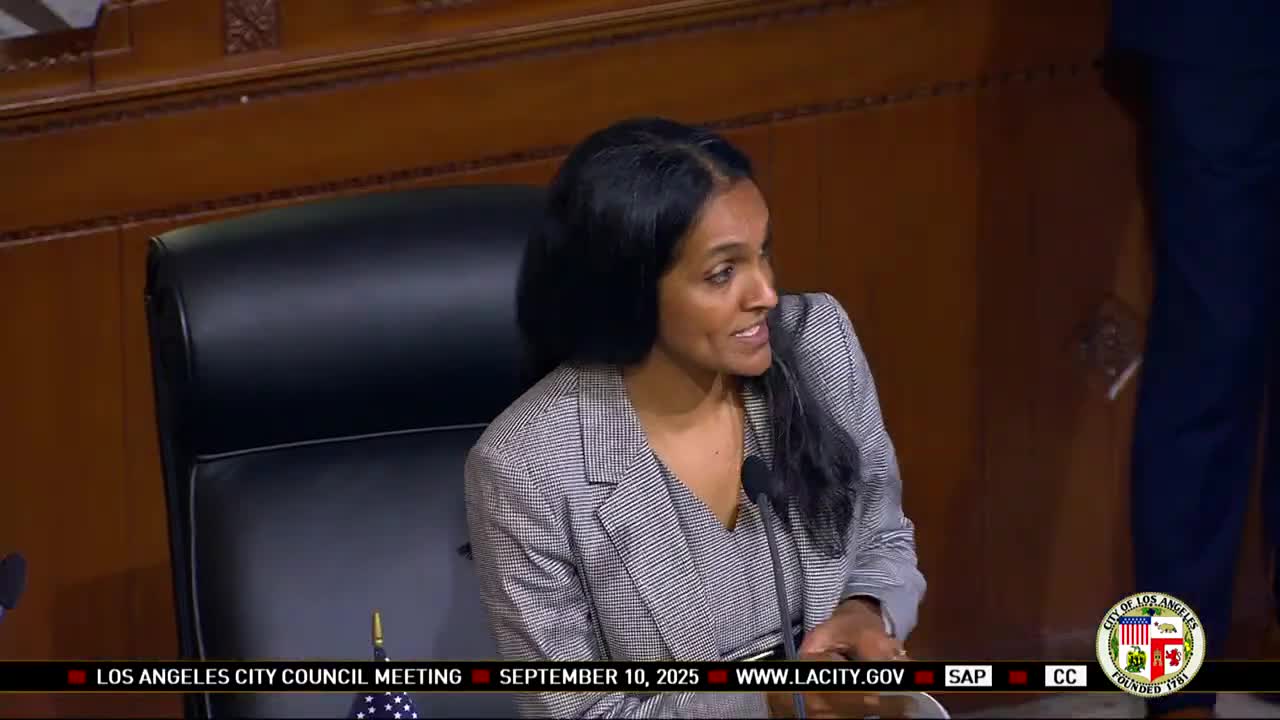
Summary
Councilmember Nithya Raman secured council consideration of a report on 911 call response times; the motion noted emergency calls meet the state standard while non‑emergency waits average several minutes and can exceed an hour in high volume periods.
Councilmember Nithya Raman introduced a motion at the Sept. 10 City Council meeting asking for a report and consideration of reforms to 911 call handling, particularly for non‑emergency calls. Raman told colleagues that while emergency‑call pickup meets the state standard—“57% of our emergency calls are addressed within 15 seconds”—non‑emergency callers face much longer waits. Raman said average wait times for non‑emergency calls were “over 3 minutes, almost 4 minutes,” and that in periods of peak call volume those waits could exceed an hour.
Raman said the discrepancy reflects a shortage of police service representatives (PSRs) who handle non‑emergency phone traffic and that improvements beyond hiring more PSRs are needed. She argued non‑emergency callers often report crimes such as burglaries where perpetrators have already left; long telephone waits can leave victims feeling unsettled after a distressing incident.
The council voted to approve the motion and requested recommendations to shorten wait times and improve service. The roll call on items 18 and 27 (both tied to public safety/911 response matters) recorded 15 ayes for the package of measures discussed by council.
What happened next: The council approved the motion and directed staff to report back with options to improve 911 call handling for non‑emergency calls, including potential administrative and resourcing changes.