
Sen. Wilson pitches $1.25 registration fee to shore up county-run DMVs; Cache County to lose office without change
Get AI-powered insights, summaries, and transcripts
Subscribe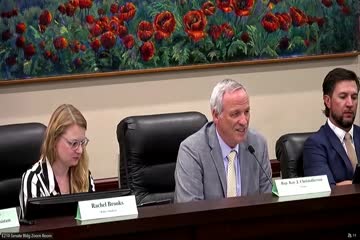
Summary
Senator Wilson presented draft legislation to add a $1.25 per-registration fee to reimburse counties that operate DMV services; committee discussion identified Cache County’s $800,000–$1,000,000 annual shortfall and general support for a county-distribution plan.
Senator Wilson told the Transportation Interim Committee that 21 Utah counties run DMV offices under a decades‑old contract with the state and that rising operating costs have left many counties subsidizing DMV services. He said reimbursements have not kept pace with personnel and space costs and that Cache County faces an annual shortfall between $800,000 and $1,000,000 and may stop operating its local DMV unless funding changes. Why it matters: county-run DMV offices provide in-person services used by rural residents and by visitors who prefer walk-in service; closures could force longer travel and added waits for residents who depend on local access. The senator said he proposes a $1.25 per‑registration transaction fee to be collected statewide; with roughly 3.5 million vehicle registrations it would generate about $4.1 million annually. He said roughly $1.8 million of that would be used by the state to open and operate a state-run office in Cache County and the remainder distributed to counties to make them whole based on a formula tied to registration volumes and county class. County officials described local impacts. Michael Jensen, Tooele County treasurer, said Tooele’s DMV subsidy rose from about $45,000 ten years ago to about $180,000; Brett Robinson, Cache County assessor, described inadequate courthouse space and population growth that have outpaced the county’s ability to host DMV services. Administration position: Jason Gardner, deputy executive director of the Tax Commission, said the Tax Commission favors a fee that places the burden on users of in-person services rather than the state general fund and that the commission can administer the distribution. He said a fee-based approach avoids moving payroll and lease costs into state payroll and lease obligations for multiple local offices. Discussion and alternatives: committee members raised equity concerns for first-class counties (especially Salt Lake) and suggested alternatives (larger user fees targeted at out‑of‑county transactions or formula changes) but acknowledged practical challenges and the administrative complexity of alternatives. Action and next steps: Senator Wilson said he plans to run the draft bill next session; the committee did not adopt final statutory language at the interim meeting. Committee members asked the senator and Tax Commission staff for the detailed county distribution table and to work on bill language to return during the session. Ending: Senator Wilson asked for input; committee members said they would consult county assessors and treasurers and return to the committee with feedback and potential refinements before a bill is filed.