
Highway Patrol and driver-license division report rising crashes involving unlicensed drivers
Get AI-powered insights, summaries, and transcripts
Subscribe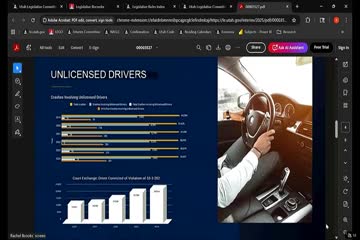
Summary
Patrol and Driver License Division presented crash and citation data showing an increase in crashes that involved unlicensed drivers and asked for direction on additional data collection and analysis.
Highway Patrol and the Driver License Division presented committee members with an analysis showing an increase in crashes and citations involving drivers without a valid license. The agencies said total statewide crashes remained roughly constant while collisions involving unlicensed drivers and hit-and-run crashes that involved unlicensed drivers both rose. Why it matters: crashes involving drivers without valid licenses raise enforcement, public-safety and court-processing concerns and can indicate gaps in licensing access, compliance, or enforcement. Data highlights from the briefing: the Highway Patrol showed year-to-year counts where crashes identified as involving unlicensed drivers rose from about 2,662 (2019) to roughly 7,400 (2024) in the dataset that the agencies presented. The Driver License Division and Patrol noted the difficulty of interpreting that increase without further breakdowns (for example, whether the driver never had a license, had an expired license, or had a suspended/denied license). Agency follow-up: the Driver License Division said it can improve testing access, prepare study materials in more languages and implement pretest screening tools; committee members asked staff to produce cross‑tabulations (for example, unlicensed drivers among all citations, and the licensing status of drivers cited for speeding) to better understand prevalence and enforcement relationships. Ending: agencies said they will return with more granular analyses and suggested improvements to forms and data collection to better track reasons for lack of licensure and links to crash risk.