
VA presents AI strategy to Congress amid GAO warnings and leadership, funding questions
Get AI-powered insights, summaries, and transcripts
Subscribe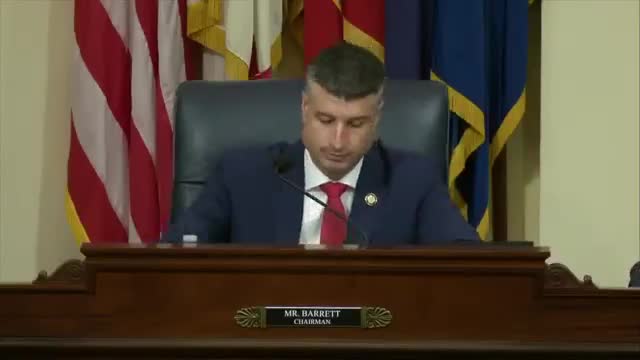
Summary
At a congressional subcommittee hearing, VA officials described an AI strategy centered on five priorities and an expanding use-case inventory while GAO testimony and members' questions highlighted gaps in governance, workforce capacity, funding, and implementation oversight.
At a House Veterans' Affairs subcommittee hearing on artificial intelligence, Department of Veterans Affairs officials described a five-priority strategy to expand AI across the department while the Government Accountability Office and members of the subcommittee warned of implementation risks tied to leadership, funding and existing IT problems. "Our strategic vision is to make VA a leader in AI, providing faster services, higher quality care, and more cost effective operations," Charles Worthington, chief technology officer and chief artificial intelligence officer at the Department of Veterans Affairs, said in opening testimony. He listed five priorities: expand AI access across the workforce; reimagine high-impact workflows with automation; invest in data and infrastructure; cultivate an AI-ready workforce; and execute transparent governance. GAO Director of IT and Cybersecurity Carol Harris told the panel that VA's AI use cases rose sharply — "from 40 in 2023 to 229 in 2024" — and that 64 percent of those cases were classified as high impact, meaning they affect rights or safety. Harris said VA also faces longstanding challenges managing IT projects and has 26 open GAO recommendations on IT resource management. Committee members repeatedly pressed VA witnesses on leadership and resources. Ranking Member Basinski noted recent internal reorganization plans at VA's Office of Information and Technology and said the department needs a confirmed chief information officer to guide enterprise strategy. Harris told the subcommittee that VA did not have a permanent CIO and that OIT was undergoing restructuring while requesting reduced funding and staff, hampering prioritization and workforce planning. Witnesses described an AI use-case inventory VA is preparing to update in December and said the department conducts agency-level reviews consistent with OMB policy before approving AI systems for production. Worthington said VA will require an authority to operate for AI systems and that the department follows federal security and privacy rules for technology brought into production. GAO and committee members emphasized predeployment testing, ongoing monitoring and workforce capacity as essential controls. Harris recommended filling privacy officer positions and implementing GAO's framework of governance, data, performance and monitoring practices to ensure accountability in design, deployment and continuous monitoring. Discussion versus decision: the hearing produced no formal policy changes or votes; it focused on oversight questions, requests for information and commitments to publish inventories and monitoring plans. The subcommittee signaled it will continue oversight and requested additional transparency on employee data access and OIT plans. Toward the close, Chairman Barrett summarized the hearing's balance: AI presents potential to improve outcomes while creating responsibility to safeguard veterans' data and preserve human clinical judgment. "AI is a tool, not a replacement for doctors, nurses, and care teams," he said.