
Manlius district officials review school resource officer program, emphasizing relationships and training
Get AI-powered insights, summaries, and transcripts
Subscribe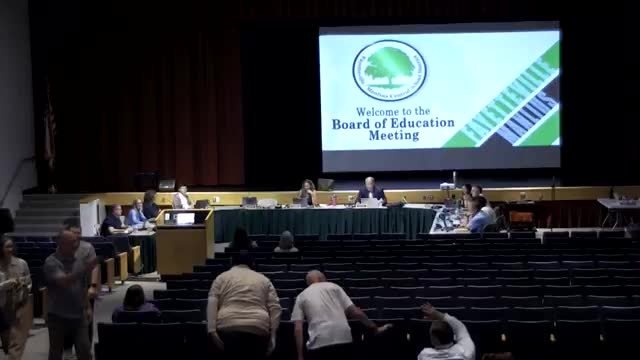
Summary
Superintendent and two School Resource Officers outlined the program’s goals — building long-term relationships, crisis response, training and traffic safety — and described daily duties and training standards; board members asked about trends including vaping and student mental health.
Superintendent Dr. Tice introduced the district’s School Resource Officer program and said it aims “to establish relationships” between students and law enforcement, then turned the presentation over to the town officers assigned to schools.
The district’s school resource officers, Officer Damien Golden and Officer Mitch Grogan, told the Board that the program maintains a full-time presence at the high school and coverage at other schools through CSIROs (community/school information resource officers) and SPOs (special patrol officers, often retirees). “The main function of our program is to maintain a full time presence in the high school and every school, within the township,” Officer Grogan said, listing duties that include crisis intervention, classroom instruction on law and safety, threat assessment, support for investigations, and traffic and event security.
Why it matters: board members pressed staff about current trends the SROs are seeing and asked how the board and community can support them. The officers highlighted vaping and student mental-health crises as principal operational concerns — both items that affect training needs, response protocols and parent outreach.
Most important facts - Superintendent Dr. Tice framed the program around continuity: having the same officers over time to “build relationships.” - Officer Mitch Grogan described day-to-day responsibilities: visible presence on school property, single-point entry and camera-system work, lockdown and fire drills, bullying and internet-safety education, traffic direction and event security, basic medical response (CPR/stop-the-bleed) and coordinating outside-resource transportation. - Officers noted specialized training: NASRO-based SRO training, Crisis Intervention Team (CIT) training and monthly in-service training (except summer months); they also said they coordinate with the county district attorney’s office, child advocacy center and other SROs. - Officers identified two persistent issues: evolving vaping products (they said additives can introduce harmful chemicals) and increased student mental-health needs tied in part to social media. - Officers described community policing programs (Cadet Post, Heroes and Helpers, scholarships) intended to build positive connections between students and police.
Discussion vs. decisions - Discussion only: The presentation reviewed program goals, staffing, training and community programs; officers answered questions but no board action or formal policy change was proposed or taken at this meeting. - Direction/assignment: None recorded in the meeting transcript. - Formal action: None.
Quotes (from meeting participants) - Dr. Tice, Superintendent: "The goals of the program ... is to establish relationships." - Officer Mitch Grogan: "The main function of our program is to maintain a full time presence in the high school and every school, within the township." - Officer Grogan on training: "NASRO ... is the base training to become a school resource officer."
Ending Board members thanked the officers and asked how the public and the board could support the program; the officers cited continued community education about vaping and sustained mental-health-focused training.