
Shelter and services group asks county for food donations, outlines housing plans for at‑risk youth
Get AI-powered insights, summaries, and transcripts
Subscribe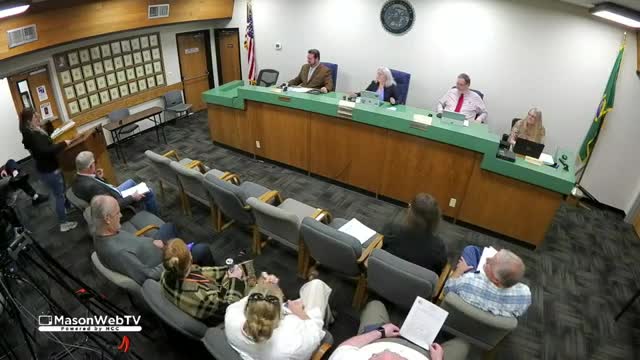
Summary
The Youth Connection reported serving hundreds of young people in August and asked the commission and community to support a food drive; the group said a CHIP grant brought them closer to developing 12 transitional housing units and they plan to apply to the housing trust fund to complete the project
SHELTON, Wash. — A community outreach worker told the Mason County Board of Commissioners Sept. 16 that local youth services are seeing rising demand and asked for help restocking food supplies while the organization pursues funding to build transitional housing.
Alex Banks, outreach coordinator and supervisor with The Youth Connection, said the organization served 545 young people at its Shelton center in August and about 30 at its Belfair center, with six people counted as newly served. "Through intensive case management, we housed 6 young people just in August into permanent housing and prevented 2 additional households from becoming homeless," Banks told commissioners.
Banks said The Youth Connection provided 390 hot meals and handed out 48 take-home food bags in August and is running low on pantry supplies. The group plans a combined food drive and haunted-house fundraiser to restock food supplies ahead of a building remodel. Banks asked donors to prioritize pop-top canned foods and precooked items for clients without kitchen access and, if possible, protein items that can be frozen for distribution.
Banks also described the organization's housing project: he said a CHIP (Community Housing and Infrastructure Program) grant has helped advance development of 12 transitional units. The next step, he said, is applying to the housing trust fund. If awarded, the housing trust fund grant would, according to Banks, fully fund the project and allow more transitional housing openings for youth.
No formal county action on the request was taken at the meeting. Commissioners responded with follow-up questions about donation logistics and expressed general support; a commissioner asked if contact information could be shared with other neighborhoods interested in learning about the LMD work and staff-study processes.
The Youth Connection’s remarks were made during the public comment portion of the meeting; the group’s statistics and program plans came from the speaker’s on‑the-record presentation.