Enterprise reports progress, bidding delays in blight-elimination demolition initiative
Get AI-powered insights, summaries, and transcripts
Sign Up Free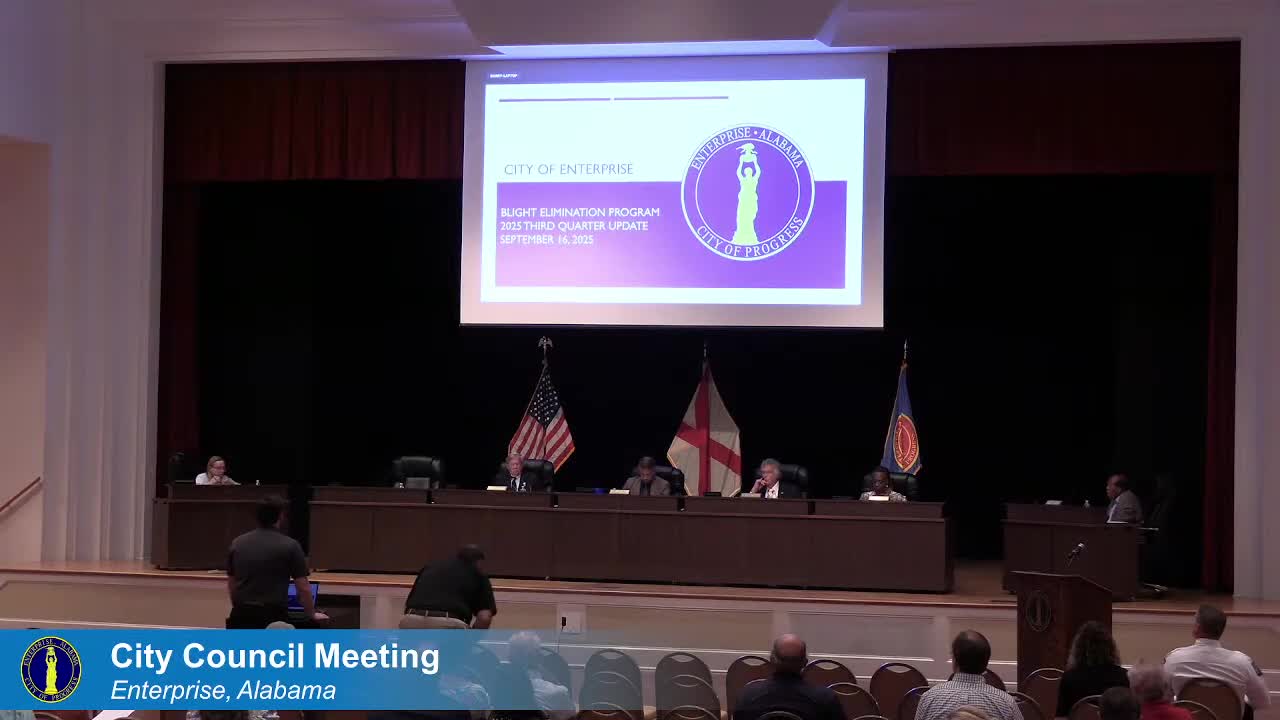
Summary
City staff reported demolition and remediation activity covering dozens of properties and hundreds of housing units over the last three years, but said bidding and asbestos issues are delaying Phase 1 work and will require more outreach to contractors.
City of Enterprise engineering staff told the City Council on Sept. 16 that the city has substantially increased blight-removal work in the past three years — demolishing and remediating dozens of structures — but the program is encountering contractor bidding and hazardous‑materials hurdles that are slowing Phase 1 work.
The update, presented by Thomas Hardy, assistant director of engineering, summarized work the city calls the “demo initiative” and the broader blight‑elimination program. “We’re trying to eliminate blight,” Hardy said while describing the program’s objectives and recent results. He listed examples of recently remediated or demolished properties and described an ongoing effort to repurpose cleared lots.
Why it matters: City staff said clearing unsafe, fire‑damaged or vacant structures improves neighborhood safety and supports redevelopment. Officials said successful demolitions and renovations can attract private investment and enable new housing construction nearer the city core.
Hardy told the council that since the program began the city and grant phases have collectively addressed roughly 96 properties and 165 housing units over three years (totals include properties already demolished, in progress, or remediated). He broke the recent tally down further: 22 privately mitigated properties, 30 properties (55 units) addressed through the city demo initiative, and about 30 additional units slated for demolition through two phases of Community Development Block Grant (CDBG) funding. Altogether, he said, the current total addressed across initiatives is approximately 71 properties and 107 units (figures reflect different program counts reported during the presentation).
Hardy described several successful rehabilitations: a termite‑infested house at 420 Grime Street that was demolished and sodded; a burnt, vandalized building at 502 South Weta Street removed and cleared; a full exterior/interior remodel at 204 West Park Avenue that returned the house to the market; and a commercial property at 912 Rucker Boulevard for which the city expects to present a remediation agreement to the council after the owner supplied architectural and engineering plans. Hardy said some properties were saved from demolition when owners chose to rehabilitate.
Staff also reported obstacles. Phase 1 — the first round the council authorized for demolition — attracted weak contractor response. Hardy and other engineering staff said some structures are simple dwellings public works can handle, but other properties are multi‑unit or structurally compromised (burn damaged, closely sited to neighbors) and require contractors with larger equipment and hazardous‑materials expertise. Hardy said asbestos testing is under way for some parcels and that the city completed some asbestos work in‑house through public works.
"We had issues with getting people to bid it," Hardy said, adding that timing and market demand likely reduced contractor interest. The plan is to reissue bid documents, reach out directly to contractors who normally perform this work, and — if acceptable bids are not received — pursue contingency options with staff and procurement.
No elevation of additional city funding was approved at the meeting. Hardy said the city will present a recommendation on Phase 1 bids if competitive proposals are received; otherwise staff will return to the council with alternative plans. Council members asked for clarity about which properties are in which phase and whether asbestos results were complete; Hardy said Phase 2 asbestos testing was pending and that public hearings for Phase 3 properties will be scheduled on Oct. 7.
Hardy displayed a map of target sites and said the green dots mark remediated properties while orange dots mark sites in process. He also presented building‑permit data showing a surge in new dwelling unit permits in 2025: Hardy said the city had issued about 166 new dwelling permits as of August, versus 127 in 2023 and 139 in 2024. He emphasized that new construction is outpacing removals, helping to drive reinvestment in neighborhoods where blight has been removed.
What’s next: staff said they will reissue bid packages for CDBG and city demo work next week, return to council with a low‑bid recommendation if appropriate, and request an extension for Phase 1 if more time is needed to secure contractors. The council did not take a formal vote on demolitions during the Sept. 16 meeting; Hardy said the next formal requests for action will come at future council meetings, including Oct. 21 for additional demolition hearing items.
Ending: Council members thanked engineering and public works for the initiative and asked staff to continue outreach to contractors and to keep the council informed about asbestos results and bid outcomes.